From the Archives:
Marcel Moyse

  • Introduction
  • Timeline
  • Recordings
  • Gallery

Introduction

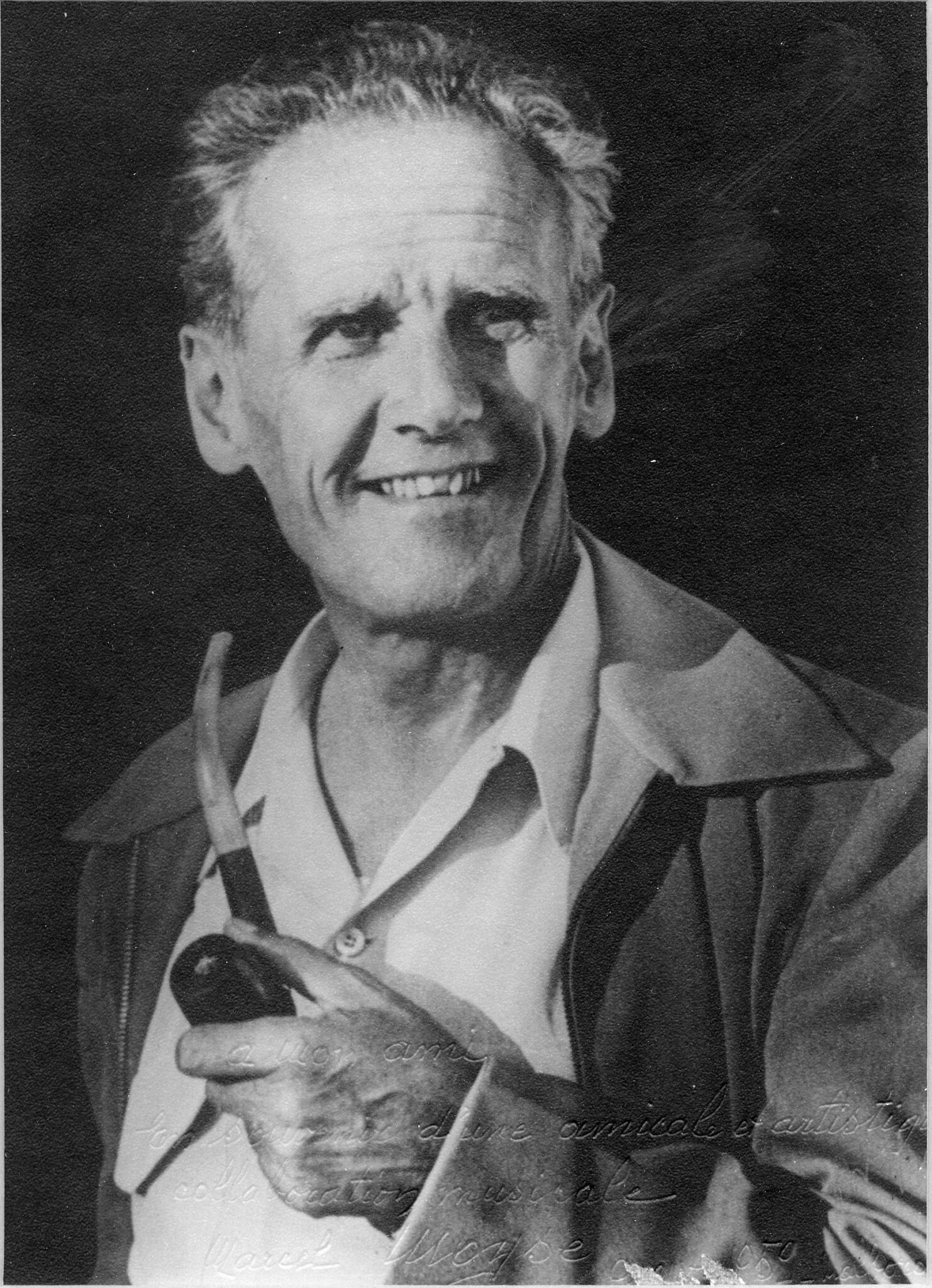
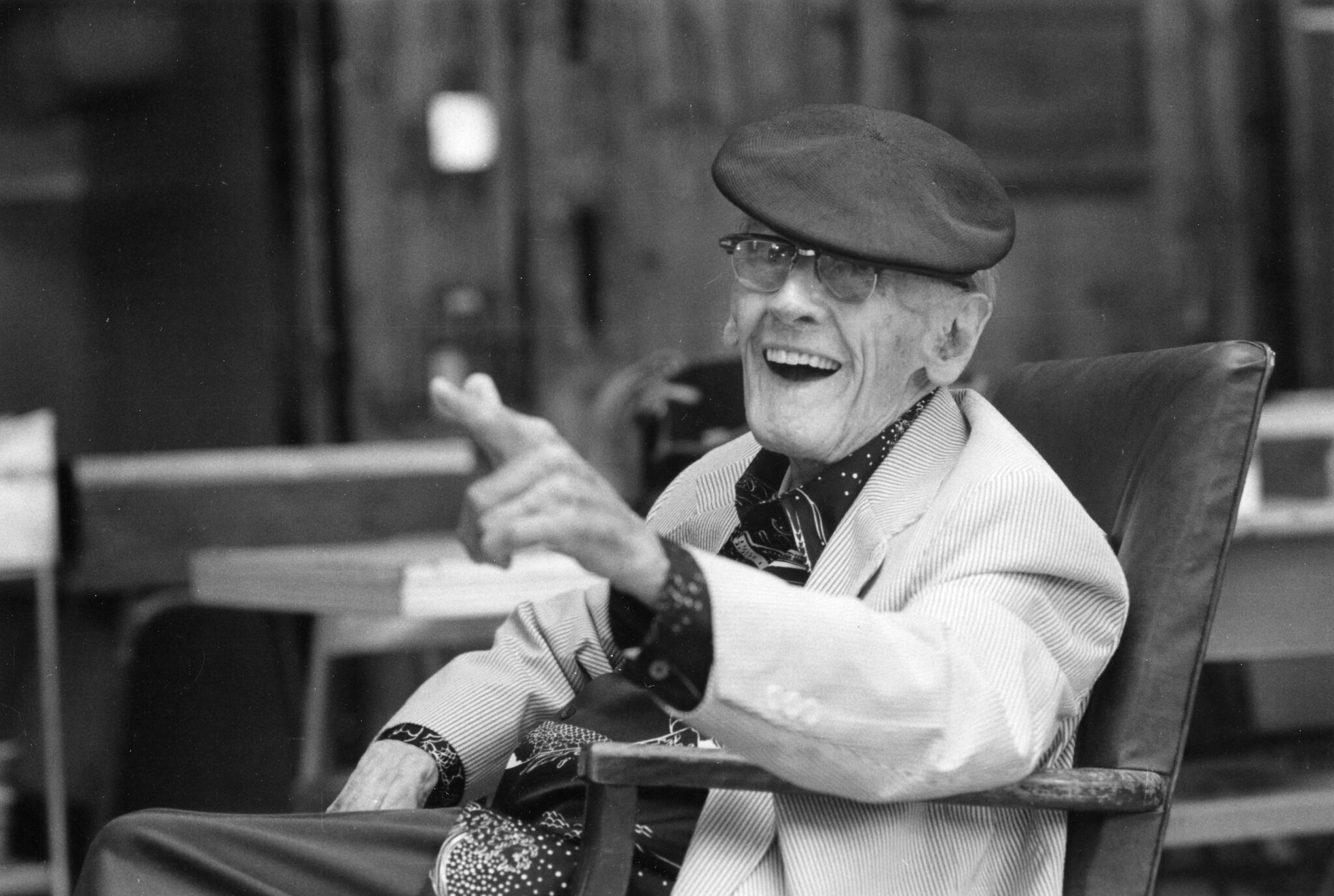
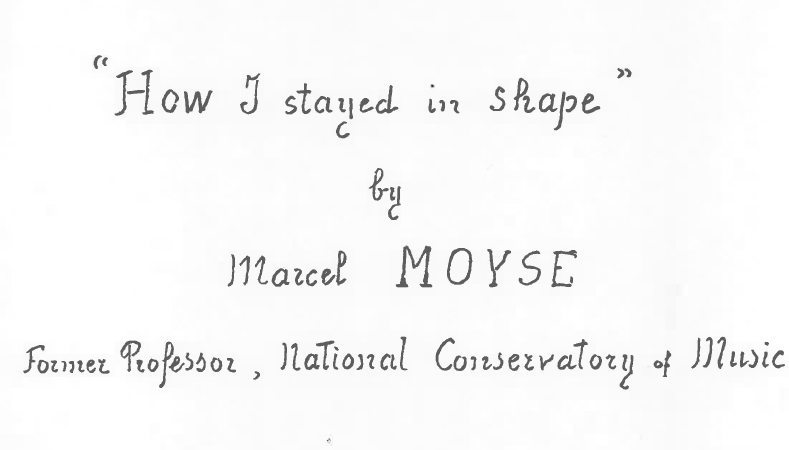
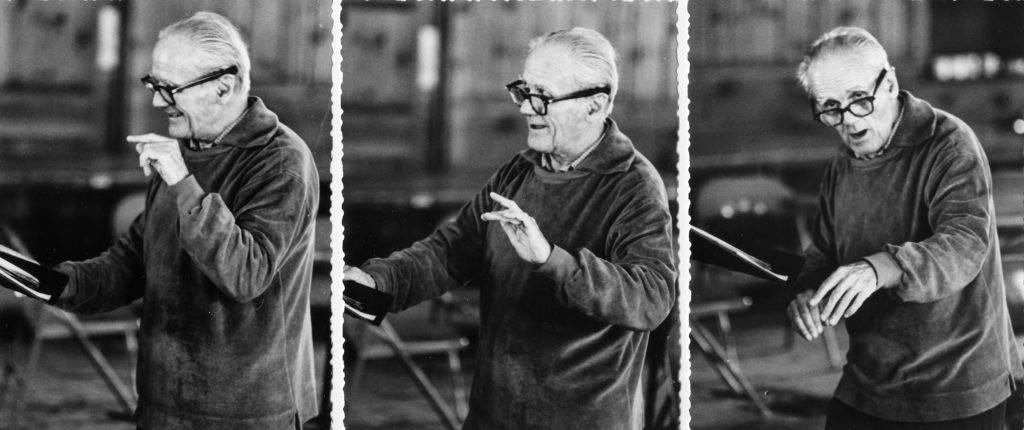
Marcel Moyse was a true original. Thinking back to the performances and ensembles that he led at Marlboro from the 1950s to the 1980s, his expressive comments and conducting gestures seemed like French impressionism in sound. He asked his wind players to sing on their instruments with a vocal line like the great opera singers for whom he played as the principal flute of the Opéra Comique in Paris. The results that he often achieved, in terms of sound, color, and phrasing, exceeded what we were accustomed to hearing from wind instruments. He seemed to have magical powers.

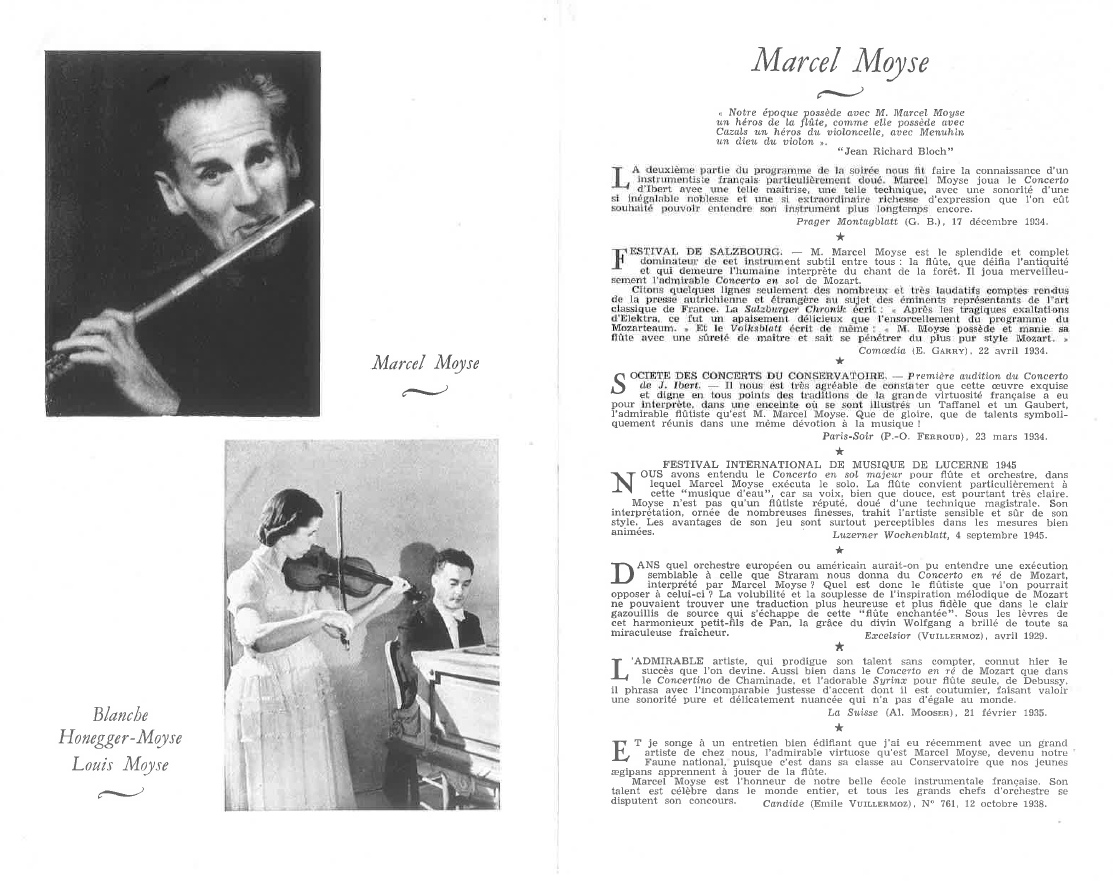
Moyse was a soloist under such legendary conductors as Furtwängler, Prokofiev, Richard Strauss, Toscanini, and Koussevitzky, and he premiered pieces by Ravel, Ibert, who wrote his flute concerto for Moyse, and Debussy, whom Moyse personally introduced to Toscanini. He was a professor of flute at the Conservatoire de Paris and was named Chevalier of the Legion of Honor. When he lived in France, American students would travel to study with him in his home country, and when he emigrated to the U.S., European students would travel to study with him in his adopted country.

Like many larger-than-life figures, he could sometimes be challenging to deal with, but my Marlboro colleague and friend Anthony Checchia developed a close relationship with Moyse. I recall going with Tony to visit Moyse in his later years at the Brattleboro residence that he shared with his daughter-in-law, Blanche, when he was recovering from his latest operation. He had lost a great deal of weight and was quite weak, but he had not lost his sense of humor. He motioned for Tony to come close to him and in what seemed like a loud whisper, with a wistful smile, he said, “I have had so many operations, my body, she is like my flute—many holes.”

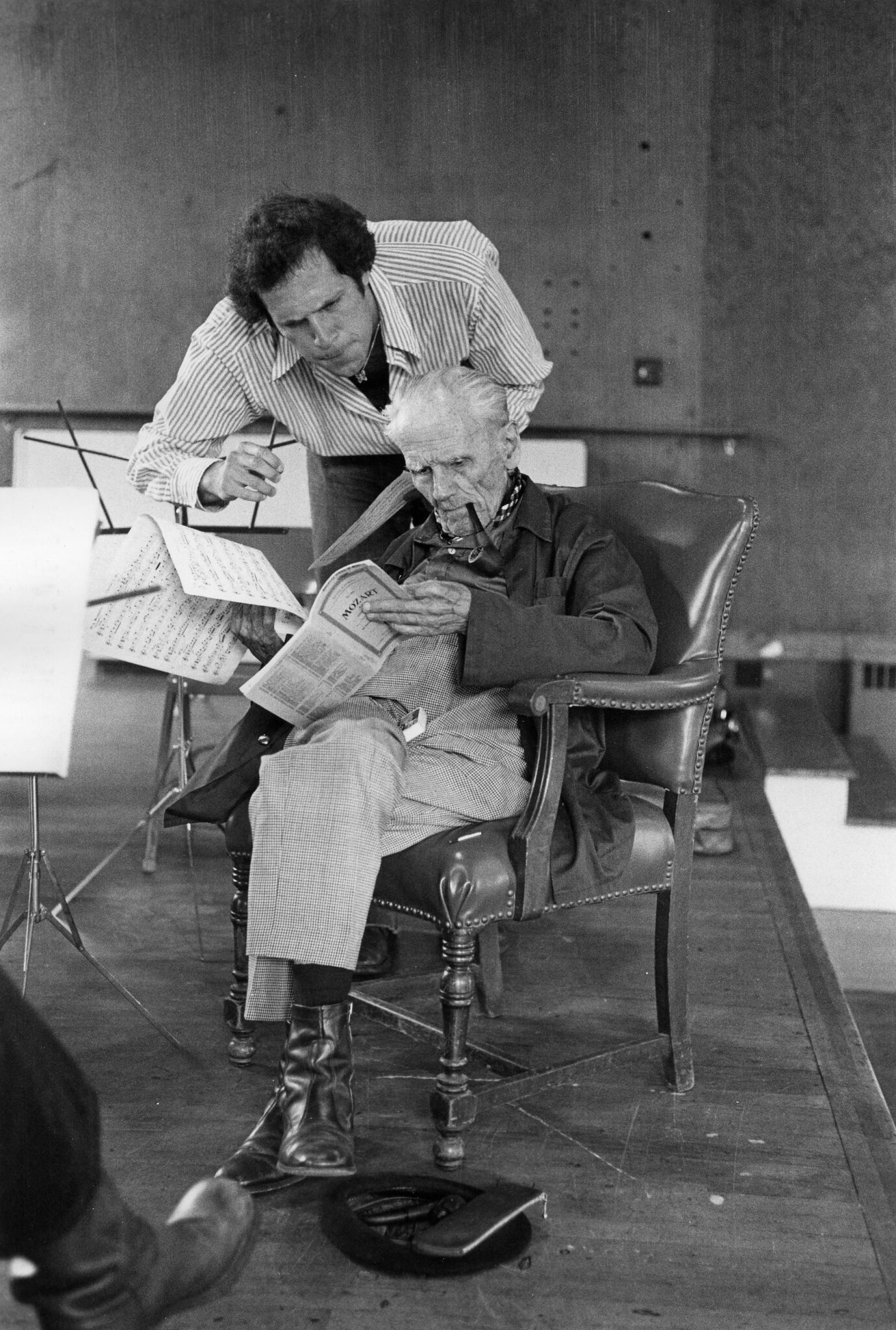
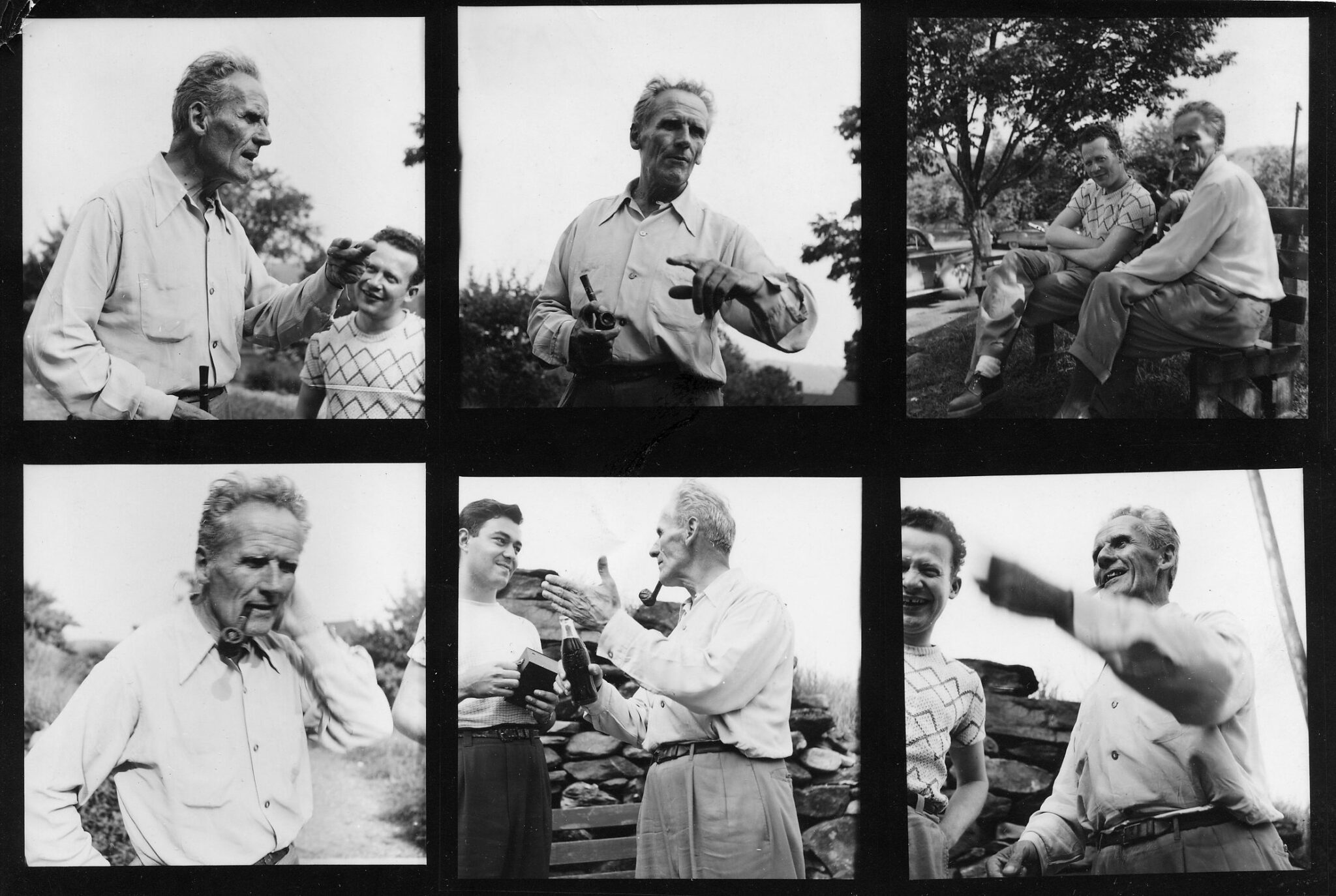
Moyse’s Tuesday night wind seminars in the Dining Hall were always special experiences. He would be ensconced in an armchair with a glass and a bottle of his beloved Pernod by his side. Whether he was listening to an opera aria played by a single wind, an ensemble work, or a selection from one of his popular exercise books, he always seemed to spur those playing for him to expand their expressivity and raise their playing to another level.

But the miracles that he was able to achieve in the rehearsal studio and on the concert stage eluded him when he climbed behind the wheel of a car. It seemed that there were as many stories in the Brattleboro Reformer about his automobile accidents as there were about concerts in which he appeared! His vehicles were all of ‘a certain age,’ and I recall one very large, high mileage Oldsmobile 88 in the 1960s that he parked at the side of the dining hall on a wind seminar Tuesday. We were all engrossed in the playing of the seminar when we heard this incredible crash at the side of the dining hall. We rushed outside to determine the cause and found a violently cursing Don Woodard, the college’s groundskeeper and jack-of-all-trades. It seems that Mr. Moyse’s Olds, with keys still in the ignition, had rolled back onto the precious grass by the apple trees, which Don protected with religious fervor. Furious at this outrage, Don jumped in the car, foot on the accelerator, drove it back to the side of the dining hall, and slammed on the brakes. The only problem, as seemed to be the case with many Moyse vehicles, was that the brakes didn’t always work. That evening’s seminar was a bit abbreviated.

Marcel Moyse was a major influence on flutists around the world—from such renowned soloists as Jean-Pierre Rampal and James Galway to the thousands of flutists who attended his master classes in Japan. But it was at Marlboro, for generations of wind players and other instrumentalists who became leading figures in the orchestral, chamber, and solo worlds, that he left an indelible impression.

Commemorating Marcel Moyse, the video below provides a glimpse of his spirit and a selection of first-person accounts of his impact on Marlboro.


Timeline

1889

Birth

Marcel Moyse is born in the town of St. Amour the same year that the Eiffel Tower, revolutionary itself, is completed for the Exhibition Universelle on the 100 year anniversary of the French Revolution. His unwed mother had travelled to St. Amour in order to give birth in a peaceful village away from her hometown. However, she dies only seven days after the birth. In the absence of his biological family, Moyse is adopted by a local widow, Josephine Perretier, who raises him alongside her two daughters in the countryside. Moyse hears both church bells and reed flutes throughout his early years, and the latter serve as his rustic introduction to music playing.

1896

Childhood

In the seventh year of Moyse’s childhood, his biological uncle perishes in a military hospital on the Spanish border, and official news is sent to all family members. Fatefully, word even reaches the town of St. Amour, where the messenger learns that though both Moyse’s mother and midwife are dead, the boy himself is alive and well. Moyse’s bereaved grandparents come to claim the boy. They bring him to the town of Besançon, where they live, and though Moyse tries repeatedly to escape back to the only home he has known, he eventually settles in and is allowed to spend summers in St. Amour. His grandfather is a chorister in a local choir and brings Moyse to rehearsals, which are the social hubs in town. Moyse develops a taste for opera, the most celebrated music in France, and even goes so far as to systematically swipe 35 bottles of wine from his grandparents’ cellar in order to sell them for ticket money.

1899

Musical Beginnings

His interest in music firmly established, Moyse begins to study flute and solfège, learning to prize both inspired nuance in tone and phrasing as well as scrupulous accuracy in timing, articulation, and intonation. Despite his musical talent, Moyse is nevertheless encouraged to pursue an apprenticeship in carpentry as he grows older. Exhibiting both handiness combines and an artistic temperament, Moyse decides to study sculpture. The vocation is approved by his grandfather, and Moyse is invited by his Uncle Joseph to live and study in Paris.

1904

Paris

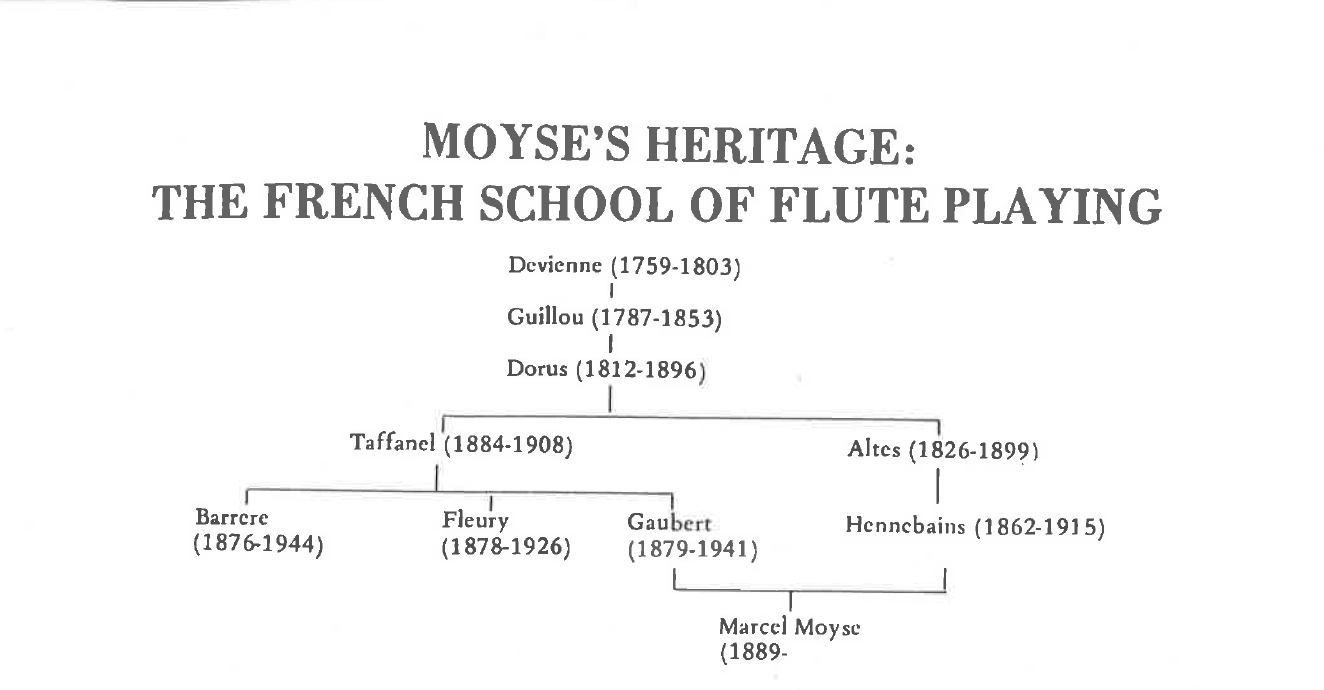
Moyse arrives in the French capital just as Debussy is named to the Légion d’honneur and Pablo Casals makes his Paris debut. Moyse’s own Uncle Joseph is a section cellist in the Lamoureux Orchestra, the ensemble that will premiere Debussy’s La mer just a year after Moyse’s arrival in Paris. It is his uncle who not only arranges for Moyse’s sculpture education but also ensures that the boy continue his flute studies. Joseph introduces Moyse to Adolphe Hennebains, the solo flutist of the Opéra, who accepts the young man as a pupil and prepares him for a successful Conservatoire audition in the course of a single year.

1906

Conservatoire

Moyse studies at the Conservatoire under the tutelage of Paul Taffanel, who introduces foreign repertoire to the institution that now seems standard, such as Bach sonatas. He also commissions exam pieces by contemporary composers, counter to the Conservatoire’s reputation for unremittent traditionalism. New works by Gabriel Fauré and Philippe Gaubert, a former student of Taffanel, are typical exam pieces during Taffanel’s tenure, and Moyse’s performance of one of Gaubert’s pieces wins him first prize at his examination just one year after having entered the Conservatoire. With this accolade, he begins to pursue a career in music at the age of 17.

1910

Building a Career

While searching for an orchestral position, Moyse also seeks further direction from Gaubert. Impressed with the way Moyse played his composition in the examinations, the flute-playing conductor and composer gives Moyse substitute work at the Opéra. After two years of courtship, Moyse marries a beautiful dancer named Celine in 1912. Four years older than he and rumored to have had the affection of Massenet, she nevertheless assumes the role of wife and mother quite naturally. She is especially conscious of Moyse’s poor respiratory health, which has plagued him since childhood. The Moyses have their first child, Louis, by the end of their marriage year, and a daughter, Marguerite Josephine, follows. Moyse plays in the premiere of The Rite of SpringIn the whirlwind year of 1913 and then accepts a touring engagement with the Australian opera diva, Nellie Melba. He supports his burgeoning family from afar, surveying the expanse of the United States during the six month, 62-concert tour.

1914

WWI

Moyse returns to a Europe wracked by world war. Due to his chronically poor lung health, his repeated attempts to enlist in the military are denied, and he stays in Paris with his family to seek what few opportunities are left to a wartime musician. Though many performances are cancelled or postponed during the war, those that remain require new musicians to fill seats left vacant by conscription and hardship. Paris’ oldest orchestra, the venerable Société des Concerts, accepts Moyse as a member. He also participates in the surviving chamber music arena, playing one of the earliest performances of Debussy’s Sonata before personal calamity befalls him in the midst of the war.

1918

In Sickness and in Health

Though afflicted with bouts of walking pneumonia throughout the war, Moyse plays until it is physically impossible for him to continue, coughing up blood when he attempts to rehearse. He abstains entirely from playing for several months and returns to the flute only to spend months regaining his skills through unrelenting, progressive exercises of his own devising. Ultimately, Moyse not only recovers his health and his mastery of the flute but also generates the content for an entire book of technique. Importantly, he also triumphs in auditions for the principal flute seat at the Opéra Comique as well as the prestigious Opéra. Able to decide between the two, Moyse opts to lead the flute section at the Opéra Comique, which offers him more flexibility to be with his family and enjoy his childhood home of St. Amour during the summer. He is soloist under conductors such as Furtwängler, Toscanini, Prokofiev, Richard Strauss, and Koussevitzky, whose series of concerts are notably innovative, featuring numerous premieres and a wealth of contemporary music.

1932

One Opéra, Two Conservatoires

Moyse succeeds Gaubert as professor of flute at the Conservatoire after his former teacher assumes the role of music director at the Opéra. The following year, he meets a young violinist named Blanche Honegger. Her teacher is the renowned Adolf Busch, and she is quite close with Busch’s family, including Rudolf Serkin. Blanche’s family hosts Moyse when he is in Switzerland, and he in turn welcomes Blanche into his household when she comes to live in Paris. Within the year, the Moyse Trio is formed, with Marcel playing flute, Blanche violin, and Louis piano. This musical union foreshadows Blanche and Louis’ marriage within the decade. Moyse accepts a professorship at the Geneva Conservatory, travelling twice a month to Switzerland and playing chamber music with Busch and Serkin after their family leaves Germany as the political climate worsens.

1938

Pre-War

Moyse resigns from the Société after the departure of Gaubert and retires from the Opéra Comique. However, he is hardly idle. Busy with teaching, writing, and recording, Moyse continues to concertize with his eponymous trio and champions solo flute repertoire as records and radio begin to make music readily available. Having worked with Arturo Toscanini in the past decade, Moyse adopts aspects of the conductor’s demonstrative style as he continues to be a sought after pedagogue.

1940

WWII

War, which had created opportunities for the young Moyse decades earlier, now disrupts his career at its height. Louis is ready to depart for America to play in the Boston Symphony but is instead conscripted and marries Blanche in the midst of the turmoil. The family finds refuge in the familiarity and provinciality of St. Amour, which remains unoccupied during the beginning of the war. As the Germans move south, Blanche’s ability to speak German often saves the family from further risk. Though Catholic, members of the Moyse family come under suspicion because of their Jewish-sounding name, and Moyse is arrested by the Gestapo near the end of the war. He had been turned in by a former student and is saved only by the unexpected good word of a French collaborator, his name lost to history, with whom Moyse had once played in an orchestra.

1945

Post-War

Though Moyse’s life is spared during the war, his standing at the Conservatoire is not. Upon returning to Paris after the liberation, Moyse discovers that his professorship has been taken up by a former student. Although the school retroactively arranges a second professorship so that Moyse can teach, it is not the same. The Moyse Trio continues to tour and is especially well-received in Argentina, where cultured expats urge them to leave behind the Old World, in which they fear that war may break out again at any time. With the suggestion that a new conservatory may be constructed in Mendoza where the members of the trio could teach, the family moves to Argentina at the end of the decade.

1949

Argentina

When the Moyse family arrives in Argentina, however, there is no conservatory. The Perón administration, one that had appointed Jorge Luis Borges a poultry inspector at the Buenos Aires Market as a political punishment, is not sympathetic to the promotion of literature and culture and flatly rejects the plans to build it. The family is surrounded by pro-German sentiment and political unrest. Moyse refuses to return to France, and Blanche writes to Adolf Busch in desperation.

1950

Marlboro, VT

Half a frightening year after the Moyse family arrived in Argentina, they receive a letter from Rudolf Serkin. “Please come to Vermont. There are positions for you at Marlboro College, and you will be among friends.” The family once again moves from one continent to another, and Moyse settles in Brattleboro, where the family quickly establishes itself. The Trio begins teaching at Marlboro, and the members become founders of Marlboro Music with Adolf Busch, his cellist brother Hermann Busch, and Rudolf Serkin in 1951. One year later, Blanche and Louis found the Brattleboro Music Center. Accustomed to the long commutes that he enjoyed between Paris and Geneva, Marcel also teaches in Boston, New York, and Montréal. He is not committed to any conservatory but works with students eager to learn from «Le Maître.»

1961

Teaching

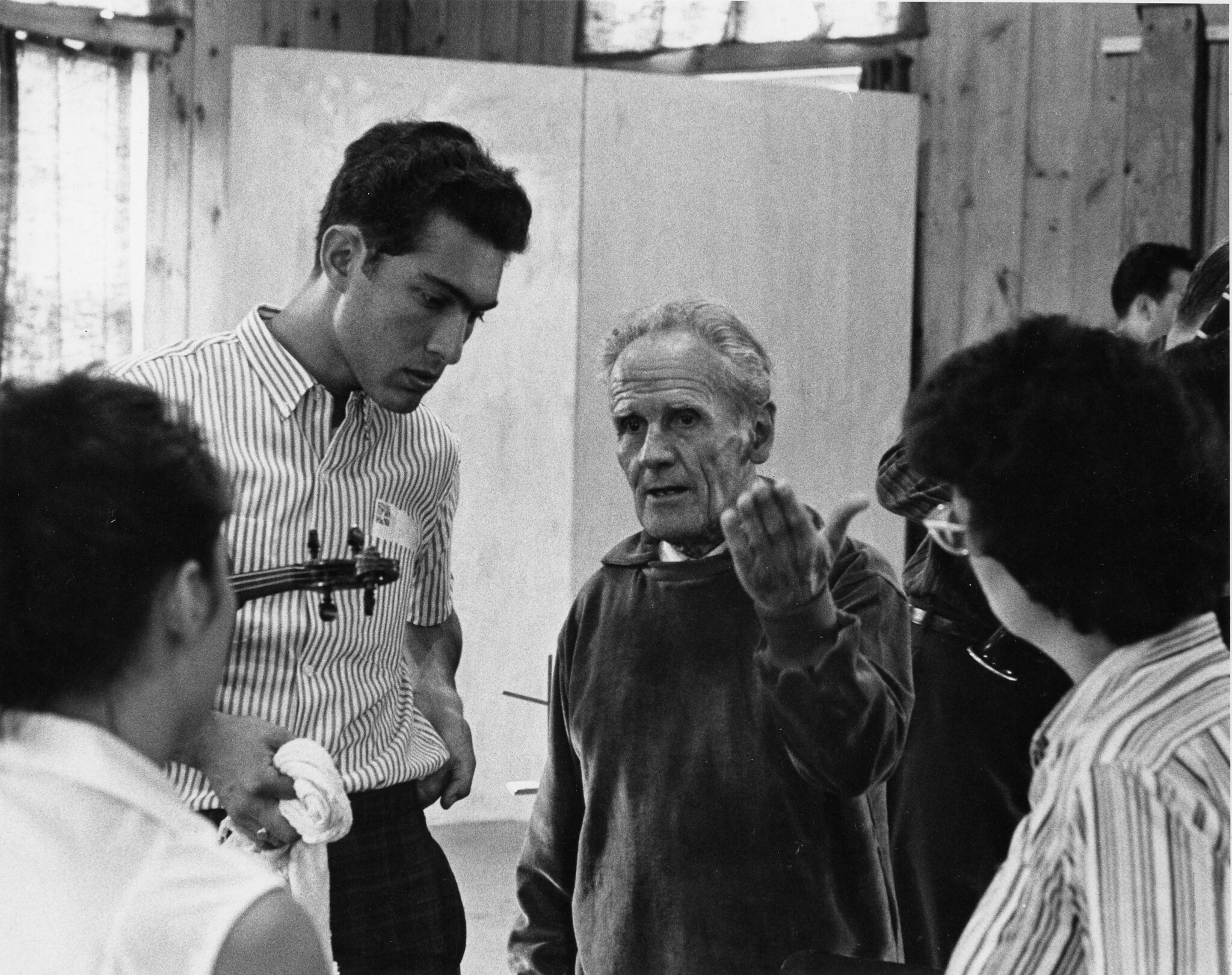
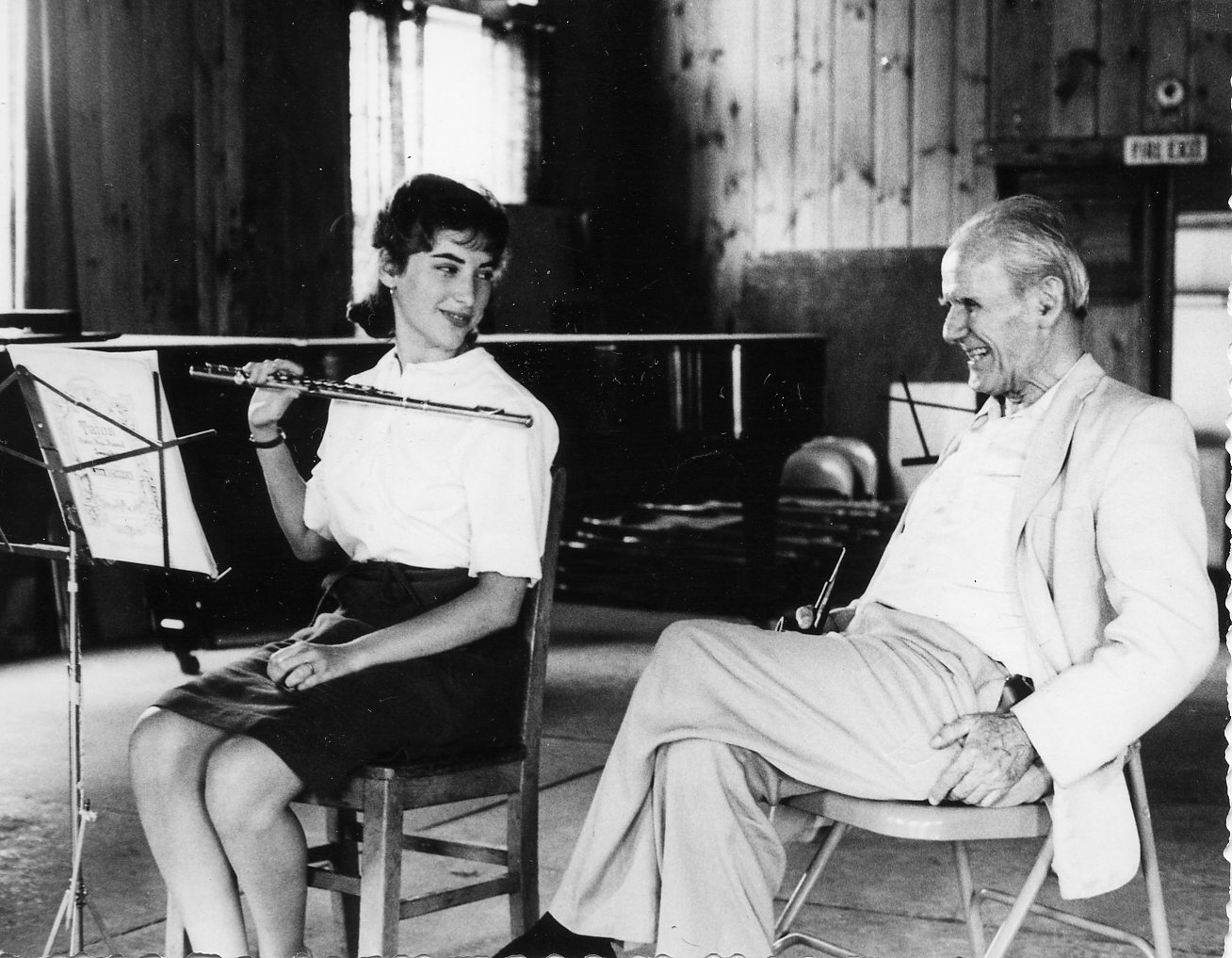
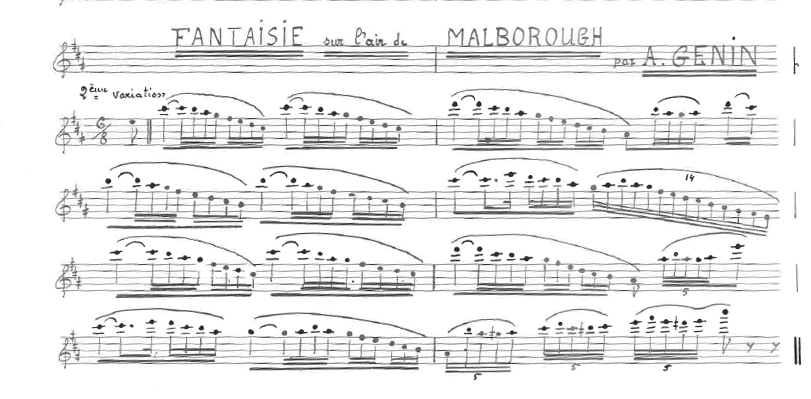
Moyse’s intense but sensitive teaching style draws dozens of wind players to Marlboro Music in its first decade. Former students fondly remember his incredible demonstrative range. He is sometimes quiet and still with nothing but his moving finger as a guide; he sometimes interjects loudly to motivate a complacent player; and he sometimes invokes rich metaphor filled with wonder and vivid imagery to inspire a genuine performance. With the administrative support of Marlboro Artistic Administrator Tony Checchia and Patricia Nott, both former woodwind disciples, Moyse begins to offer wind seminars during the year, enriching the program a year after its first season with the publication of his hallmark exercise book, Tone Development through Interpretation. A classic, the book features opera arias and interludes from Moyse’s own days immersed in opera.

1966

Wind Seminars

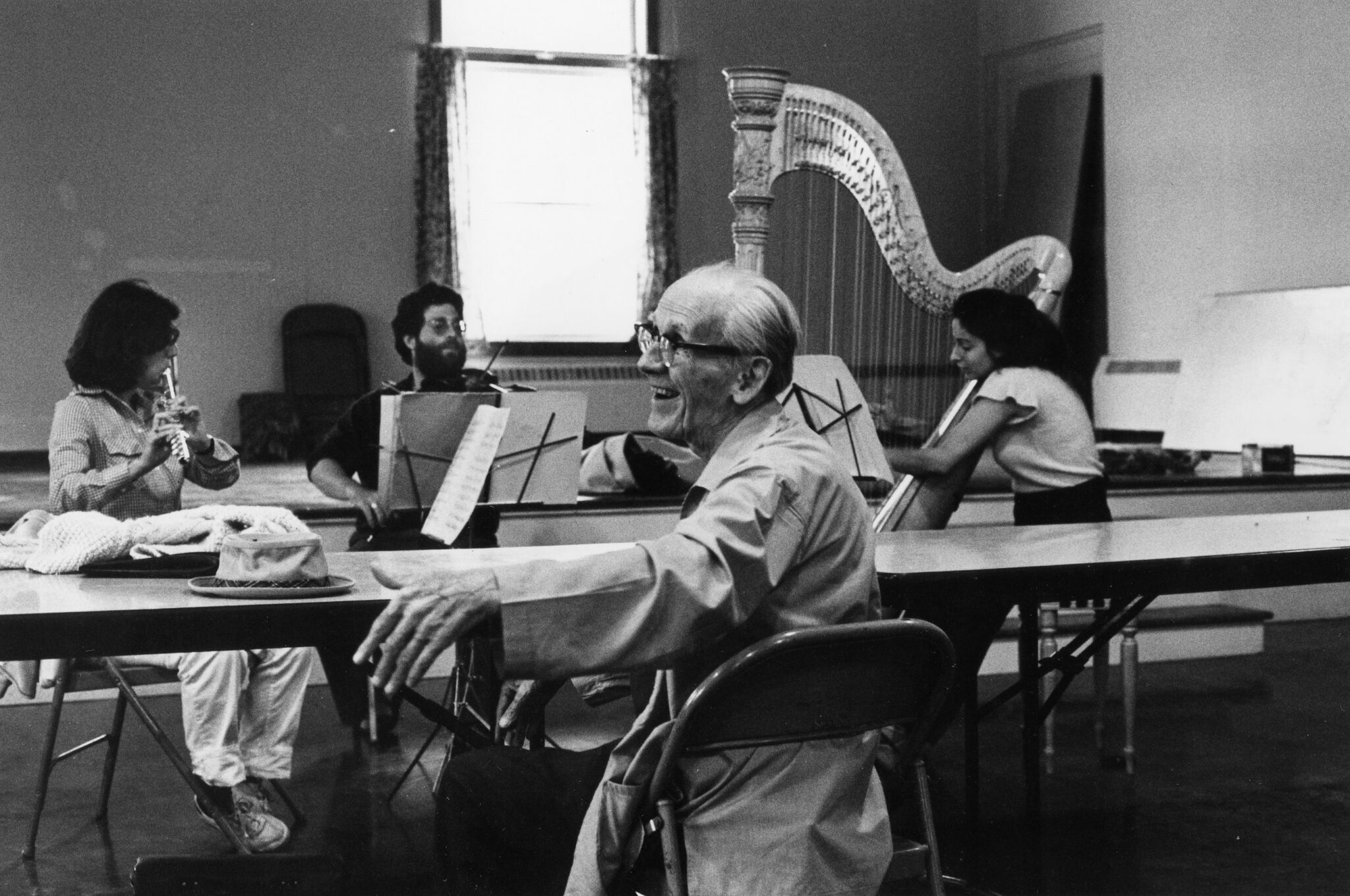
Though Moyse had participated in Marlboro Music as a director every summer for its first 15 years, he resigns from participation as his health worsens. A gall bladder operation begins a series of procedures in the ‘60s, and he saves his strength for the wind seminars, whose increasing success necessitates an expansion from their humble beginnings in the kitchen of bassoonist Roland Small. At the height of their popularity, three flute seminars and four wind seminars are concurrently scheduled so that participants, some of whom even travel from abroad, can learn from one another as well as from him.

1970

70s

The town square in St. Amour is renamed in Moyse’s honor at the beginning of this decade, keeping his memory alive in his native France, as he also deepens his connections overseas in Japan. His wife Celine sadly passes away in 1972, and Louis and Blanche divorce soon after. However, Blanche stays with Marcel, and he returns to Marlboro Music in 1974, almost a decade after departing. He continues to travel, to Philadelphia, New York, and even to Paris, where he is invited back to the Conservatoire in 1977 to lead a week of master classes.

1984

Death and Legacy

Moyse passes away on All Saint’s Day, practically accompanied to the end by his signature pipe and glass of Pernod. He travels into his 90s, and the seminars continue through the year of his death. His life spans the contents of 37 publications, eight decades of musicianship, four continents, and countless musicians who consider him a guiding force in their interpretation to this day.

1994

Biography

“Marcel Moyse: Voice of the Flute” by Ann McCutchan was a great resource for this project. With sensitive story telling, the biography paints a vivid picture of Moyse as a musician and as a husband, father, and intrepid immigrant.

Recordings

Enjoy these exclusive recordings of Marcel Moyse leading ensembles at Marlboro. Listen to the pieces uninterruptedly below or click the links for additional performance information and recordings that are separated by movement.

Audio Recordings from Marlboro

Gallery

Click any of the pictures below to view an enlarged version complete with additional quotes in the captions.