Mission & History
A Legacy of Spirit and Service to Music
“Marlboro is a place where we try to understand the music—not to show how well we play, but to reveal what the composer intended.” — Rudolf Serkin
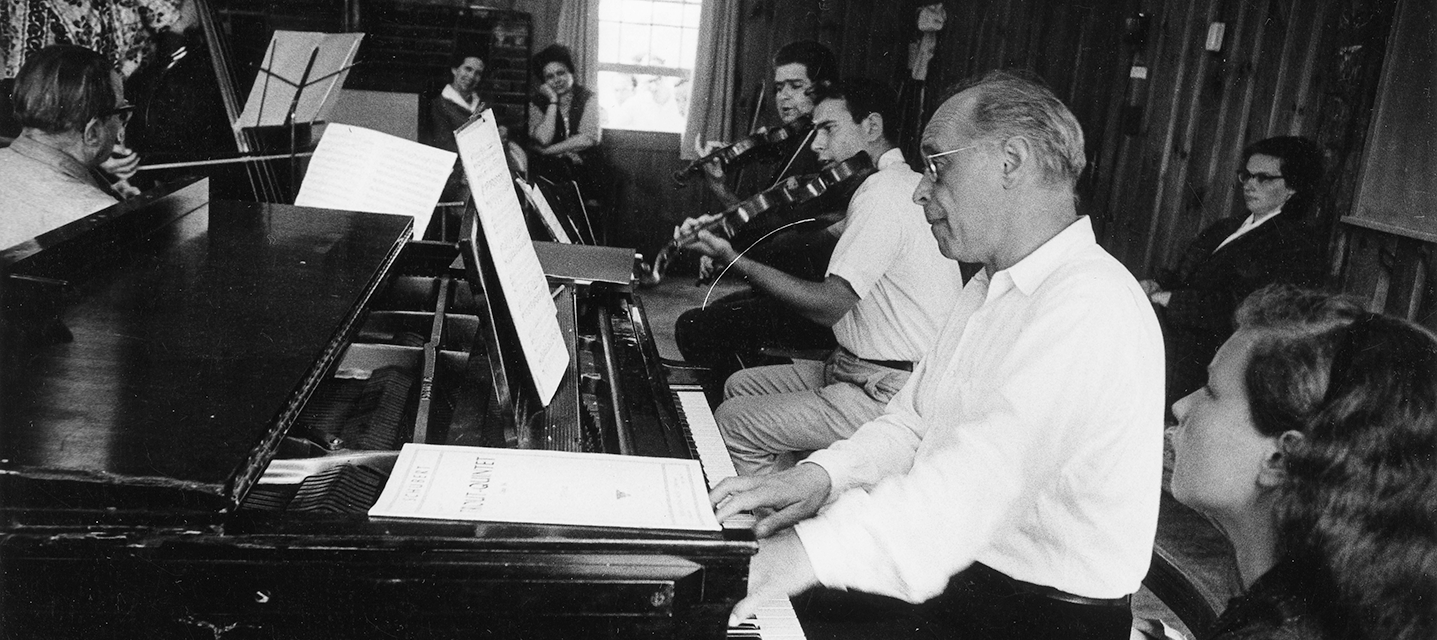
For 75 years, Marlboro Music has been a place like no other—an idealistic experiment where extraordinary musicians gather to explore music in depth, across generations, in a spirit of discovery and collaboration.
Founded in 1951 in the aftermath of World War II, Marlboro was built on a radical belief: that listening, trust, and artistic integrity could help heal a fractured world. Rejecting competition and display, it would offer something increasingly rare—time. Time to rehearse deeply. Time to question assumptions. Time to listen—to the music and to one another.
More than a school or festival, Marlboro is a living community and a set of values, renewed each summer in pursuit not of self-expression, but of revelation. From the hills of southern Vermont, it has shaped generations of artists who now serve as principal players, soloists, chamber musicians, educators, and artistic leaders, carrying its values into concert halls, classrooms, and communities worldwide.
1951: From Exile to Sanctuary
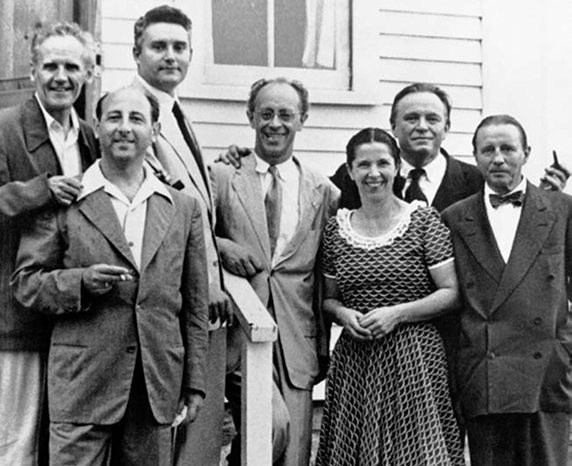
The story of Marlboro begins with a search for refuge. In the late 1930s, a group of illustrious European musicians—Rudolf Serkin, Adolf and Hermann Busch, and Marcel, Blanche, and Louis Moyse—escaped the horrors and life-changing disruptions of fascism and war. After being uprooted from their homelands, they found new lives in America and were drawn to the rolling hills of southern Vermont, a landscape that reminded them of the Swiss countryside and offered a haven for artistic renewal.
In creating Marlboro, our founders sought to combine the best qualities of European artistry with the democratic, collaborative spirit of their new home. They wanted to give back to the country that had welcomed them, and to help shape the future of their art form. Their goal was not fame or financial gain, but service to music.
A Legacy of Leadership
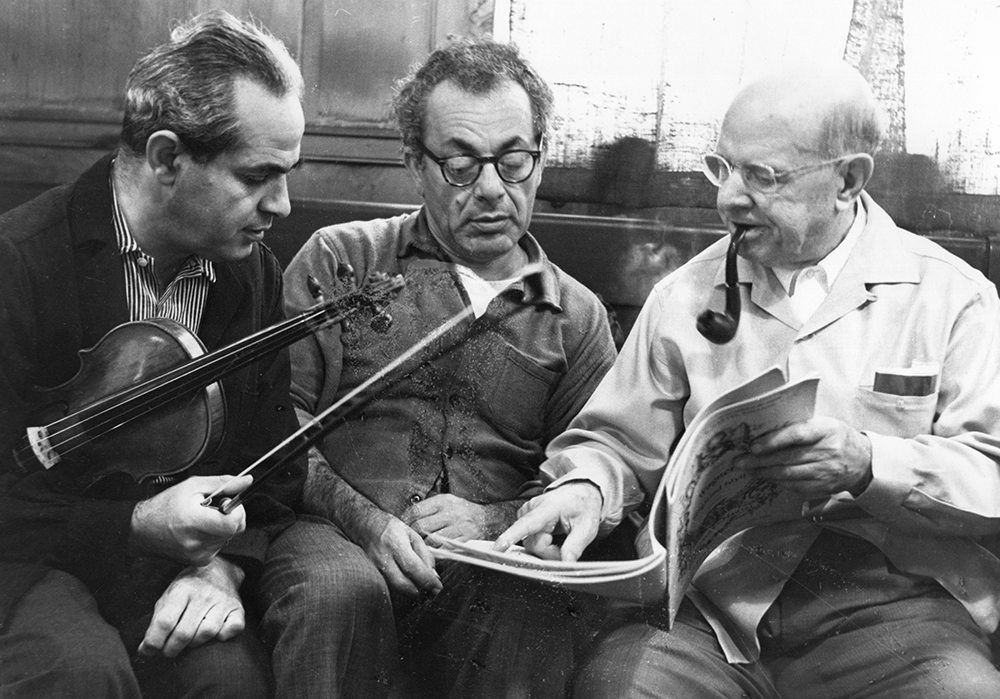
What the Serkin, Busch, and Moyse families started on a small Vermont hilltop was a bold, idealistic experiment that soon evolved into a cornerstone of the musical world. Over the ensuing decades, Marlboro became a vital gathering place and musical oasis for many renowned artists, including cellist and conductor Pablo Casals; pianists Mieczysław Horszowski and Eugene Istomin; violinists Pina Carmirelli, Isidore Cohen, Felix Galimir, and Sándor Végh; cellists Madeline Foley and David Soyer; clarinetist Harold Wright; and soprano Benita Valente.
As the community grew, so did its impact. A pivotal moment occurred in 1964 when four young Marlboro artists decided to form the Guarneri String Quartet. Their success demonstrated that chamber music was a viable and vital career path, inspiring generations of ensembles to follow.
The Impact of a Dream
With over 2,000 alumni, the “Marlboro spirit”—a blend of musical integrity, collaborative humility, and service to art—continues to ripple outward, shaping the way chamber music is played, taught, and loved worldwide. Under the artistic leadership of Mitsuko Uchida and Jonathan Biss, Marlboro continues to thrive, remaining true to its core ideals while incorporating fresh ideas and inspiration.