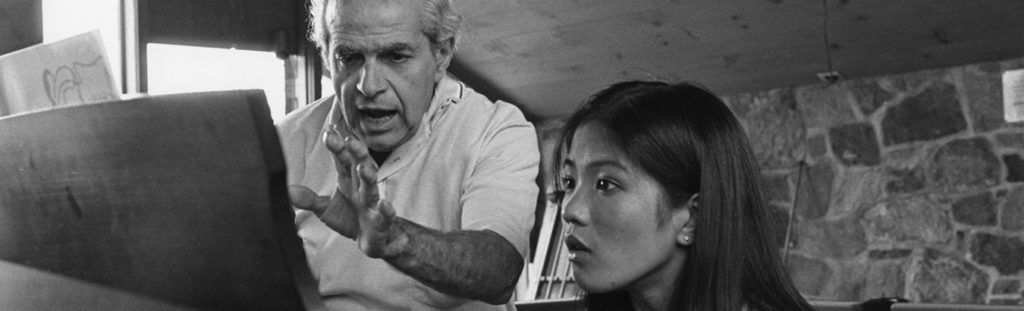
From the Archives:
Felix Galimir

  • Introduction
  • Timeline
  • Recordings
  • Gallery
  • Galimir Quartet

Introduction

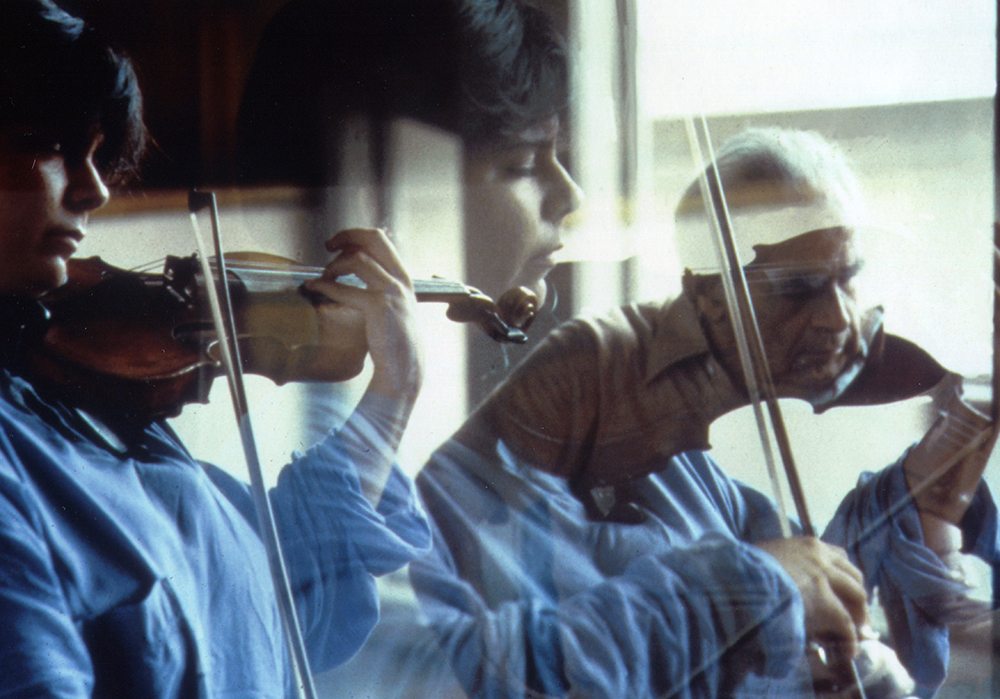
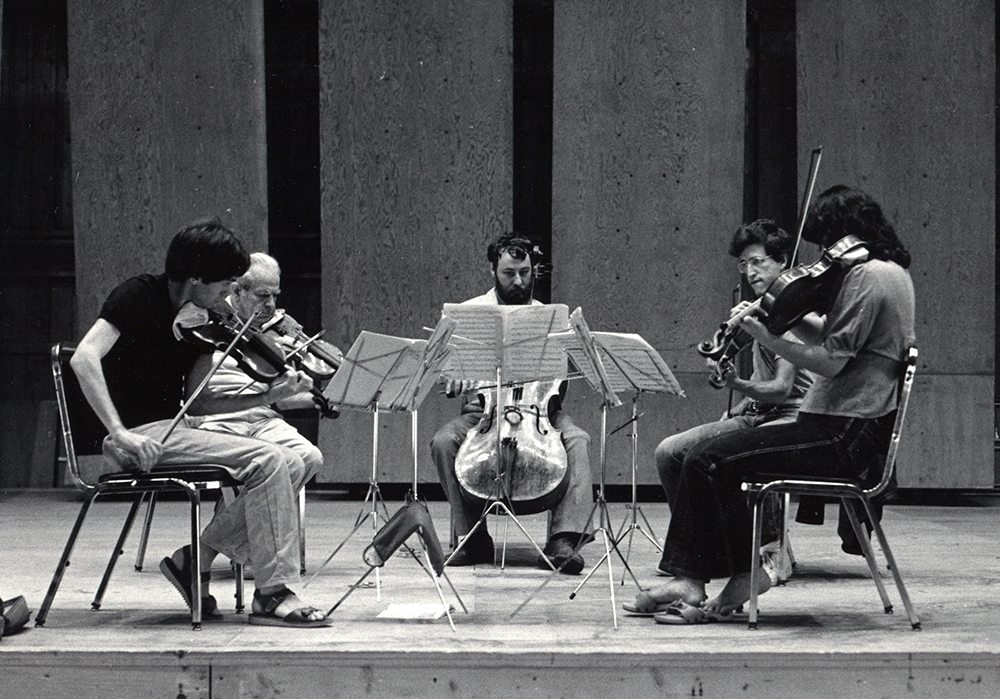
One of Marlboro’s most important influences was the revered violinist Felix Galimir, who for 45 years, from 1954 through 1999, shared a deep musicality and infectious personality with generations of eager young participants. In so many ways, he opened new worlds, not only in terms of the repertoire for which he became known but also in the thoroughness and care with which he explored each piece.

An adherent of the Second Viennese School closely associated with Alban Berg, he led the Galimir String Quartet with his three sisters while still a teenager. In 1936, the Quartet won the Grand Prix du Disque for their recordings of the Berg Lyric Suite as well as for one of the first recordings of the Ravel Quartet, with both composers coaching and attending the recording sessions. It was this diverse background and knowledge that Galimir brought to Marlboro, having fled Vienna for Palestine and coming to the U.S. in 1938.

Galimir’s knowledge of the string repertoire and his experience as a violin and chamber music coach at Juilliard, Curtis, and Mannes made him an invaluable colleague of Rudolf Serkin. In annual auditions, in selecting works and personnel for pieces suggested by the participating artists, and in proposing senior artists to be invited to join the Marlboro family, Galimir played a key role in the development of three generations of musical leaders who were deeply influenced by their summers in Vermont.

He introduced string players, many of whom went on to form prominent string quartets, to the worlds of Schoenberg, Berg, and Webern while attempting to convey these composers’ deeply expressive qualities, which he felt were not sufficiently recognized. For those fortunate to have participated in or heard his conception of Schoenberg’s Verklaerte Nacht, it remains a most treasured performance, and his Pierrot Lunaire was a revelation for the artists who had the life-changing experience of playing it with him.

Another coveted Marlboro experience for any young string player was to play one of the Bartók string quartets with Galimir in the second violin chair. But, then, all Galimir performances had a rare and distinctive quality—Haydn, Mozart, Dvořák—offered a special musicality and a sense that much more had been discovered and mastered than just the notes in the score.

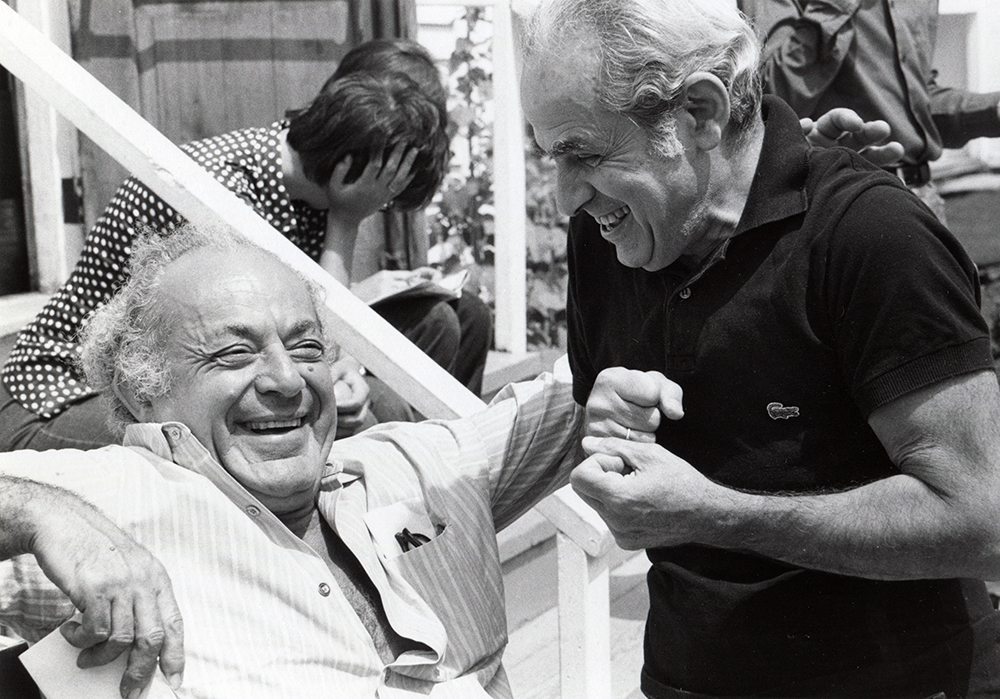
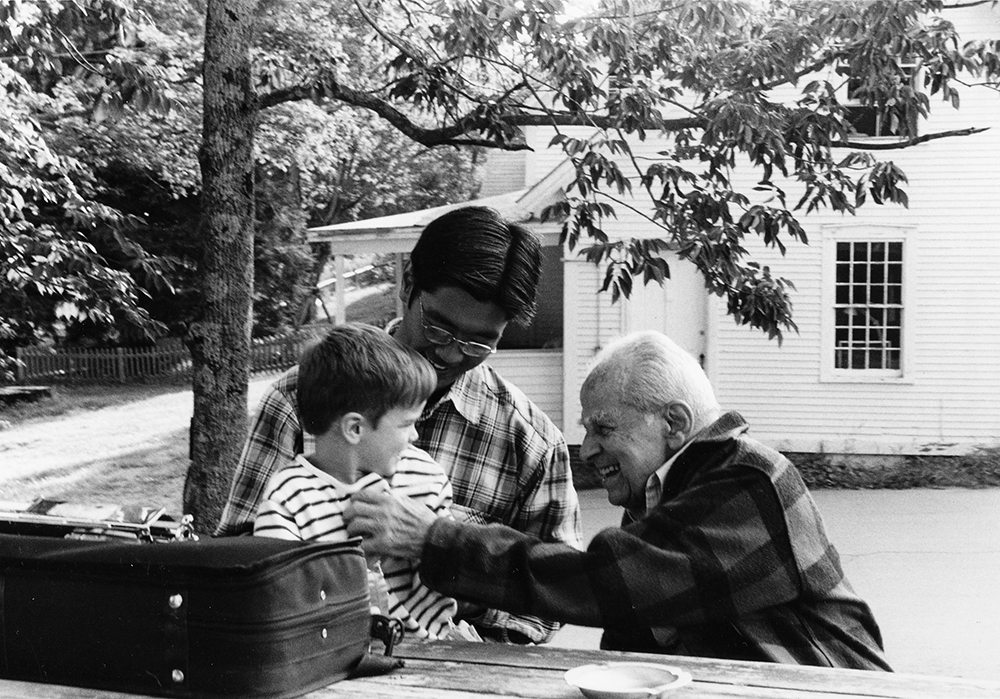
A dynamic personality, Galimir was both demanding and inspiring. He had a wry sense of humor and a twinkle in his eye, but he also had a most expressive way of displaying his unhappiness when his colleagues were not properly prepared or focused. He was definitely of the opinion that the composer deserved the utmost respect. He cared about young musicians on a human as well as a professional basis with the same fervor that he had for music, and for so many in the Marlboro community, he was a beloved father and uncle figure as well as an inspirational mentor and friend.

As the New York Times wrote upon his death:

It would be difficult to overstate Mr. Galimir’s centrality in American chamber music life but perhaps the best measure of his influence is that at virtually any chamber music concert today, at least one musician on the stage is likely to have studied with, been coached by or performed in an ensemble with him.”

His contribution to Marlboro was immeasurable.

Timeline

1910

Birth

Felix Galimir is born in Vienna to a Jewish family, with an Austrian mother and a Romanian father. The family’s mixed heritage leads to alienation during WWI when Romania is allied against Austria, and the fact that they speak Ladino, a Judeo-Spanish language, further distances them from German-speaking Austrians. As he starts school, Galimir has to “learn German very quickly” to survive. After the war, however, things improve as Galimir’s mother belongs to a prominent Sephardic family, and his father is a businessman whose work at an international textile firm provides the family with stability and support.

1922

Early Life

Though Galimir is not born into a musical family, he is born into a musical city. Vienna was the cultural capital of Europe throughout the turn of the 20th century as well as the Imperial seat of the Austro-Hungarian Empire. Galimir and his three sisters, the older Marguerite and Renée and the younger Adrienne, grow up immersed in a rich milieu led by artistic, literary, and scientific luminaries who honored the city’s cultural lineage even as they conceived of new ways to see the world. As the Galimir siblings mature, they begin to study music themselves and frequently attend the Opera and the Musikverein, where they will eventually give their own performances. Galimir enters the Vienna Conservatory at the age of 12 to study the violin with Adolf Bak and Simon Pullman, who teach him that one has to “play so that a blind man can see the score.”

1927

Galimir Quartet

Galimir’s fifth year at the Conservatory also marks the centennial of Beethoven’s death, and every school is eager to present its students in concert to commemorate the occasion. There is an apocryphal story that has circulated about how Felix got his sisters to quickly learn to play violin, viola, and cello so that they could be a quartet. But in fact, not only is Felix Galimir enrolled in the Conservatory, but all three of his sisters are enrolled and study strings in addition to their ability to play the piano. The siblings decide to form a quartet in order to perform at a centennial concert with Felix Galimir playing first violin; his youngest sister Adrienne, only 15, playing second violin; Renée—who may have actually been studying the violin—taking up the viola; and Marguerite completing the ensemble on the cello. Their performance of Beethoven’s Op. 18, No. 4 proves so successful that they continue to play together as the Galimir Quartet and are coached by Simon Pullman.

1928

Advanced Studies and Early Tours

After graduating from the Conservatory, Galimir continues his studies in Berlin with Carl Flesch while maintaining contact with his former teacher, Simon Pullman, in Vienna. By 1930, the Galimir Quartet, studying both classical and contemporary works, is playing so well that they have their first performance alongside Pullman’s students. The next year, they give their first performance of Ravel’s string quartet, a piece with which they will have a particularly profound association. The Quartet is recognized for their fiery performances, and the young group begins to concertize throughout Europe and the Middle East. They are often accompanied by their proud father, who supports their music-making and carries reviews of their concerts alongside their photos in his wallet for the rest of his life.

1936

Grand Prize

Galimir works closely with the founders of Serialism and other members of Schoenberg’s Society for Contemporary Music. He learns directly from Schoenberg himself, as well as Webern, Berg, Krenek, and Zemlinsky, among others. The Galimir Quartet is coached through recording sessions of Berg’s Lyric Suite—a work initially considered to be unplayable—and Ravel’s String Quartet by the composers themselves. The results of their close collaborations win the Quartet two Grand Prix du Disques awards. But it is the very success of their Lyric Suite performance that ultimately brings about the end of the ensemble. The violinist Louis Krasner, who would eventually premiere the Schoenberg Violin Concerto, is touring Europe and wants to hear Berg’s string writing. He hears the Galimirs play the Lyric Suite and persuades Berg to write a Violin Concerto, which he also premieres. But Berg isn’t the only person with whom he develops a further relationship. Adrienne Galimir, though the youngest of the siblings, marries Krasner, and the quartet disbands.

1936

Palestine

Galimir accepts violinist Bronislaw Huberman’s invitation to come to Palestine along with his sister Renée. The two Galimirs become founding members of what would become the Israel Philharmonic Orchestra. Huberman arranges for the life-saving emigration of Jewish-European musicians and invites Toscanini to conduct the orchestra’s early concerts. Though Palestine offers safety from the barbarism into which Europe has descended, its own resources are limited, and even with the orchestra, Palestine’s colonial atmosphere is a far cry from the Viennese sophistication in which Galimir has matured and thrived.

1938

United States

At the same time, Adrienne is able to escape Europe by relocating to the United States with her Jewish-American husband, Louis Krasner. Krasner’s citizenship allows him to extend a welcome to Galimir, and Galimir leaves Palestine for New York. He immediately embraces the city’s still-vibrant cultural scene, playing a recital at Town Hall and re-establishing the Galimir Quartet with new members.

1939

NBC/Toscanini

In addition to maintaining a schedule of solo recitals, chamber music, and freelance work, Galimir joins the NBC Symphony within a year of immigrating and plays once again under the baton of Toscanini. Of the maestro, Galimir would later recall that “the power and integrity of his music-making were overwhelming.” After the NBC Symphony is dissolved by the network, many of its members form the cooperative Symphony of the Air with Galimir as one of its concertmasters. The Symphony gives its first public concert at the United Nation’s 9th anniversary celebration and performs under Leonard Bernstein for its first year before Leopold Stokowski becomes one of its principal conductors, leading to many recordings together.

1945

Marriage

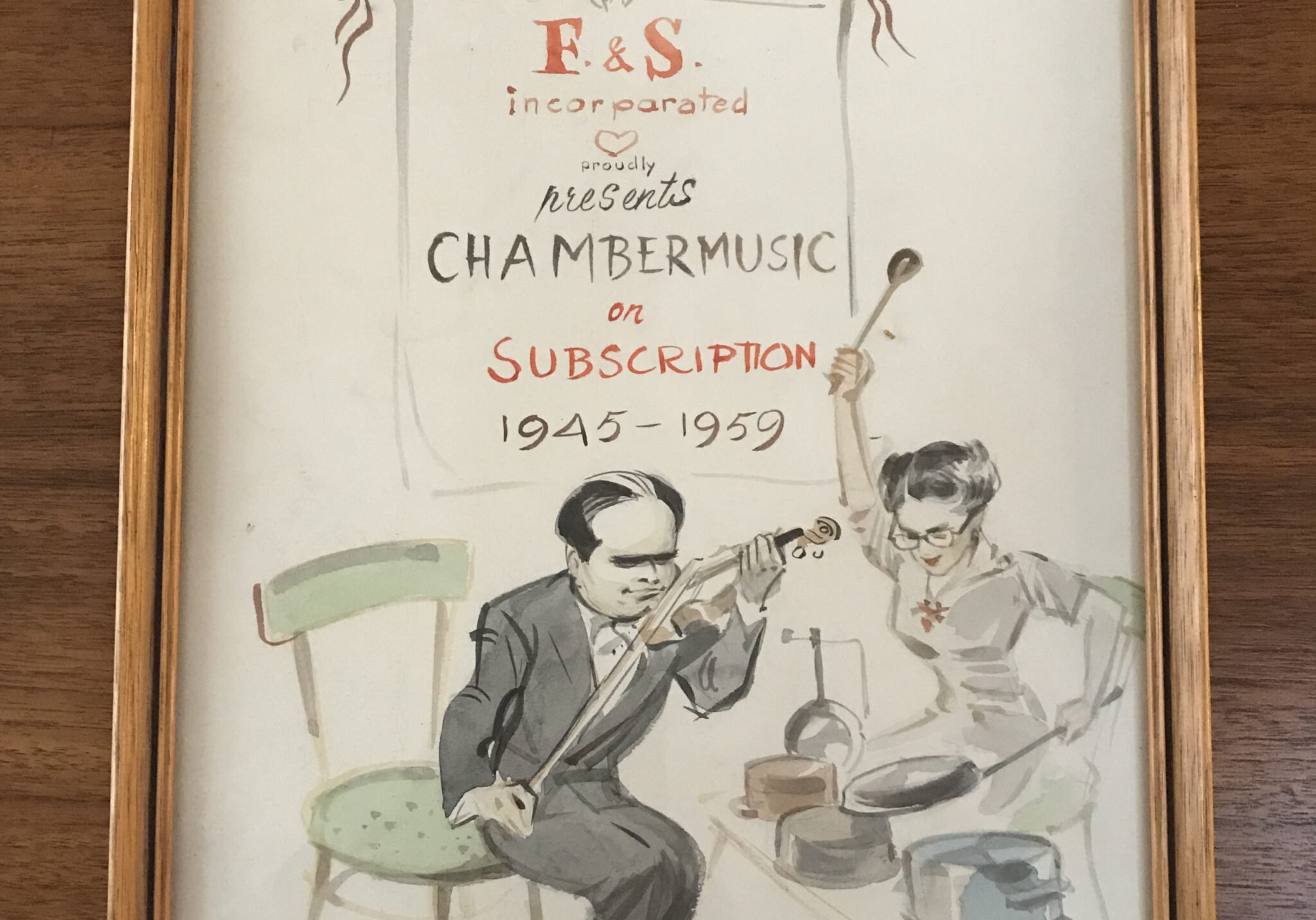
Galimir serves in the armed forces starting in 1943 and plays in the radio orchestra at the Army Air Forces Training Command’s Basic Center in Greensboro, North Carolina. He is honorably discharged in 1945 and marries Suzanne Hirsch, the woman who would be his wife for over 50 years. Though he and Suzanne are both Viennese, they meet in America. Trilingual, a marvelous cook, an expert seamstress, and a generous host, Suzanne not only supports and cares for Galimir for the next five decades but also welcomes generations of musicians who are often far from home into the Galimirs’ New York apartment as well as their country house in Vermont.

1954

Marlboro

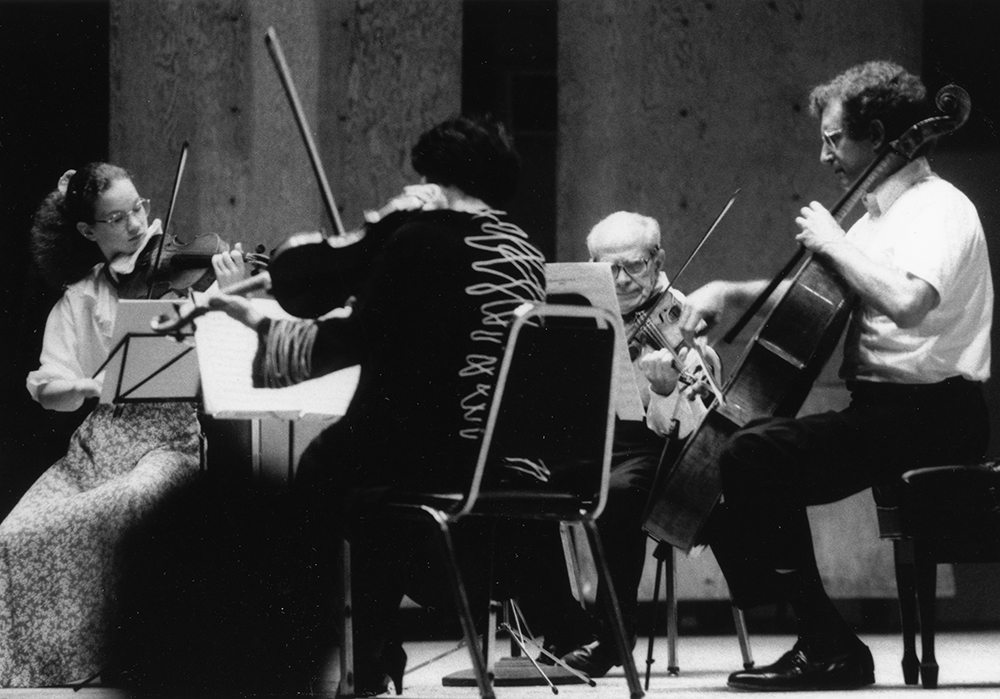
Galimir is first invited to Marlboro Music in Vermont by Hermann Busch after the death of Busch’s brother and fellow Marlboro co-founder, the renowned violinist Adolf Busch. Though he arrives during one of Marlboro’s first seasons without knowing anything about it, Galimir soon becomes involved in every musical decision of the festival. He directly advises Rudolf Serkin, particularly with regards to programming and the experience of the string players. Over the course of his next 45 years at Marlboro, Galimir plays within groups, often as the second violin, and impacts the musical education of countless musicians, serving as a direct link between the great composers of the early 20th century and the next generation that will play their works into the future.

1962

Juilliard, Curtis, Mannes

Marlboro isn’t the only place where Galimir leaves a lasting impact on decades of emerging musicians. He begins teaching at the Juilliard School in 1962; at the Curtis Institute—where he serves as head of the chamber music department and later joins the violin faculty— in 1972; and at the Mannes School of Music in 1976. Ever dedicated, he continues giving lessons until just weeks before his death.

1966

Musicians from Marlboro

Not only does Galimir lead a group through Schoenberg’s touchstone work Verklaerte Nacht for a series of Marlboro recordings for Columbia Records (SONY); he also performs the work with a group of 35 Marlboro musicians in their State Department tour of Europe and Israel in 1965. When the American Musicians from Marlboro tour program begins the next year, Galimir performs in one of the first groups. The fascinating program that he devises includes vocal duets by Dvořák and Schumann, string sextets by Byrd and Schoenberg, and a piano quartet that Mendelssohn wrote when he was 13. He is joined by 22 year-old pianist Richard Goode, violist Samuel Rhodes, who played in the Galimir Quartet before being invited to join the Juilliard Quartet, and cellist Toby Saks, who goes on to found a major chamber music festival in Seattle.

1969

Grab Bag and String Seminar

Suzanne and Felix Galimir also play an important role in the New York String Orchestra Seminar and Carnegie Hall concerts, an acclaimed project for some of the country’s most exceptional 16 to 23 year-old musicians. Many of these musicians go on to become Marlboro participants and major figures in music, so Frank Salomon, who founded the Seminar and also acts as director of Alexander Schneider’s New School Concerts, likens it to the AAA farm team of a major league baseball team. Galimir not only helps select participants of the Seminar at auditions, opening new worlds for the young Seminar participants as a chamber music coach, he and Suzanne generously host the young musicians for dinner in their home each year on Christmas Day. They even have a grab bag of mostly funny gifts for their young guests, many of whom were in New York for the very first time.

1971

Messiaen Quartet and Western Tour

Galimir takes Musicians from Marlboro on its first West Coast tour with soprano Benita Valente, pianist Richard Goode, cellist Nathaniel Rosen, and clarinetist Richard Stoltzman. In addition to the Brahms Piano Trio in C Major, some Schubert songs, and Das Hirt auf dem Felsen, the program included the Messiaen Quatuor pour la fin du temps, not yet as celebrated as it is destined to become. Richard Goode recalls that years later, Galimir admitted that he was not convinced that the quartet was a great work. Goode asked that, if that was the case, how was he able to make it sound like a great work? Galimir, a bit surprised, answered that if you perform a work, it is your responsibility to try to make it as musical and impressive as possible. He does as much at Marlboro for five decades.

1982

Philomusica

The hornist A. Robert Johnson, at Marlboro in 1963 and ’64, is one of the many young participants who meet and rehearse with Galimir, going on to perform the Beethoven Sextet in E-flat Major alongside him. Less than a decade later, Johnson starts the New York Philomusica with Galimir as one of the founding violinists. Galimir performs with the Philomusica for over a decade and makes the first recording of all 17 Mozart Divertimentos over a period of four years with the ensemble. Felix is honored as artist laureate of the Philomusica in 1982, and Johnson remarks that “Felix Galimir represents the most sensitive, intelligent, and probing mind of his musical experience; no one in the field approached the degree of insight into as wide a range of repertory as he.”

1990

Chamber Music America

Chamber Music America names Galimir as the recipient of its highest honor, the Richard J. Bogomolny National Service Award. The award is presented annually to an individual who has made a significant and lasting contribution to the chamber music field. On the 10th anniversary of the award’s creation, Galimir joins Rudolf Serkin and Alexander and Mischa Schneider as a recipient.

1993

Galimir Quartet

The Galimir Quartet, first founded between siblings in 1920s Vienna, becomes a hearty transplant in the United States that includes 35 members over the course of its 65-year life span, many of whom are part of the Marlboro family as well. For a full list of members, take a look at the tab to the right of the timeline, recordings, and photo gallery.

1999

Death and Legacy

Shortly before his death, Galimir saw a production of Schoenberg’s Moses und Aron at the Met. He recounted how the matinée audience rushed towards the stage in applause and how he felt touched by the affirmative response to the 12-tone opera. The success of such a work at an iconic institution like the Met seemed to validate his life and all that he did as an advocate of the Second Viennese School. The impact that Galimir had on music was the result of the lifetime of hard work and attention that he put into every bar of music in a score, every line and texture in a piece of music, and every student from whom he demanded precision, dedication, and expressivity. As Samuel Rhodes recalls, “It was from him that I first learned that fine chamber music playing does not demand the subordination of one’s personality, but rather the assertion of it in a very personal way at the appropriate times in the music in order to make the eternal dialogue a living, breathing entity.” Felix Galimir both lived and taught this advice, and his keen insights remain with the generations of musicians who rehearsed and performed alongside him.

2001

Works in Memoriam

Galimir’s memory has inspired several new compositions, a particularly fitting way to celebrate his commitment to new music. Notably, Leon Kirchner, who guided Marlboro’s first composer-in-residence program, was commissioned by Galimir’s family to compose a duo for violin and piano. Ida Levin and Jeremy Denk premiered the duo on the Marlboro stage in 2001. Fellow Pulitzer laureate Gunther Schuller was in residence at Marlboro in 2003 when his fourth string quartet was performed by Ayano Ninomiya, Erin Keefe, Samuel Rhodes, and Sarah Carter. It was commissioned by Galimir’s friend and neighbor Brian Sands on behalf of the Philadelphia Chamber Music Society, where Galimir had performed both with his quartet and with Musicians from Marlboro. The connections between musicians, composers, and audiences that Galimir helped establish and strengthen during his life remained and continued in his memory after his passing.

2018

Acknowledgements and Sources

Though there is not yet a book that chronicles Felix Galimir’s eventful and influential life, we are fortunate to be able to appeal to the many articles that centered around and then memorialized his performance and pedagogy. However, the most helpful and generous source throughout this project has been Richard Hurtig, the son of Renée Galimir Hurtig and the nephew of Felix Galimir. His lovingly-maintained family archives proved an immense help and a wellspring of continuous interest.

Recordings

These recordings present a rich slice of Marlboro history, and the range of featured participants captures a wonderful cross-section of Marlboro generations among Felix Galimir’s fellow players. Having lived in the time and milieu of these works, Galimir brings stylistic authority and a great knowledge of the pieces in these fine performances. While these recordings are exclusive releases of historic Marlboro performances, they are also representative of the depth and breadth of Galimir’s artistry and what he gave to so many musicians and audience members.

Audio Recordings from Marlboro

Gallery

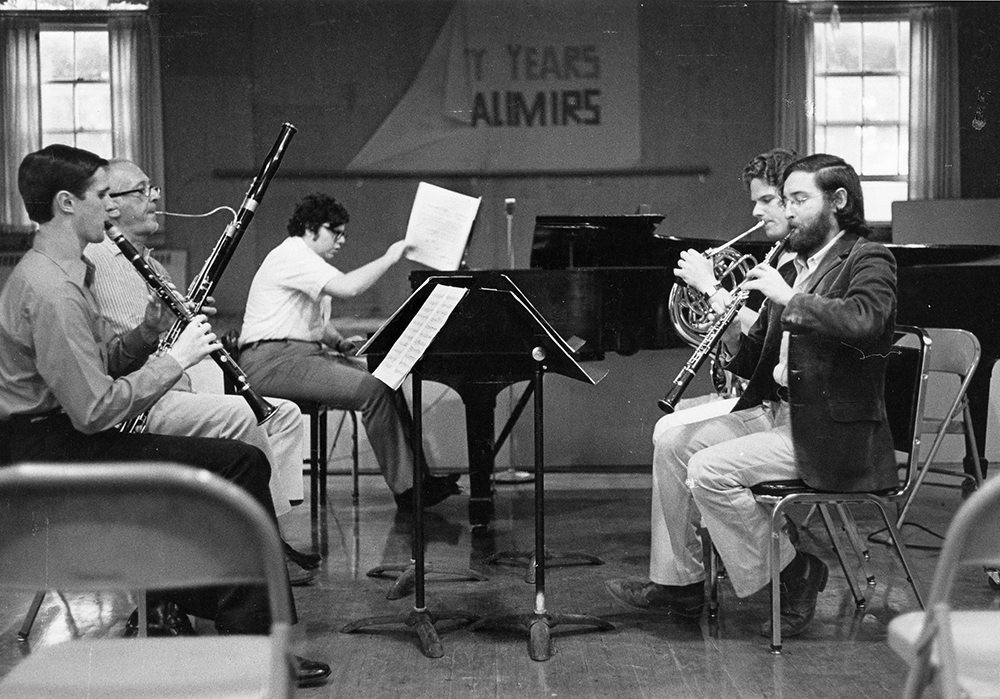
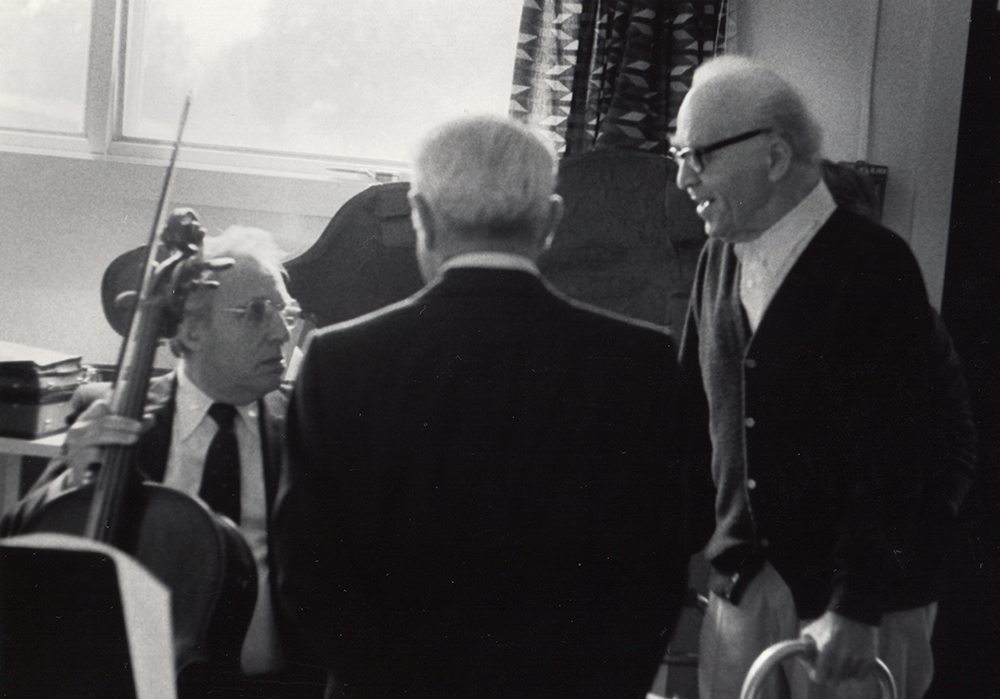
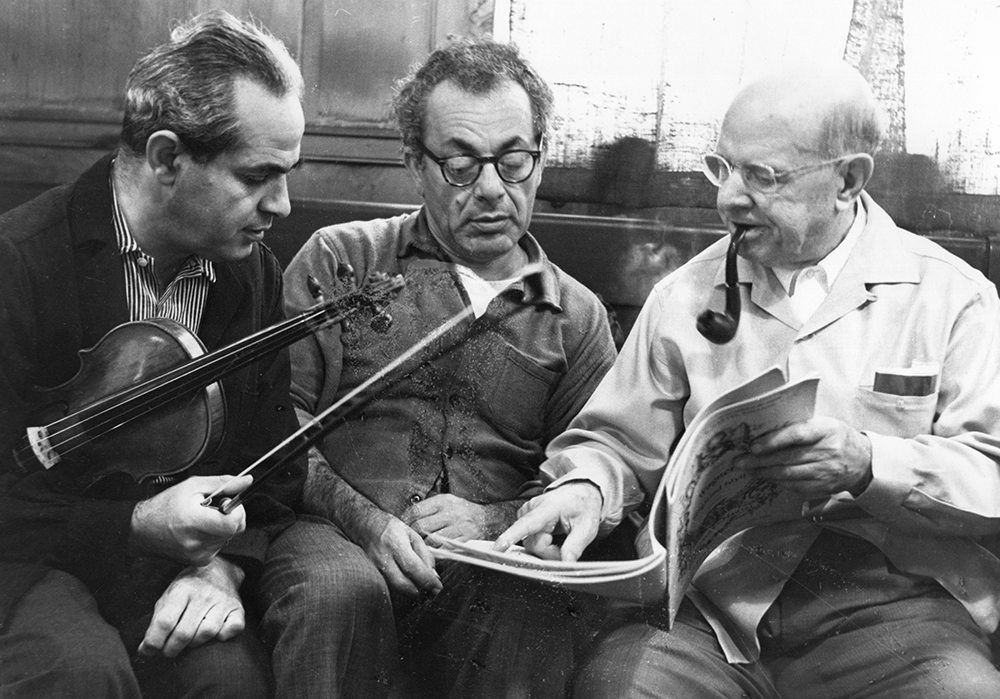
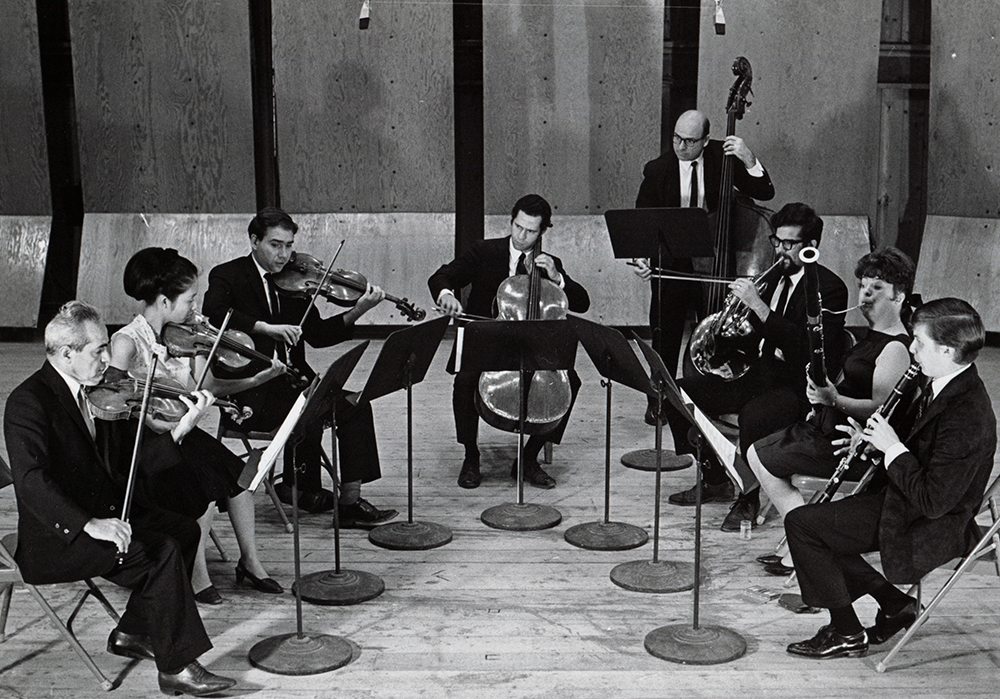
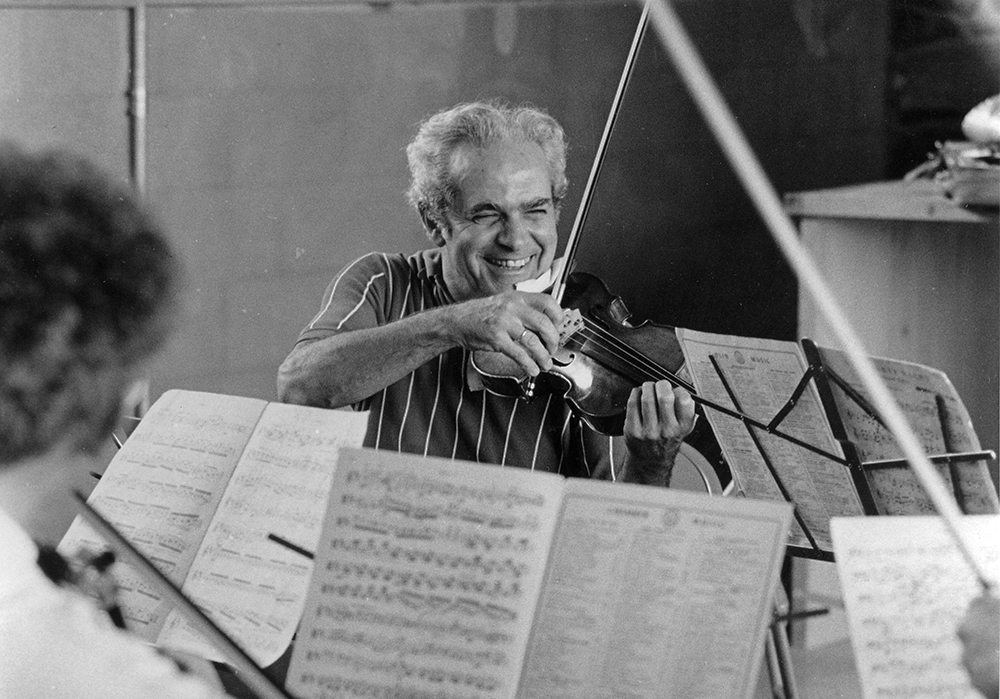
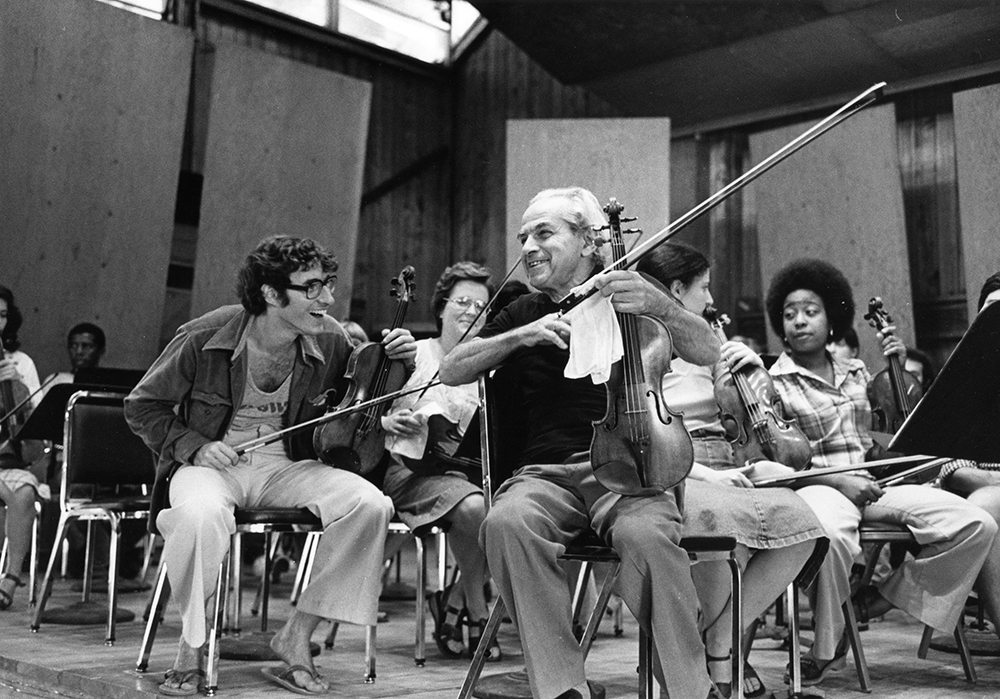
Click any of the pictures below to view an enlarged version complete with additional quotes in the captions.
Galimir Quartet

YearViolin IViolin IIViolaCello
1927-36Felix Galimir*Adrienne GalimirRenée GalimirMarguerite Galimir
1939Felix Galimir*Robert ConradLotte Hammerschlag*Fritz Magg
1939Felix Galimir*Robert ConradLotte Hammerschlag*Ernest Silberstein
1940Felix Galimir*Robert ConradLotte Hammerschlag*Fritz Magg
1940Felix Galimir*Robert ConradLotte Hammerschlag*Edgar Lustgarten
1940Felix Galimir*Robert ConradLotte Hammerschlag*Ernest Silberstein
1941Felix Galimir*Robert ConradLotte Hammerschlag*Ernest Silberstein
1941Felix Galimir*Robert ConradLotte Hammerschlag*Arthur Winograd
1941Felix Galimir*Adrienne Galimir KrasnerLotte Hammerschlag*Arthur Winograd
1942Felix Galimir*Adrienne Galimir KrasnerLotte Hammerschlag*Arthur Winograd
1943Felix Galimir*Adrienne Galimir KrasnerLotte Hammerschlag*Arthur Winograd
1947Felix Galimir*Max WeiserWalter Trampler*Mosa Havivi
1948Felix Galimir*Broadus ErleWalter Trampler*Mosa Havivi
1948Felix Galimir*Broadus ErleWalter Trampler*Eva Heinitz
1950Felix Galimir*Henry SeiglKaren Tuttle*Seymour Barab
1954Felix Galimir*Helen KwalwasserRenée Galimir HurtigMaurice Bialkin
1955Felix Galimir*Sonya Monosoff*Renée Galimir HurtigPaul Clement
1956Felix Galimir*Sonya Monosoff*Renée Galimir HurtigPaul Clement
1958Felix Galimir*Marvin MorgensternRenée Galimir HurtigCharles McCracken*
1959Felix Galimir*Marvin MorgensternRenée Galimir HurtigCharles McCracken*
1960Felix Galimir*Marvin MorgensternRenée Galimir HurtigCharles McCracken*
1961Felix Galimir*Marvin MorgensternSamuel Rhodes*Charles McCracken*
1962Felix Galimir*Marvin MorgensternSamuel Rhodes*Charles McCracken*
1963Felix Galimir*Marvin MorgensternSamuel Rhodes*Charles McCracken*
1964Felix Galimir*Marvin MorgensternSamuel Rhodes*Charles McCracken*
1964Felix Galimir*Marvin MorgensternSamuel Rhodes*Pierre Basseaux*
1965Felix Galimir*Marvin MorgensternSamuel Rhodes*Pierre Basseaux*
1965Felix Galimir*Gino Sambuco*Samuel Rhodes*Pierre Basseaux*
1966Felix Galimir*Gino Sambuco*Sanuel Rhodes*Pierre Basseaux*
1967Felix Galimir*Jon Toth*Samuel Rhodes*Fortunato Arico*
1968Felix Galimir*Hiroko Yajima*Samuel Rhodes*Fortunato Arico*
1969Felix Galimir*Hiroko Yajima*Samuel Rhodes*Fortunato Arico*
1971Felix Galimir*Hiroko Yajima*John Graham*Fred Sherry
1973Felix Galimir*Hiroko Yajima*John Graham*Fred Sherry
1974Felix Galimir*Hiroko Yajima*John Graham*Fred Sherry
1976Felix Galimir*Hiroko Yajima*John Graham*Fred Sherry
1978Felix Galimir*Hiroko Yajima*John Graham*Marcy Rosen*
1979Felix Galimir*Hiroko Yajima*John Graham*Timothy Eddy*
1981Felix Galimir*Hiroko Yajima*John Graham*Timothy Eddy*
1982Felix Galimir*Hiroko Yajima*John Graham*Timothy Eddy*
1983Felix Galimir*Hiroko Yajima*John Graham*Timothy Eddy*
1984Felix Galimir*Hiroko Yajima*John Graham*Timothy Eddy*
1985Felix Galimir*Hiroko Yajima*John Graham*Timothy Eddy*
1986Felix Galimir*Hiroko Yajima*John Graham*Timothy Eddy*
1987Felix Galimir*Hiroko Yajima*Steven Tenenbom*Timothy Eddy*
1988Felix Galimir*Hiroko Yajima*Steven Tenenbom*Timothy Eddy*
1989Felix Galimir*Hiroko Yajima*Steven Tenenbom*Timothy Eddy*
1990Felix Galimir*Hiroko Yajima*Steven Tenenbom*Timothy Eddy*
1991Felix Galimir*Hiroko Yajima*Steven Tenenbom*Timothy Eddy*
1992Felix Galimir*Hiroko Yajima*Steven Tenenbom*Timothy Eddy*
1993Felix Galimir*Hiroko Yajima*Steven Tenenbom*Timothy Eddy*
 *Marlboro Participant