From the Archives:
Leon Kirchner

  • Introduction
  • Timeline
  • Recordings
  • Gallery

Introduction

Rudolf Serkin was a man of few words, but his sense of what might help some of the world’s most exceptional young instrumentalists to become thoughtful and transformative musicians at Marlboro was uncanny. He gathered together a group of distinguished colleagues whose knowledge and experience were a marvelous resource for generations of young musicians.

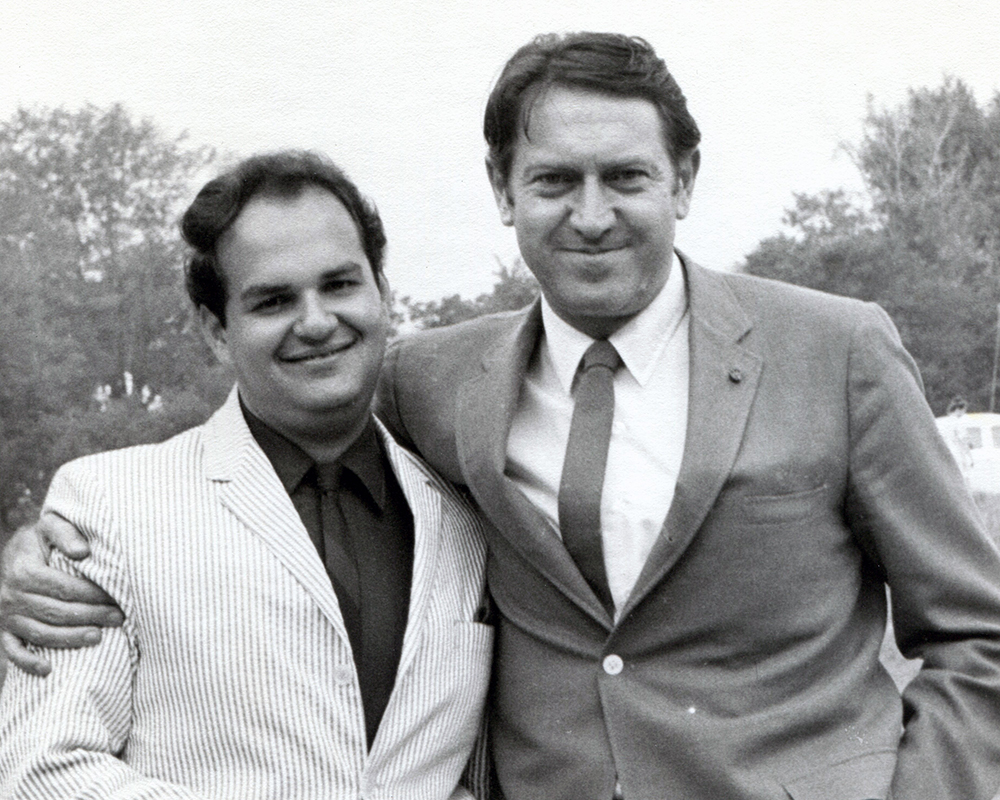
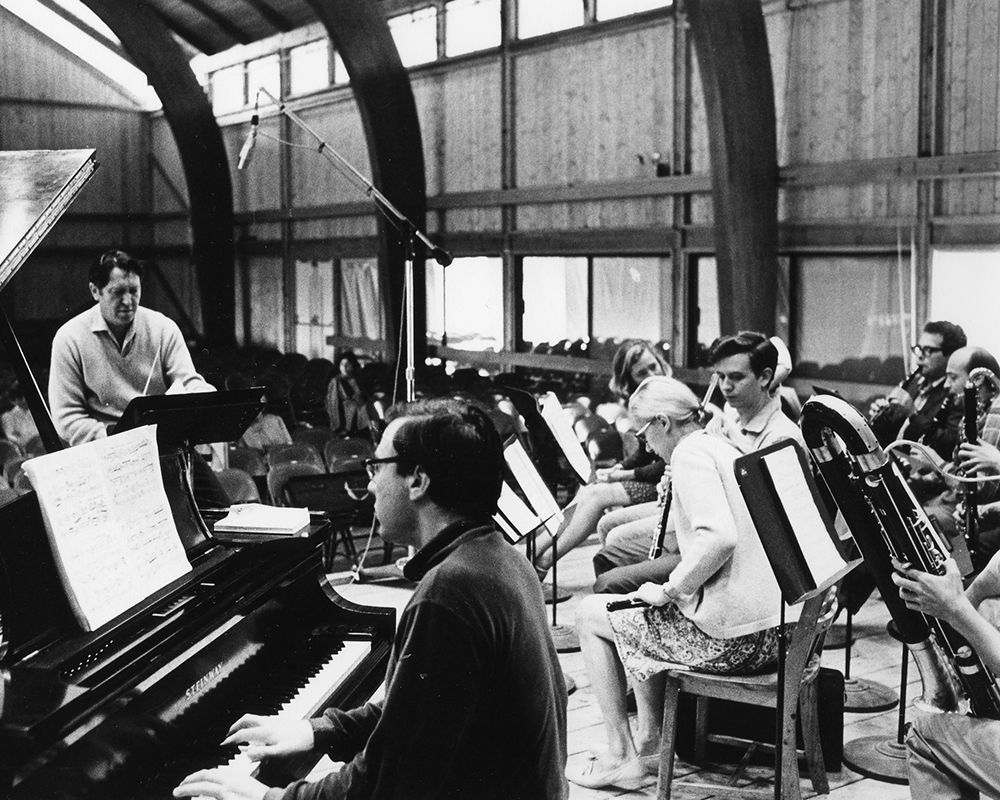
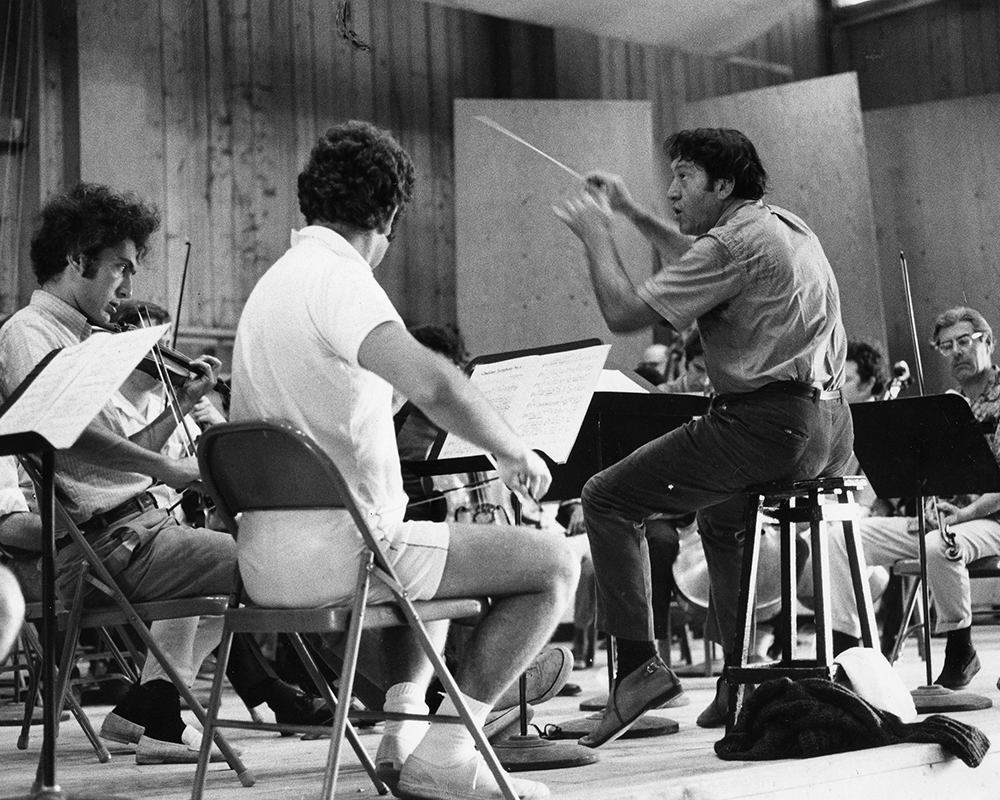
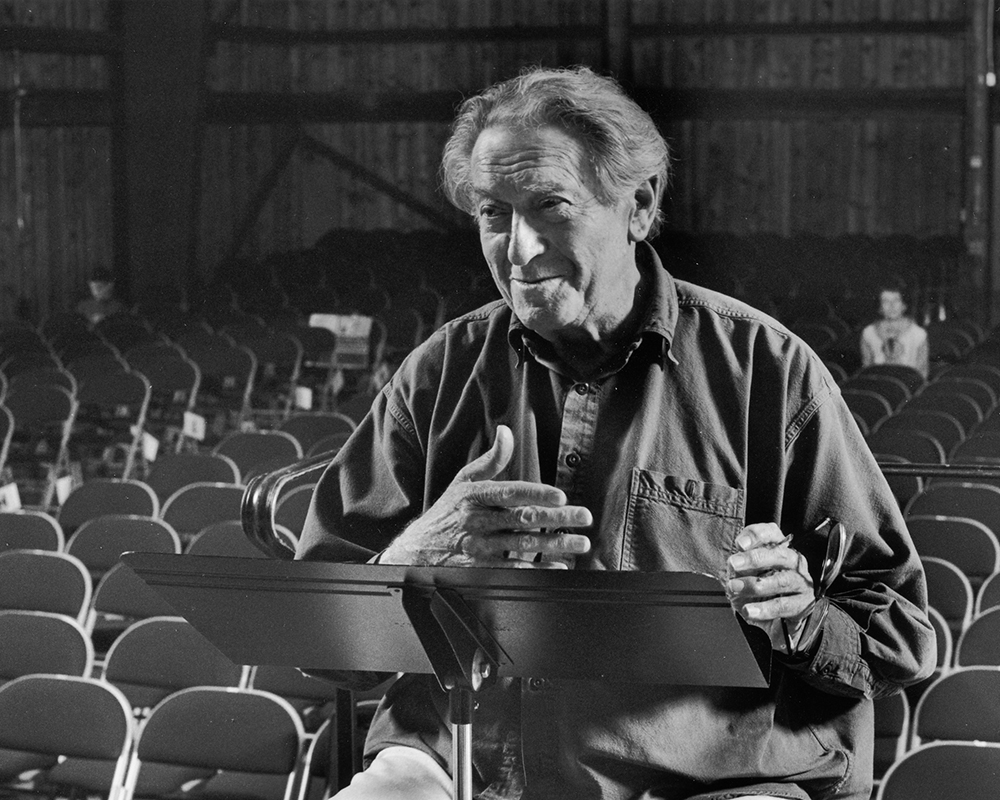
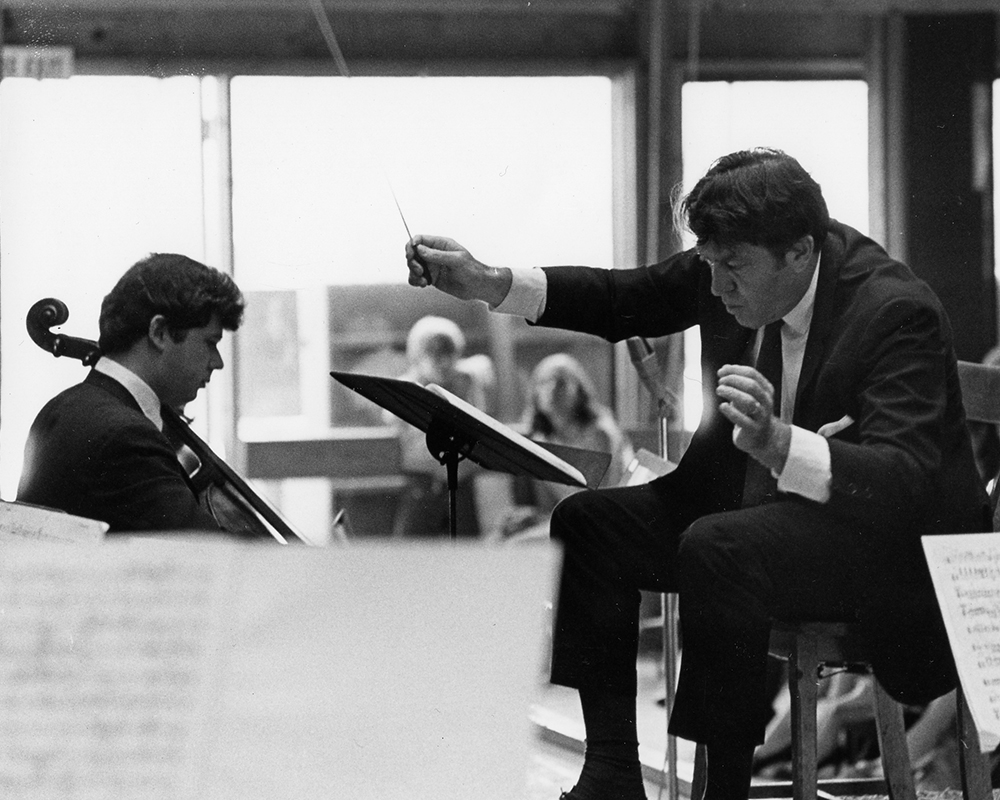
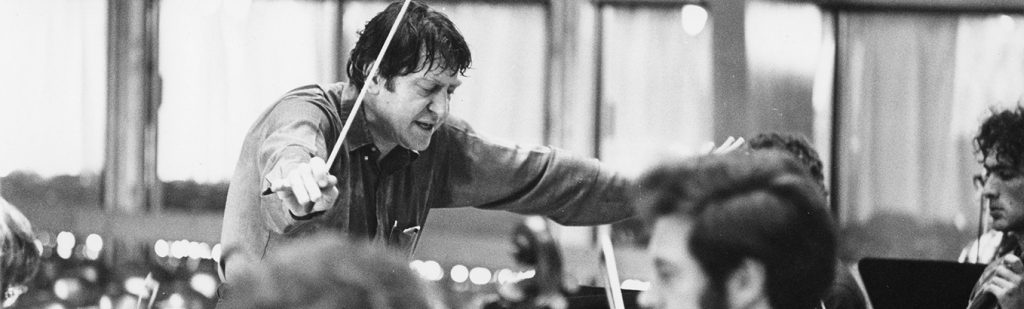
Among them was composer, conductor, pianist, and Harvard professor Leon Kirchner. He first came to Marlboro in 1958 when he played his Sonata Concertante with violinist Alexander Schneider. When he returned in 1963 as Resident Composer, it marked the beginning of a 12-year period when new music and living composers became an integral part of the Marlboro experience. As composer, pianist, and conductor, and someone who could play a Mozart concerto and conduct the Beethoven Choral Fantasy with the same insights that he brought to his own compositions, Kirchner opened up new worlds for Marlboro’s exceptional young musicians. Many of them would go on to become founders or members of such ensembles as the Emerson, Guarneri, Cleveland, and Vermeer Quartets, the Beaux Arts and Kalichstein-Laredo-Robinson Trios, the Chamber Music Society of Lincoln Center, and the Silk Road Project.

He brought young composers to Marlboro, including John Adams, Paul Chihara, David Del Tredici, Barbara Kolb, Oliver Knussen, Fred Lerdahl, and Tison Street and invited such distinguished colleagues as George Crumb, Luigi Dallapiccola, Earl Kim, Ned Rorem, and Tōru Takemitsu to discuss and often lead their works. All of them marveled at having their works explored in the kind of depth possible only at Marlboro, and rehearsed and performed by such devoted and gifted musicians.

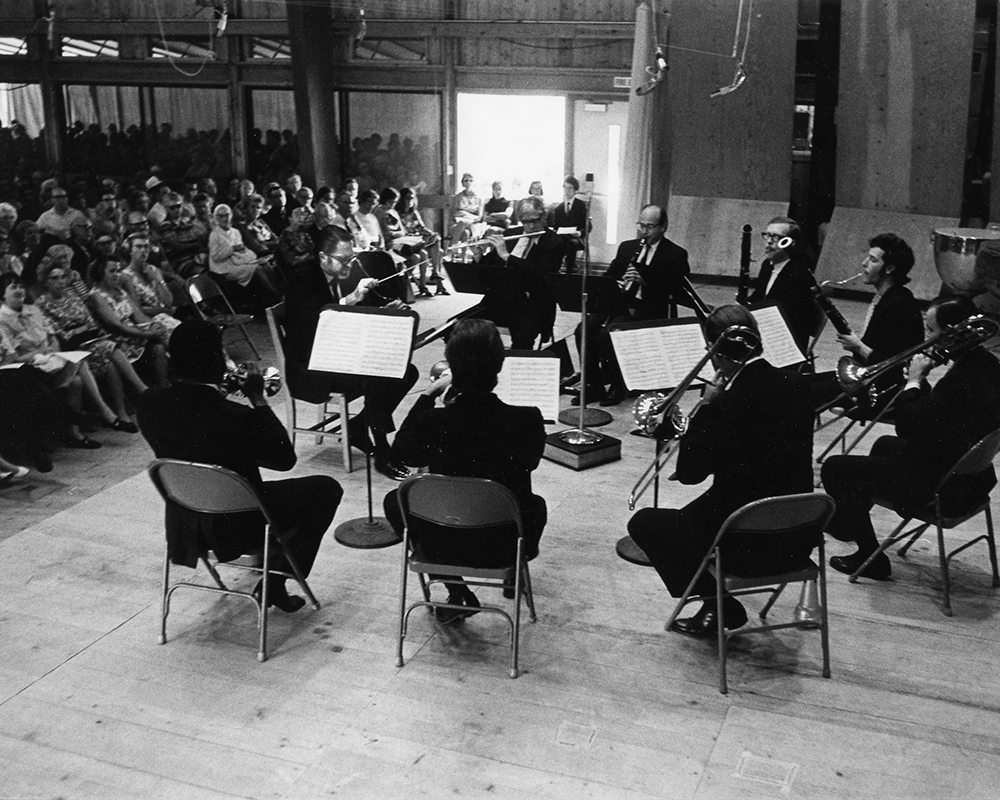
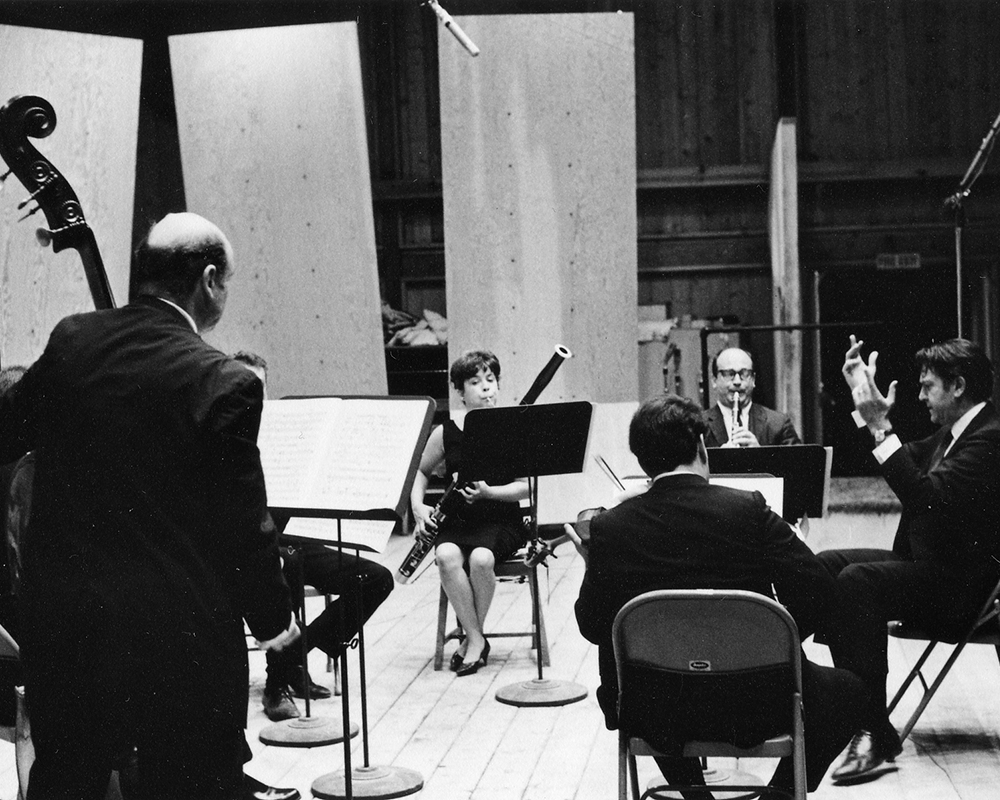
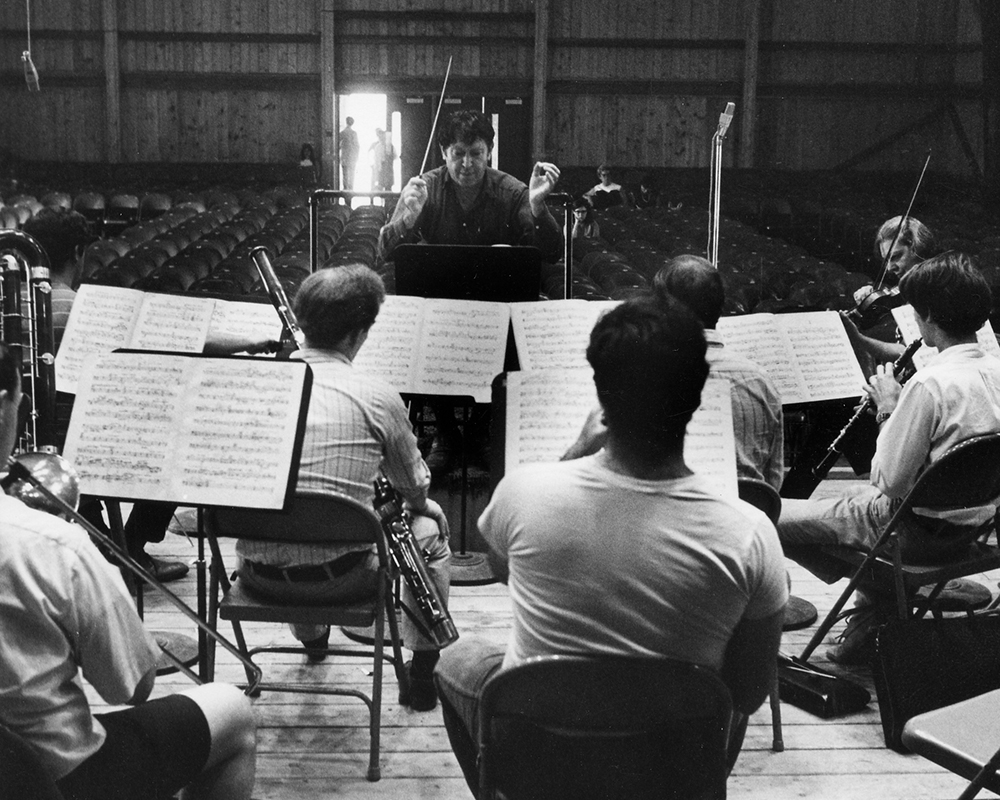
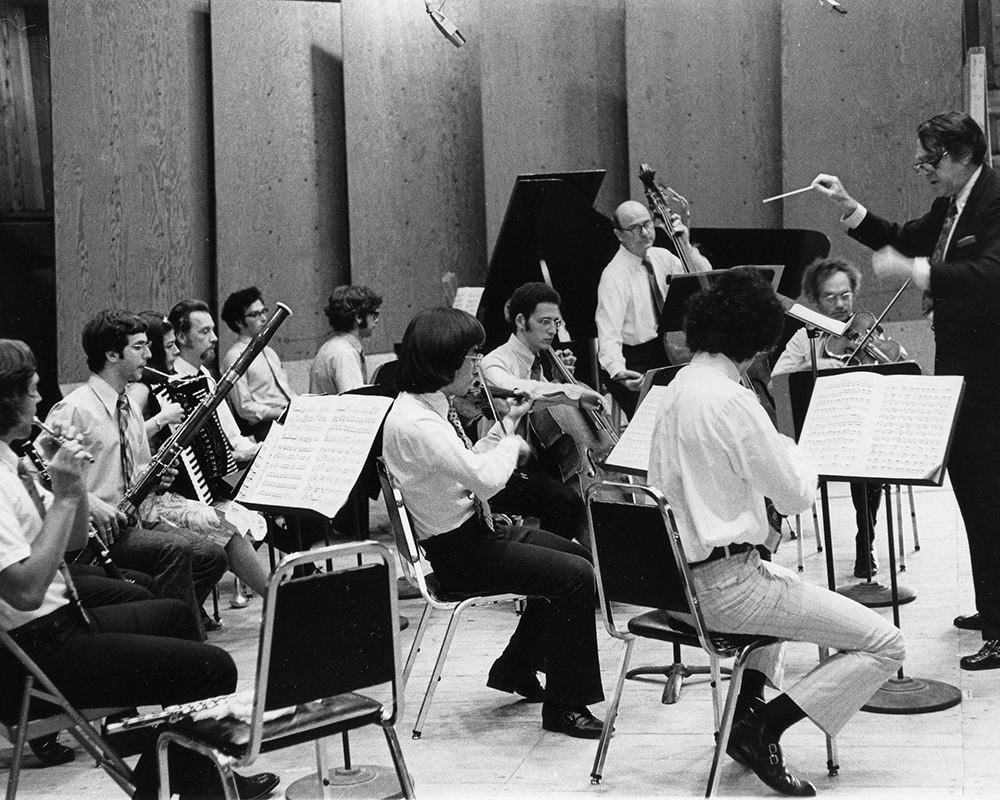
Major revelatory scores for larger ensembles were studied and performed at Marlboro for the first time, led by Kirchner: Alban Berg’s Chamber Concerto; Arnold Schoenberg’s Chamber Symphony No. 1; his Serenade, Op. 24 and Suite, Op. 29 (both recorded for the Marlboro Recording Society, later released on SONY Classical); Kirchner’s own Concerto for Violin, Cello, Ten Winds, and Percussion; and, in 1964 and again in 1968, Stravinsky’s Les Noces. The rarely-heard Stravinsky was a major production, calling for four solo voices, four pianos, six percussionists, and chorus. Four of the six percussionists were so taken with the work and with playing together that they formed the acclaimed NEXUS percussion ensemble.

The seeds that Leon Kirchner planted in the 1960s continue to flourish at Marlboro with the works of each summer’s resident composer, not only illuminating the season’s concerts but often being shared with a larger audience on the Musicians from Marlboro tours.

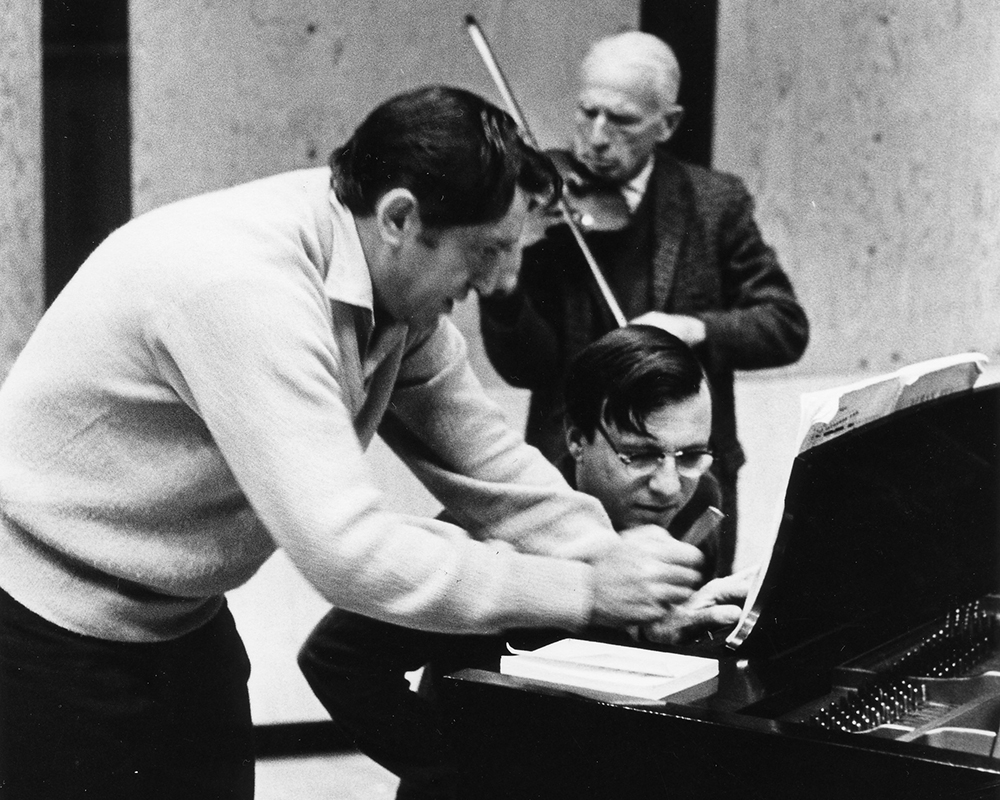
Watch Leon Kirchner rehearsing his piano trio at Marlboro with violinist Shmuel Ashkenasi and cellist Leslie Parnas as part of the 1967 Bell Telephone hour documentary.


Timeline

1919

Early life

Brooklyn, New York is cool and drizzly on January 24, 1919, when Leon Kirchner is born to parents Pauline and Samuel. The family is of Russian Jewish heritage, both parents having immigrated from Odessa in their youth. Samuel is a French-art embroiderer and gifted storyteller, and Pauline is a bookkeeper with an abiding love for music that quickly takes root in her son. She teaches five year old Leon to play her favorite piano work, Beethoven’s Für Elise, and at seven, he begins attending the Diller-Quaile School of Music and practicing the piano with Pauline’s “almost authoritarian encouragement.” Leon’s father suffers from asthma, so the family, which now includes Leon’s younger brother, Julius, relocates to Los Angeles in 1928 at the recommendation of a doctor. The Great Depression (1929-1939) necessitates simple living, so for their first five years in California, there is no piano in the Kirchners’ house. Leon begins formally studying piano with Raymond Schouten in 1933 and aspires to be an artist like his father. At age 14 he asks for a piano, and the family manages to obtain a barely operative upright.

1935

A Path to Composing

As a teenager, Kirchner attends Los Angeles Symphony concerts and sits in the balconies, or as he describes them, “the meeting place for the young and ambitious talents of the city.” After graduating a year early from high school, Leon enrolls at Los Angeles City College (LACC) in the fall semester of 1935 as a zoology and music double-major. By coincidence, he passes by an open window on campus and hears the strains of Earl Kim playing the Grieg Piano Concerto, and the two become friends. As part of Leon’s music studies, he composes under the direction of Ernst Toch, a friend of his piano teacher, John Crown. Toch encourages Leon to devote himself seriously to composition and recommends him to Arnold Schoenberg, the influential leader of the Second Viennese School who is now teaching in Los Angeles.

1937

Dedication to Composition

In 1937, on top of his course load at LACC, Leon begins taking classes at UCLA and studying composition with Schoenberg. At this point, he decides to dedicate his studies entirely to music. “From Schoenberg he seems to have learned two essential lessons,” notes music critic, novelist, and librettist Paul Griffiths. “One was to accept the rough with the smooth – not to be afraid of irregular tunes and awkward, dissonant harmonies, not to run away from the grandeur of difficulty. The other was to recognize the primacy of what you have to say, from which the way to say it will emerge.” By 1938, Leon is studying composition with Albert Elkus, Edward Griffith Stricklen, and Arthur Bliss at the University of California, Berkeley. After a brief hiatus following the death of his father, during which Leon returns to Los Angeles to support his mother, he finishes his degree at Berkeley in 1940. He returns to Los Angeles for graduate studies in music at UCLA, studying with Schoenberg once again. The following year, he goes back to Berkeley for graduate studies with a new mentor, Ernest Bloch. Among his fellow students at Berkeley are Earl Kim, Leonard Ralston, and Kitty Schafer.

1942

New York City & Military Service

While at Berkeley, Leon wins the George Ladd “Prix de Paris” Fellowship, which underwrites two years of study in Paris, but WWII makes the fellowship impossible. Instead, he relocates to New York City and continues to pursue compositional studies in harmony, counterpoint, and analysis with Roger Sessions. His apartment building there is home to fellow musicians Lukas Foss, Leonard Bernstein, and Mieczysław Horszowski, whom he befriends, and he encounters other prominent musicians including Samuel Barber, Artur Schnabel, and Rudolf Serkin. In 1942, Leon enlists in the army. Though he spends the first year of the standard four-year tour of duty in the inactive reserves, he enters active service on August 9, 1943. During his three years of active duty in the Army Signal Corps, Leon composes the first pieces that are included in his official work list, including two songs for soprano and piano: “Letter” on a text by Sidney Alexander, and “The Times are Nightfall” on a text by Gerard Manley Hopkins. He also begins work on a piece for chorus and organ, “Dawn,” which sets a text by Federico García Lorca, and is ordered by his captain to write a score for a theatrical production of “Dracula.”

1946

Return to Berkeley & NYC

After his four-year tour of duty, Leon is discharged as Lt. Kirchner and returns to Berkeley in 1946 to resume studies with Sessions, who becomes his principal mentor after the war. He spends two years at Berkeley, obtaining his Master of Arts degree in 1947 and taking on the role of lecturer at the school. He receives a Guggenheim Fellowship in 1948 and decides to return to NYC, devoting two years to composing. Leon maintains frequent correspondence with Sessions during this time, and “their letters reveal a transition from their long-standing student/teacher relationship to a close friendship between colleagues,” writes musicologist and Kirchner biographer Robert Riggs. “The value of this correspondence for Kirchner probably was the sense of self-confidence and importance that it instilled in him. […] Style tolerance, which was a characteristic virtue of Sessions’s teaching philosophy, became one of Kirchner’s hallmarks as well.”

1948

“A Composer of Stature”

In 1948, Leon visits his Mills College acquaintance Darius Milhaud at Tanglewood’s Berkshire Music Center and also meets Aaron Copland. Copland, the “Dean of American Composers,” recognizes the humanity and vitality of Kirchner’s work and goes on to become one of his most important early supporters. Observed Copland: “The impression carried away from a Kirchner performance is one of having made contact, not merely with a composer, but with a highly sentient human being; of a man who creates his music out of an awareness of the special climate of today’s unsettled world.” This same year, Leon’s career truly takes off after his Piano Sonata No. 1 receives a major review in the New York Times. By 1950, he “proves himself a composer of stature” with the premiere of his String Quartet No. 1 by the Juilliard Quartet at the Museum of Modern Art, writes Times critic Carter Harman.

1949

Marriage & Family

Leon’s friend Irma Jurist Neverov introduces him to his future wife, Gertrude Schoenberg, in 1948. Gertrude is a trained singer who also plays piano, and during their courtship Leon composes and dedicates his “Little Suite” to her. The couple is married in an intimate civil ceremony in Oakland on July 8, 1949; the only guests and witnesses are Earl Kim and his wife Nora. “Everyone who knew her loved her, and called her ‘Gert,’” recalls music critic Richard Dyer. “She was a talented woman who might have made a professional career as a singer, painter, or sculptor but… chose instead to raise a family and create an environment in which her husband’s gift could flourish – she believed in that gift even at those times when he may not have.” Fellow Marlboro musician Yo-Yo Ma remembers the couple’s affection, including Gertrude’s ability to “complete her husband’s sentences and thoughts, each life intertwined in the other’s, with a deep respect and tolerance for each other’s esthetic nature.” Gertrude and Leon welcome their son, Paul, in 1950 and daughter Lisa in 1953. While the children are young, the family resides in Los Angeles and Leon teaches at USC and Mills College.

1953

Awards & Acclaim

The decade spanning 1947-57 sees Leon composing, on average, one major work per year. Now in his early thirties, he receives an annual award from the National Institute of Arts and Letters recognizing his “highly developed skill which he has devoted to musical composition in a consistently serious and responsible manner.” Leon’s 1953 Piano Concerto, writes musicologist Alexander Ringer, is a “modern revival of the piano concerto in the grand manner [and] a work that has attracted greater public attention than any of Kirchner’s compositions up to now, thanks no doubt to the sweeping grandeur of its conception.” Though the piece is not premiered until 1956, it enjoys a warmly-acclaimed first performance that February with Dimitri Mitropoulos conducting the NY Philharmonic and Kirchner at the piano.

1956

“A Personal Cosmos”

In 1954, Leon begins composing “Piano Trio” for the Elizabeth Sprague Coolidge Foundation in the Library of Congress. In the liner notes for the 1956 recording of the work, he writes his “musical credo,” declaring: “It is my feeling that many of us, dominated by the fear of self-expression, seek the superficial security of current style and fad… An artist must create a personal cosmos, a verdant world in continuity with tradition… It is in this way that Idea, powered by conviction and necessity, will create its own style and the singular, momentous structure capable of realizing its intent.” Leon takes a sabbatical in 1957, and the family travels throughout Europe. Particularly stimulating is their time in Rome, where the Kirchners forge a close connection with pianist Leon Fleisher and his wife Dorothy. The two young families tour Italy together, and Fleisher adds Kirchner’s Sonata for Piano to his repertoire. Upon his return, Kirchner accepts a visiting professorship of composition at the University of Buffalo. During a cultural exchange between the Soviet Union and the United States in the mid-1950s, Shostakovich hears the first movement of Leon’s Sonata Concertante for violin and piano. He first asks to hear the entire work and later invites Leon to visit the USSR as a guest artist.

1959

Marlboro Beginnings

The summer of 1959 marks Leon’s first performance at Marlboro, at the request of Alexander “Sasha” Schneider. Initially, he declines the invitation due to commitments with the Berkshire Music Center at Tanglewood. Schneider playfully, if adamantly, persists: “You schmoeckedores. Here I am offering you caviar, and you want salami.” After receiving a personal written invitation from Rudolf Serkin, Leon is convinced. He joins Schneider in a performance of the Sonata Concertante, first at an informal dining hall concert on July 24, 1959, and then two days later at a public concert. The following summer, Marlboro’s nascent Contemporary Composers’ Program begins with Leon Fleisher studying and concertizing Kirchner’s Piano Sonata No. 1.

1961

A Home in Cambridge

Leon begins teaching at Harvard in the fall of 1961, and in 1966 is appointed the Walter Bigelow Rosen Professor of Music, a position he holds until his retirement in 1989. Early in his tenure, he is elected to the American Academy of Arts and Letters (1962) and the American Academy of Arts and Sciences (1963). Despite increasing responsibilities at Harvard during the early sixties, Leon remains in touch with Rudolf Serkin, Marlboro’s Artistic Director, who shares a desire to incorporate more contemporary music in the festival’s explorations and suggests that his friend may be ideally suited to guide this initiative.

1963

Return to Marlboro

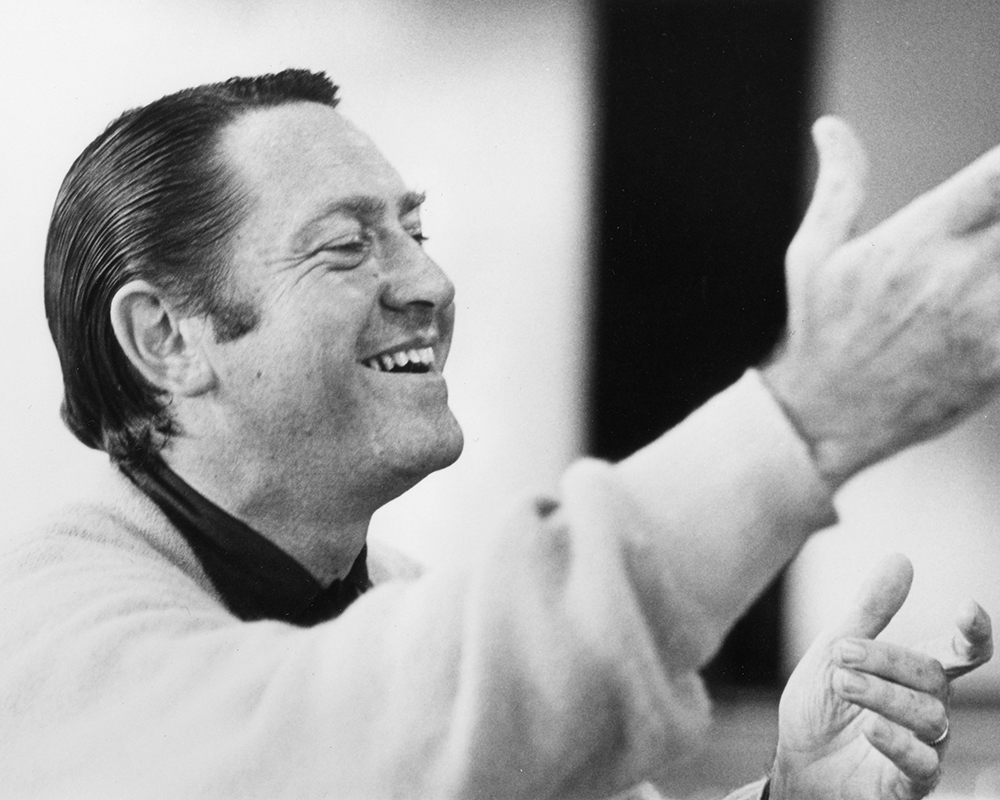
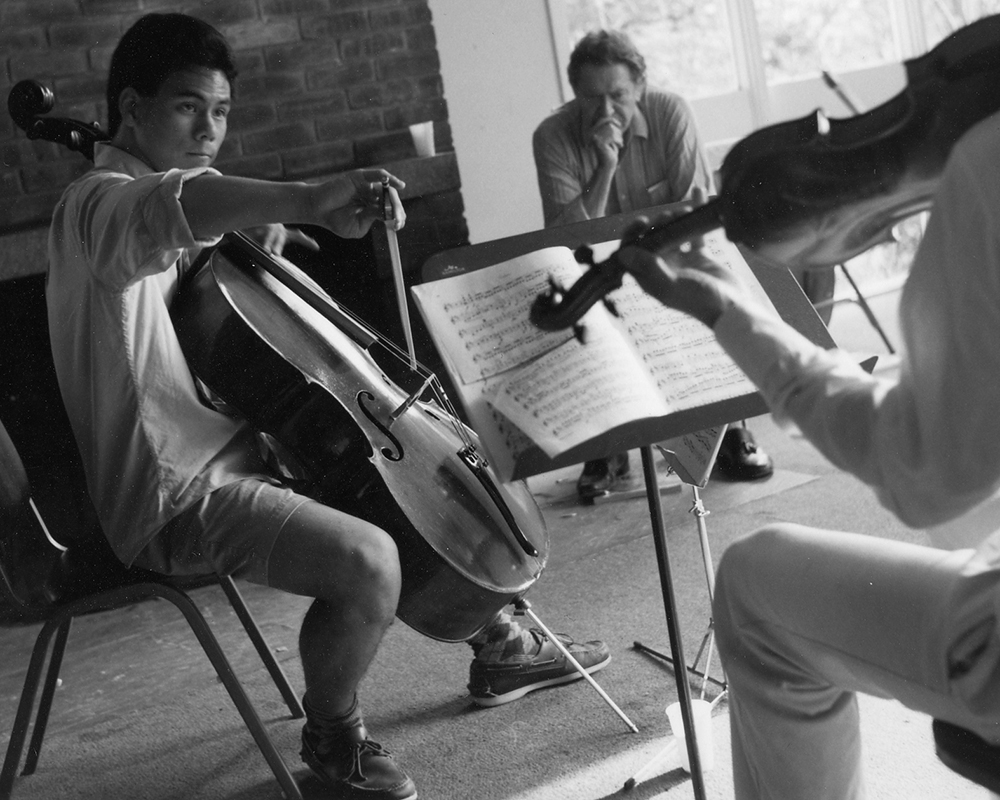
With encouragement from violinist Jaime Laredo, Leon returns to Marlboro in 1963, reuniting with old friends, making new musical and social connections, and memorably conducting a performance of his Double Concerto, with Laredo and cellist Madeline Foley as soloists. Laredo vividly recalls the challenges of the piece—”I said to Madeline, I couldn’t make heads or tails of just the violin part, and she said it’s exactly the same for me with the cello part.”—and its affable composer’s ability to put a somewhat anxious, awestruck young player at ease from the first rehearsal. “He was so nice and so sweet… very imposing, but at the same time, totally nice and warm.” Leon, for his part, finds the music-making and the community atmosphere at Marlboro deeply inspiring, declaring: “The players here are among the best in the world. There are players in other communities that are as fine, but very rarely do they all come together in a single place like this and work together and occasionally give performances that are really, truly stirring.”

1964

Marlboro Performances

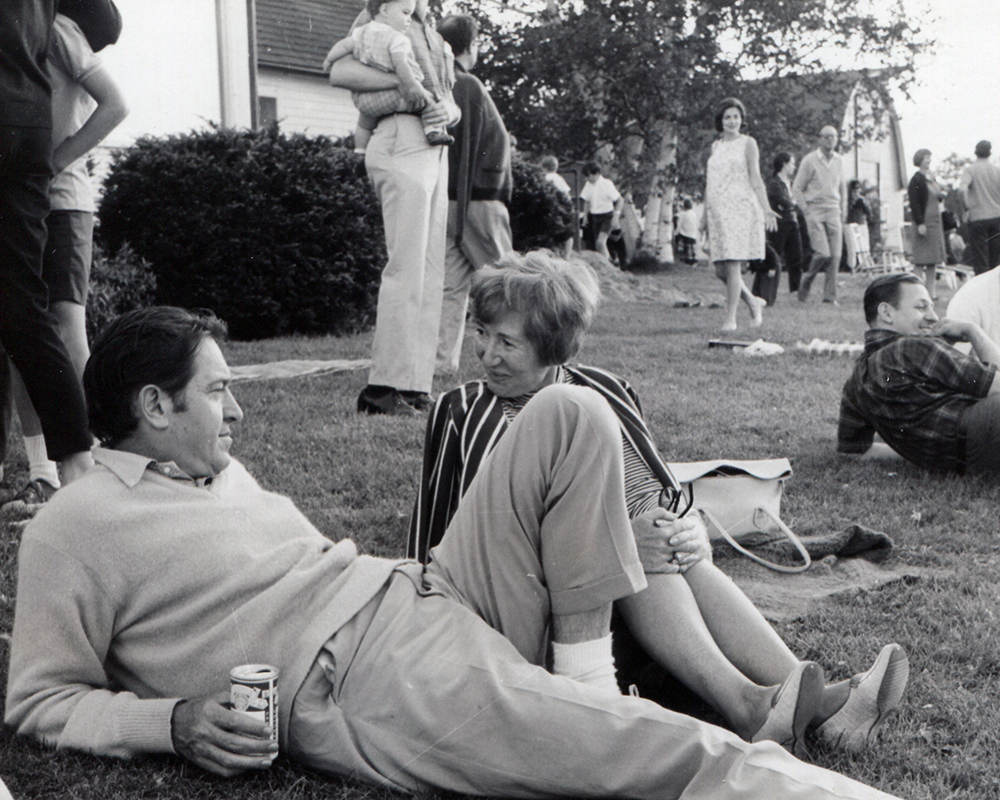
In 1964, Leon conducts Beethoven’s Choral Fantasy for the first time. His Kirchnerian flair is so well received that he conducts the work in seven of the following nine years. In addition to conducting the Choral Fantasy, Leon participates in notable performances of Stravinsky’s “Les Noces” with pianists Malcom Frager, Lilian Kallir, Ruth Laredo, and Claude Frank in 1964 and Ruth Laredo, Richard Goode, Laura De Fusco, and Walter Ponce in 1968. He also performs his own works, such as the aforementioned Sonata Concertante for Violin and Piano with violinists Alexander Schneider in 1959 and Arnold Steinhardt in 1964, as well as Piano Trio No. 1 with violinist Shmuel Ashkenasi and cellist Leslie Parnas in 1965 (a video of the latter group is included above) . Leon also cherishes the multi-generational community aspect of Marlboro. “There are children and adults of all ages,” he writes. “The span is about a century, and everyone will try his hand at sailing Frisbees through the after-dinner sky. On informal concert nights the air is festive and familial. Music begins and each delicious phrase, each structural insight is rapidly signaled from face to face, like synapse in a common brain.”

1965

Contemporary Composers’ Program

From 1963-74, Leon spends five to eight weeks each summer at Marlboro as Composer-in-Residence and director of Marlboro’s Contemporary Music Program. In 1965, the program receives a grant from the Rockefeller Foundation to support and broaden its mission. Marlboro Senior Administrator Emeritus Tony Checchia recalls Leon inviting “all kinds of international figures” to the festival, including established composers such as Samuel Barber and Aaron Copland, as well as many who are early in their careers. Leon selects these young, gifted composers “so that they might have an opportunity to live in the atmosphere at Marlboro where we could look at their music, study it, and perform it,” remembers Checchia. “In the meantime, they would be composing, meeting various musicians, and they would live and work in this very special musical atmosphere.” The younger generation of composers invited by Leon includes John Adams, Paul Chihara, David Del Tredici, Barbara Kolb, Oliver Knussen, Fred Lehrdahl, and Tison Street. The gift of unlimited time for rehearsal, exploration, and conversation is a revelatory experience for both performing musicians and composers.

1967

Pulitzer Prize & Professorship

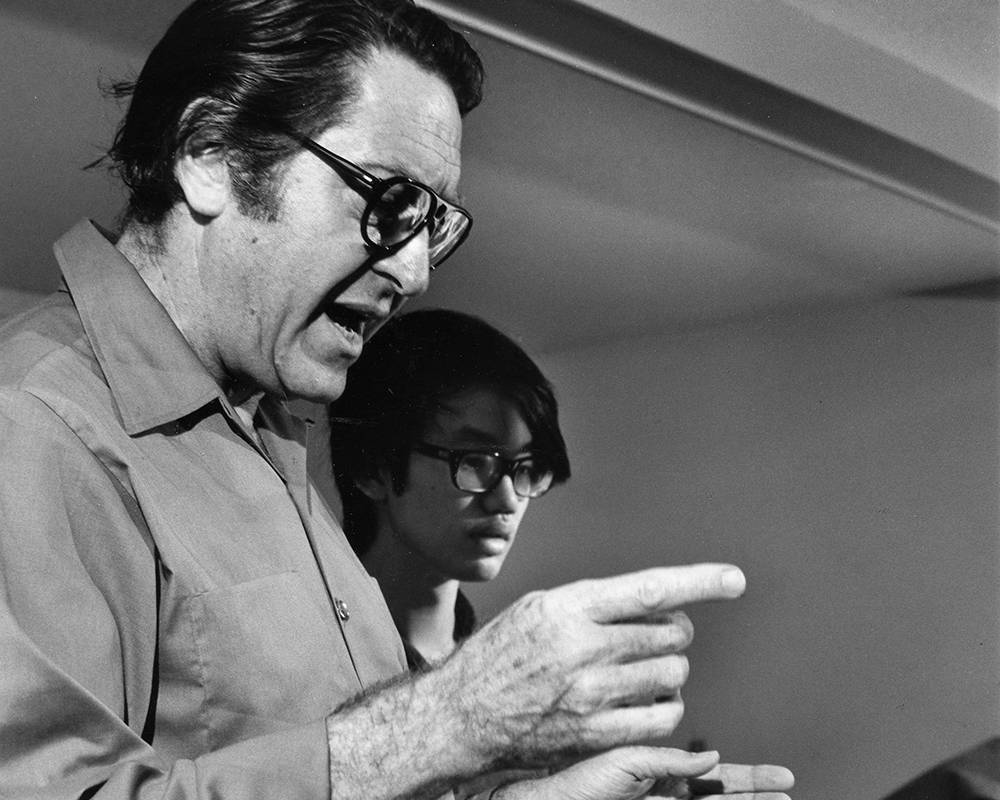
Leon wins the Pulitzer Prize in Music for his Third String Quartet in 1967. The same year, he founds the electronic music studio at Harvard and convinces the college to offer a Ph.D. in composition, effectively reorienting the study and practice of music at Harvard to take it beyond an extracurricular undertaking. He develops a renowned course in the analysis and performance of chamber music, which proves to be formative in the lives of many musicians, among them violinist Lynn Chang and cellist Yo-Yo Ma. The course is legendary within Harvard’s music department, unique in the sense that it focuses entirely on performance. Leon coaches chamber ensembles in weekly master classes and nurtures the personal voice of each composer in his seminars. “All of our music sounded distinctly unique, and none of our music sounded like his. He had no interest in our becoming little ‘Kirchners’… (there was a) deeper purpose in his teaching,” writes one of Leon’s Ph.D. students. “Studying with Kirchner, you felt a physical link to the entire Western music tradition.”

1969

New & Neglected Masterworks

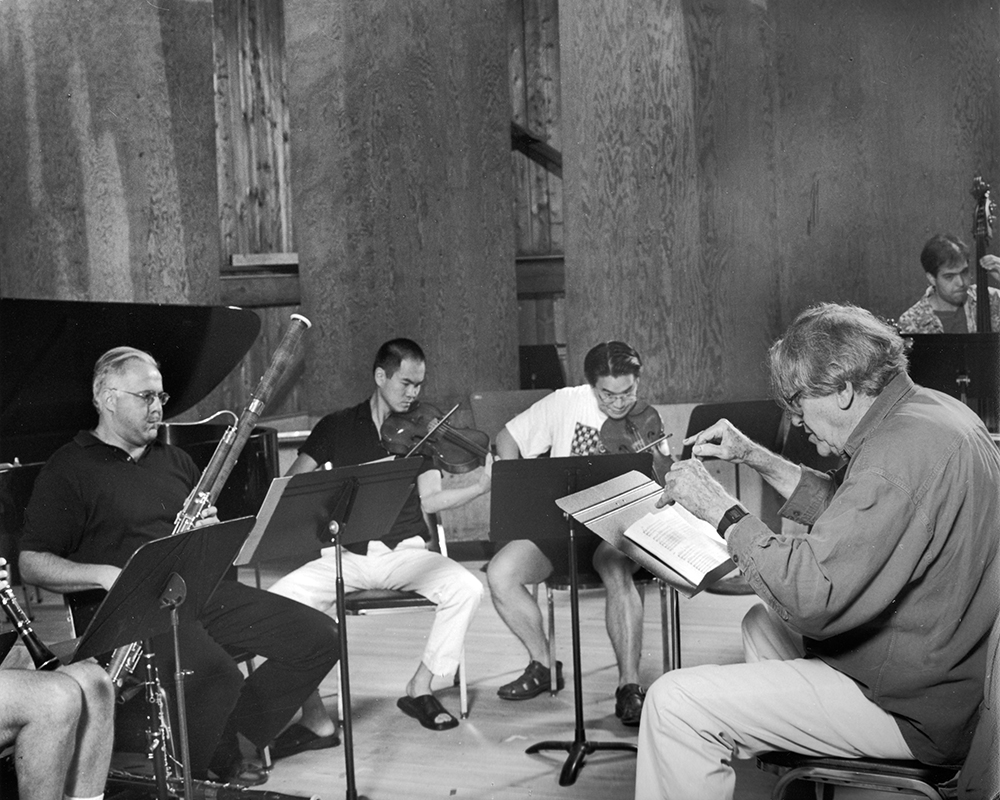
At Marlboro, Leon devotes special attention to masterpieces that he feels emerging musicians ought to study. Among them are Berg’s Chamber Concerto, large-scale pieces by Messiaen and Hindemith, and various works by Schoenberg, Webern, and Bartók. “This was music that Leon particularly loved and to which he devoted much loving care,” recalled Peter Serkin. “Leon did his own music too, of course, and he invited other composers to visit, whose works were also performed… Leon would work as devotedly on their music as he did on Schoenberg’s and on his own.” With Rudolf Serkin’s encouragement, Leon also helps to guide the development of wind music at Marlboro, expanding the repertoire with works by Stravinsky, Schoenberg, and others that showcase and challenge the School’s outstanding wind players. Felix Galimir observed that Rudolf Serkin “wanted us to play Schoenberg. He didn’t really like the music, but he thought Marlboro was a place where Schoenberg should be played.” Kirchner, for his part, appreciates Serkin as “a kind of King Arthur, glad to send his ‘knights’ out to have their musical adventures.”

1973

Fanfares at Harvard & Marlboro

Leon’s chamber opera, “Lily,” is premiered at Alice Tully Hall in the spring of 1973 with soprano Diana Hoagland in the titular role; within the next few months it is also performed at Harvard, the Smithsonian, and Marlboro. This same year, Leon takes a step back from Marlboro. After 11 consecutive summers in Vermont, he remains at Harvard during the 1973 summer recess and inaugurates the Harvard Summer School Chamber Players’ concert series, envisioning it almost as a miniature version of Marlboro. He maintains a good relationship with Rudolf Serkin, composing a surprise trio to mark the Marlboro artistic director’s 70th birthday. The work, for two trumpets and horn, is rehearsed “on the fly” by Henry Nowak, Wilmer Wise, and Donald Rosenberg before they unleash “a series of piquant and joyous brass fanfares” to a beaming Serkin. In 1974, Leon founds and conducts the Harvard Chamber Orchestra, which is comprised of freelance musicians in the Boston area. The ensemble performs regularly to sold-out crowds, offering revelatory performances of major works by Beethoven, Brahms, and Mahler.

1983

Eighties Achievements

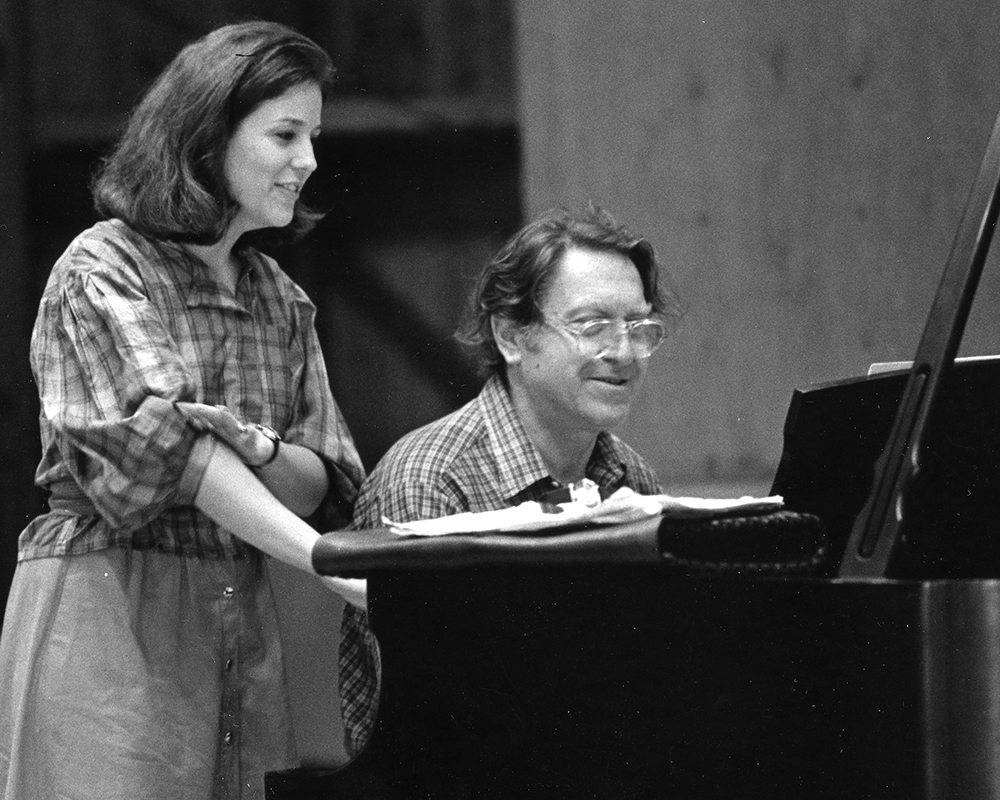
Leon returns to Marlboro in 1983 and performs his song cycle “The Twilight Stood,” a setting of Emily Dickinson texts, with soprano Beverly Hoch. In the ensuing years, he works with ensembles and leads performances of his “Music for Twelve,” Copland’s “Appalachian Spring: Suite for 13 Instruments,” and Mozart’s Serenade in C Minor, K. 388. In 1987, Peter Serkin commissions Leon and seven other composers to write solo piano works. He premieres Leon’s “Interlude” at the 92nd St. Y in New York City in 1989. Yo-Yo Ma also champions Leon’s music, premiering “Triptych” in 1988 with Lynn Chang. Despite numerous performances elsewhere, Cambridge remains the center of Leon’s concert activity until his retirement in 1989. He and Gertrude host annual New Year’s Eve parties for faculty, students, and friends. After evening concerts at Harvard, current and former students alike walk over to Leon’s home to meet visiting celebrities and enjoy “sumptuous spreads laid out by Mrs. Kirchner,” remembers composer David Patterson.

1989

Late-Career Triumphs

As Kirchner grows older and devotes more time to teaching, his compositional output slows and he turns his attention to new arrangements of his compositions for different mediums. In 1989 and 1991, he is featured composer at the Aldeburgh Festival. In 1990, Elektra Nonesuch releases an album of four Kirchner works that cover a large swath of his career, from 1954-87. Following the composition of “Interlude” for Peter Serkin, he writes “Five Pieces” for Max Levinson, “Interlude II” for Jonathan Biss, Sonata No. 2 for Jeremy Denk, and Sonata No. 3 for Joel Fan. During this period, Leon’s “continued loyalty to his Schoenbergian origins” stands in contrast to the “easy tonality” of the late 20th century, recalls Paul Griffiths. “He always swam against the tide, but being a whale of a composer, he swam well.” Yo-Yo Ma’s recording of “Triptych” for his “Made in America” album is reviewed as “one of the most exquisite and chilling moments in contemporary chamber music” by a critic on NPR’s Fresh Air. Leon also writes “Music for Cello and Orchestra” for Yo-Yo Ma. The work is premiered in 1992 and performed in New York, Los Angeles, Boston, Chicago, London, and Philadelphia. The recording from Philadelphia receives a Grammy.

1999

Later Years

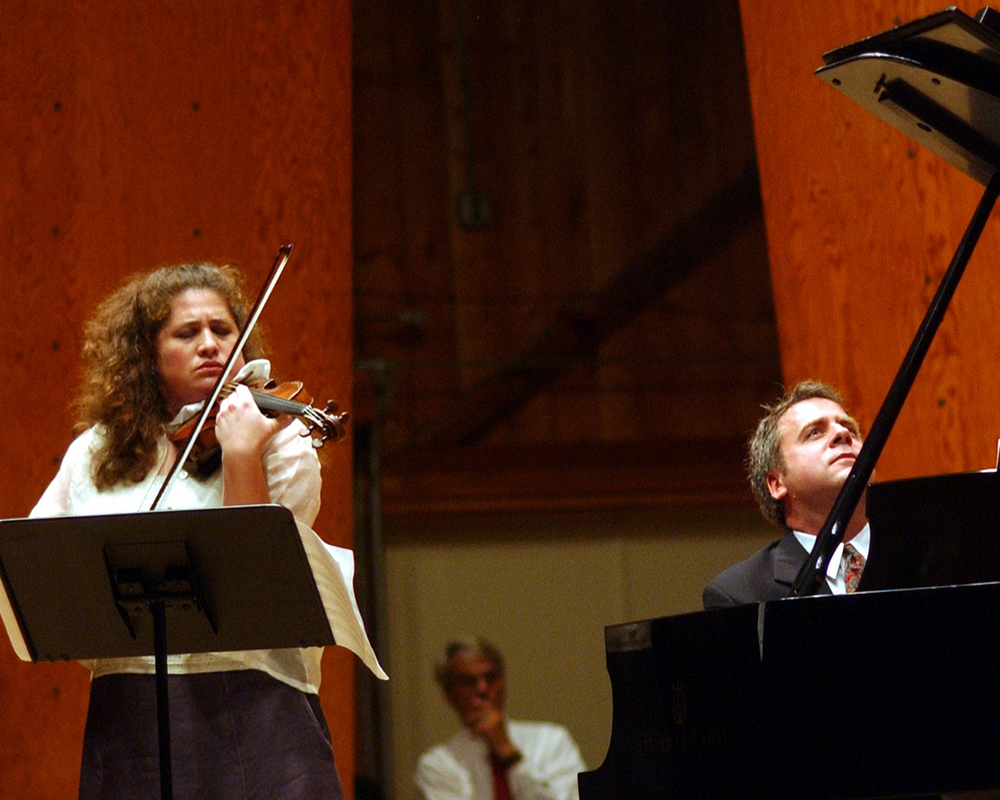
Leon loses his wife Gertrude in 1999. Following his retirement from teaching, a new tonal language emerges in his compositions. Cultural historian Joseph Horowitz notes “a soothing or ecstatic Bergian tonal language” in Kirchner’s late work. Leon is commissioned to write his Duo No. 2 in memory of Felix Galimir and returns to Marlboro in 2002 for its premiere by Ida Levin and Jeremy Denk. Both artists are strongly influenced by Kirchner and later perform the impassioned composition together on a Musicians from Marlboro tour. Their much-lauded recording also features on the award-winning album “Duos from Marlboro.” After four decades living in Cambridge, Leon moves back to New York City in 2005 with his companion, Sally Wardwell, to whom he is introduced a few years earlier by Marlboro friends Scott Nickrenz and Paula Robison. Sally’s care and support enable Leon’s unflagging drive to compose. The following year, he writes his Fourth Quartet, which is premiered and recorded by the Orion Quartet. At age 89, Leon composes his final orchestral work, “The Forbidden,” for James Levine and the Boston Symphony Orchestra. It is premiered on October 16, 2008, and the composer’s note concludes musingly, “It is a seductive idea, one that I have been pursuing of late, to reveal possibly one of the ways that necessary intimacies between the past and present keep the art of music alive and well.”

2009

A Lifetime of Achievement

Leon celebrates his 90th birthday with a concert, in the Gardner Museum’s “Composer Portraits” series, featuring performances of Trios No. 1 and 2 by the Claremont Trio, an excerpt from “Lily” by flutist Paula Robison and percussionist Ayano Kataoka, and Duo No. 2 and “Sonata Concertante” by pianist Jeremy Denk and violinist Corey Cerovsek. The Boston Phoenix gives the event a glowing review: “The music was ageless. Kirchner is one of our most mercurial composers. Intense. Uninhibited. Alternating (and combining) ferocity and delicacy, agitation and soulfulness, always making some powerful yet utterly unpredictable whole.” In May 2009, he is honored with a lifetime-achievement award from the American Academy of Arts and Letters. Despite increasing physical maladies, Leon maintains a vibrant social calendar and a lively interest in books and current events. He also continues to compose, “putting his whole heart into the choice of notes and creating works that,” in the words of biographer Robert Riggs, “resonated deep in his soul—and in ours.”

2009

Death & Legacy

On September 17, 2009, Leon Kirchner passes away peacefully in his home on Central Park West in Manhattan. Hundreds of friends and colleagues soon gather to celebrate his remarkable life with a concert that includes moving performances by his daughter Lisa and several artists and ensembles from Leon’s years at Harvard, Marlboro, and beyond. Today, Kirchner’s legacy at Marlboro is as vibrant as ever, with the program that he helped to establish bringing such eminent composers as Kaija Saariaho, Krzysztof Penderecki, Sofia Gubaidulina, Helmut Lachenmann, and George Benjamin to our community in recent summers. As Marlboro’s Composers-in-Residence program enters its sixth decade, it continues to give new generations of exceptional emerging instrumentalists and singers the unique opportunity to interact with and learn from the composers of music that they are exploring.

2024

Acknowledgements

We are grateful to Lisa Kirchner for creating and sharing her wonderful book, ‘Leon Kirchner and His Verdant World’. Lovingly compiled and edited by Lisa and available at verdantworldrecords.org, this anthology of 69 essays, letters, and interviews by Kirchner and his colleagues was a vital resource for this profile. Robert Riggs’s estimable biography, ‘Leon Kirchner: Composer, Performer, and Teacher’ (University of Rochester Press, 2010), is also indispensable reading for anyone seeking to learn more about Kirchner’s life and legacy.

Recordings

Enjoy a selection of chamber music recordings from Leon Kirchner’s years at Marlboro, from the 1967 performance of his Pulitzer Prize-winning String Quartet No. 3 (with a prominent single “boo” at the end, which suggests it provoked a strong reaction by at least one audience member!) to the 1998 performance of his Piano Trio No. 1 by Marcy Rosen, Catherine Cho, and current Co-Artistic Director Jonathan Biss. The performance of Schoenberg’s Chamber Symphony No. 2 is of particular note as Kirchner studied with the composer and gives us an important link to the work’s performance history.

Also available for streaming is the 1971 recording of Berg’s Chamber Concerto (commercially released on Verdant World Records) with Kirchner conducting, Pina Carmirelli and Peter Serkin as soloists, and a stellar ensemble that includes such artists as Paula Robison and Richard Stoltzman, among others.

Audio Recordings from Marlboro

Gallery

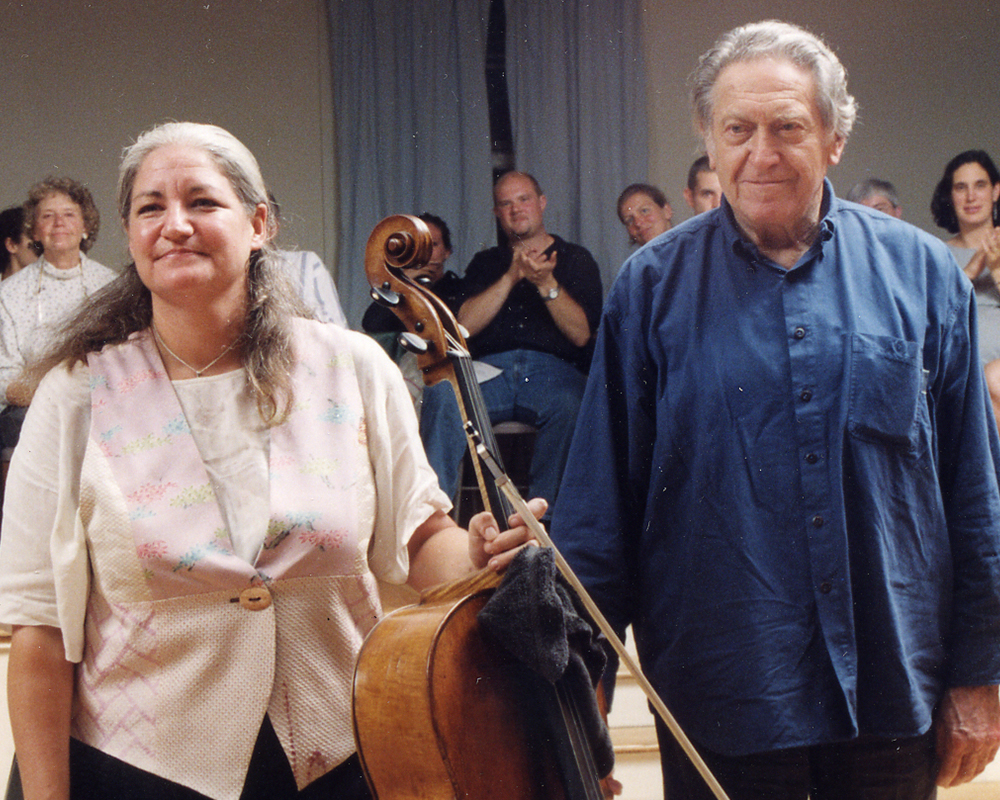
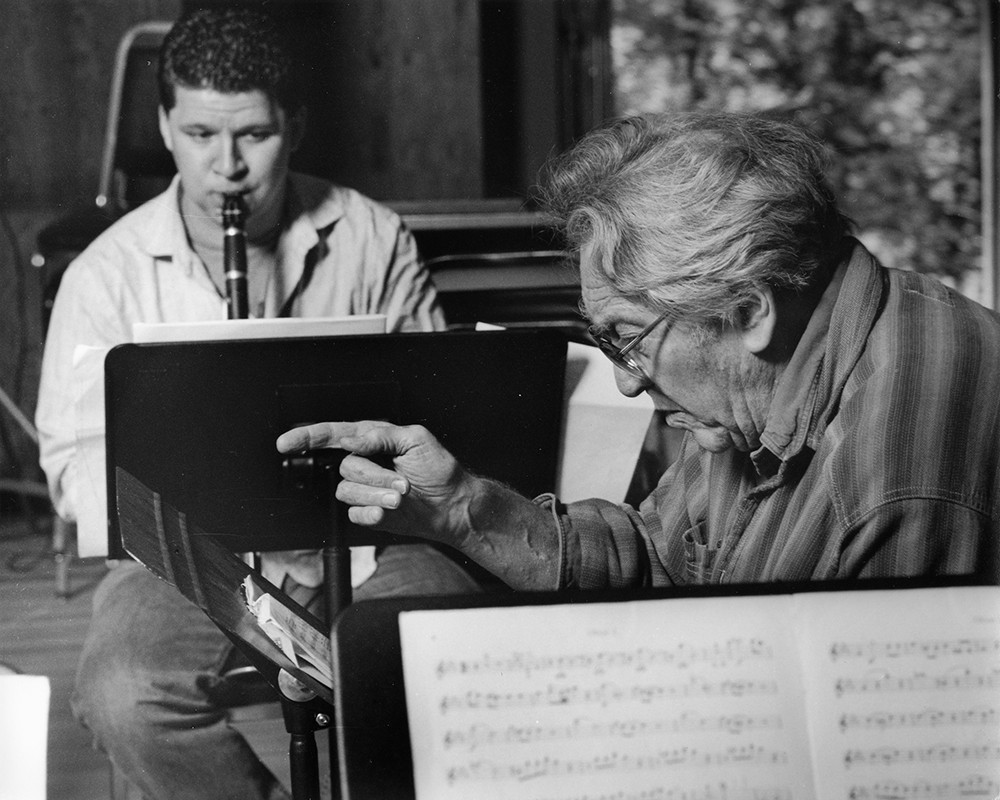
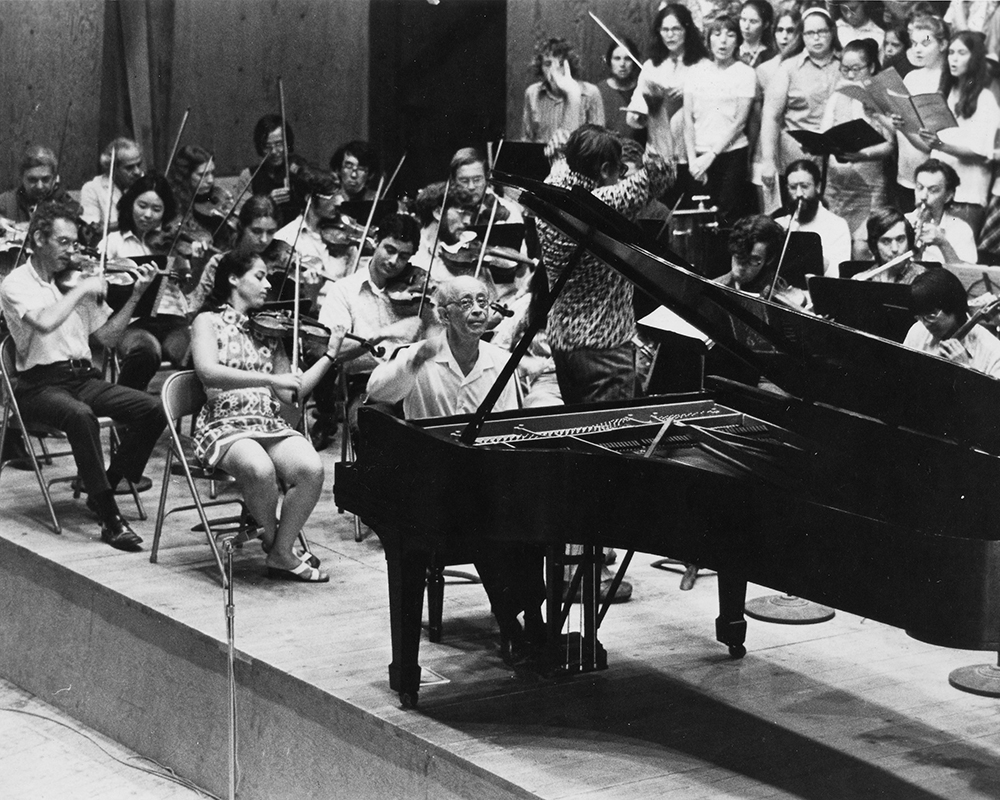
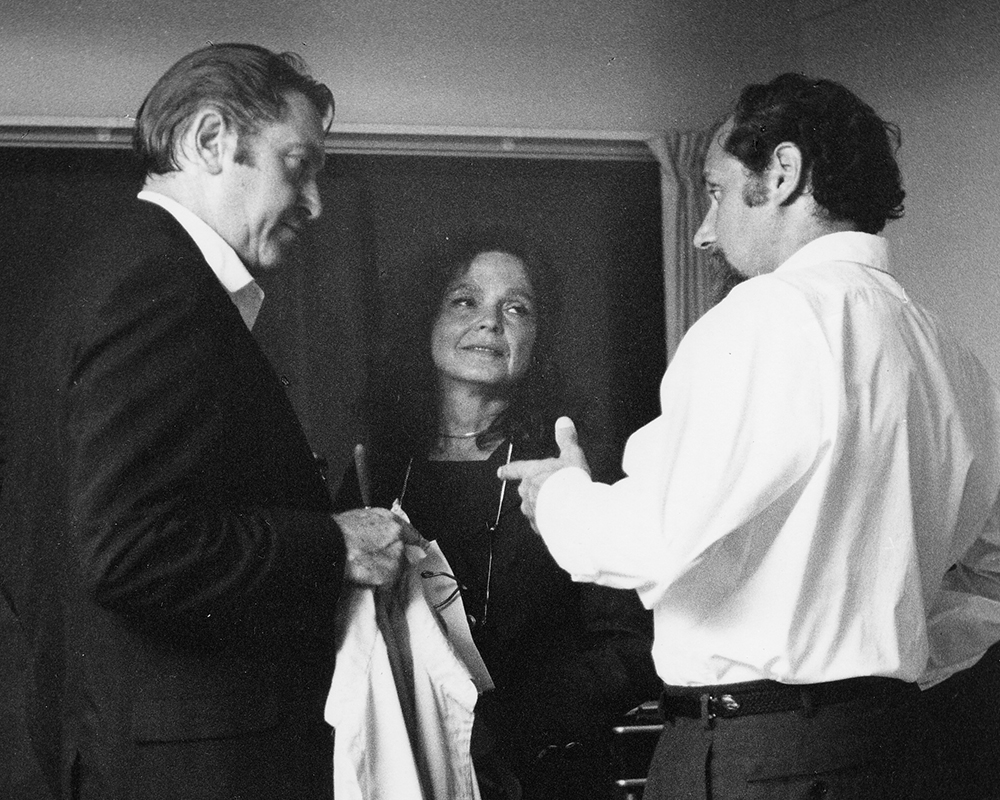
Click any of the pictures below to view an enlarged version complete with additional quotes in the captions.