From the Archives:
Madeline Foley

  • Introduction
  • Timeline
  • Recordings
  • Gallery

Introduction

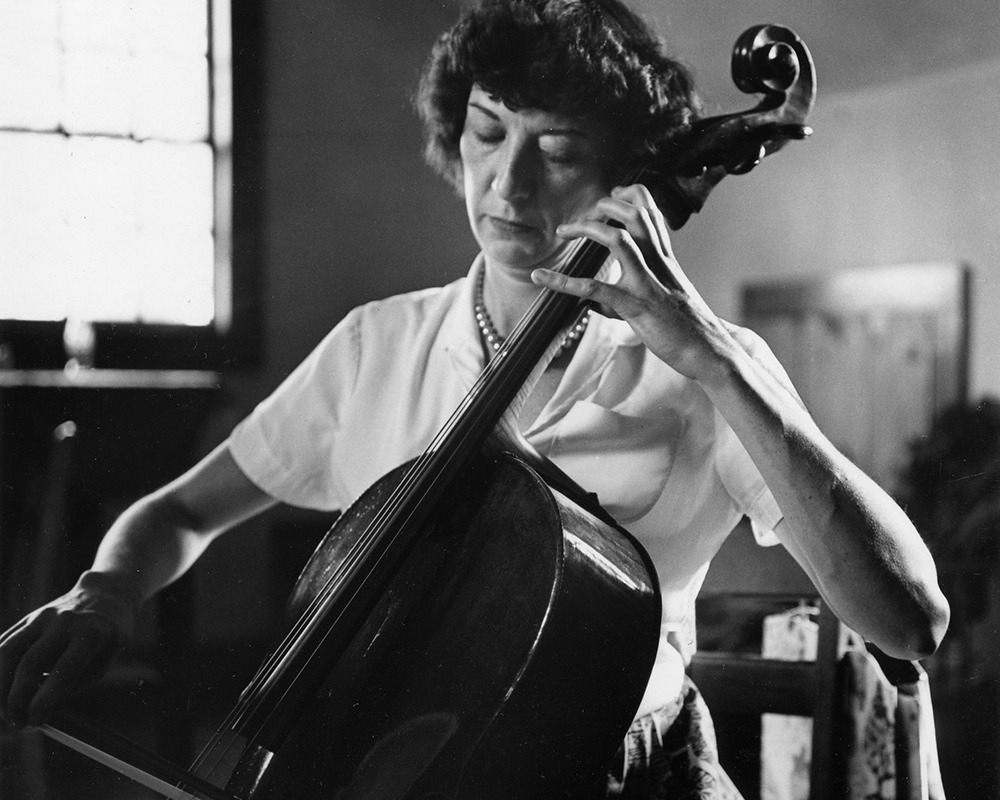
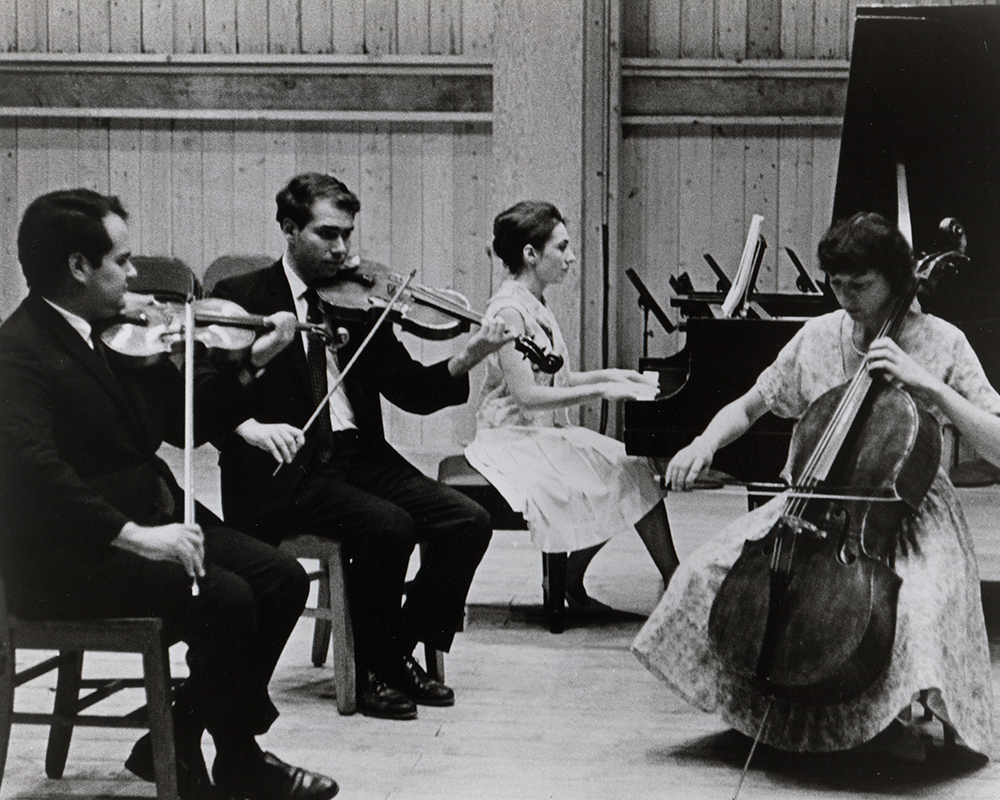
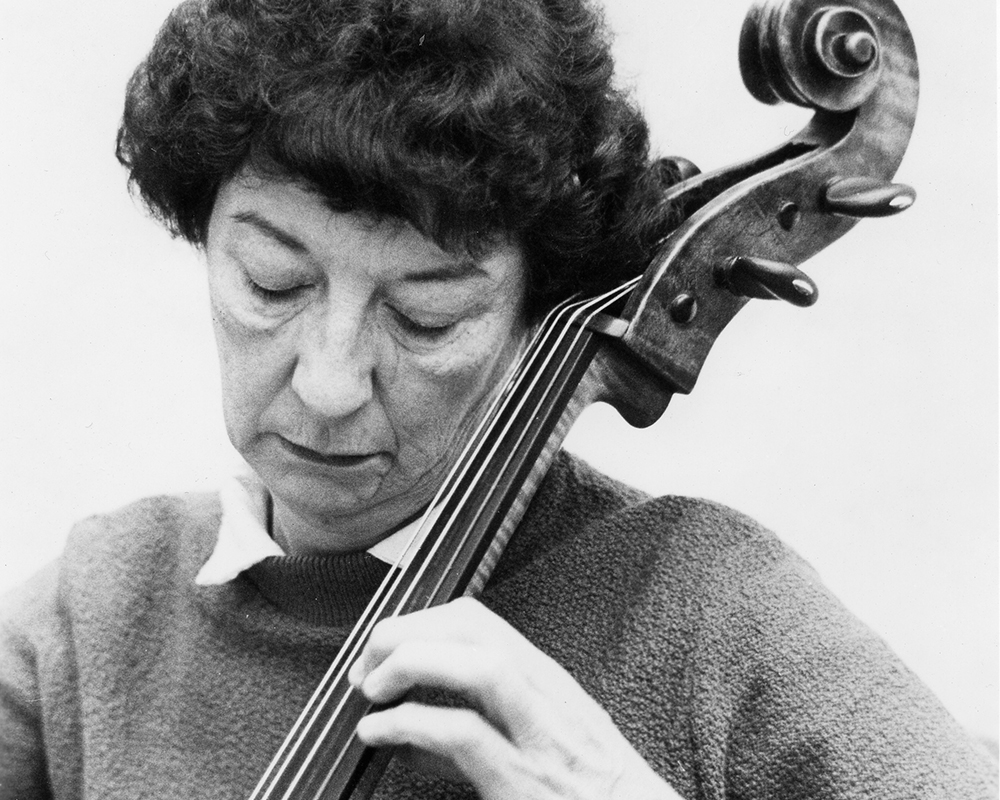
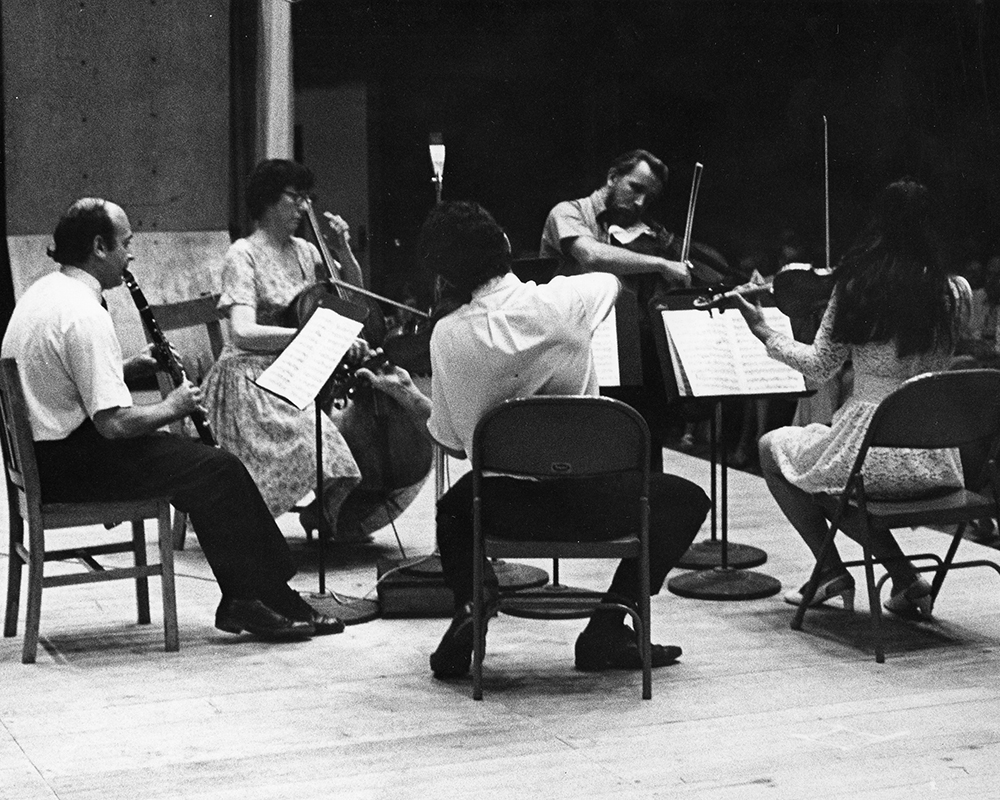
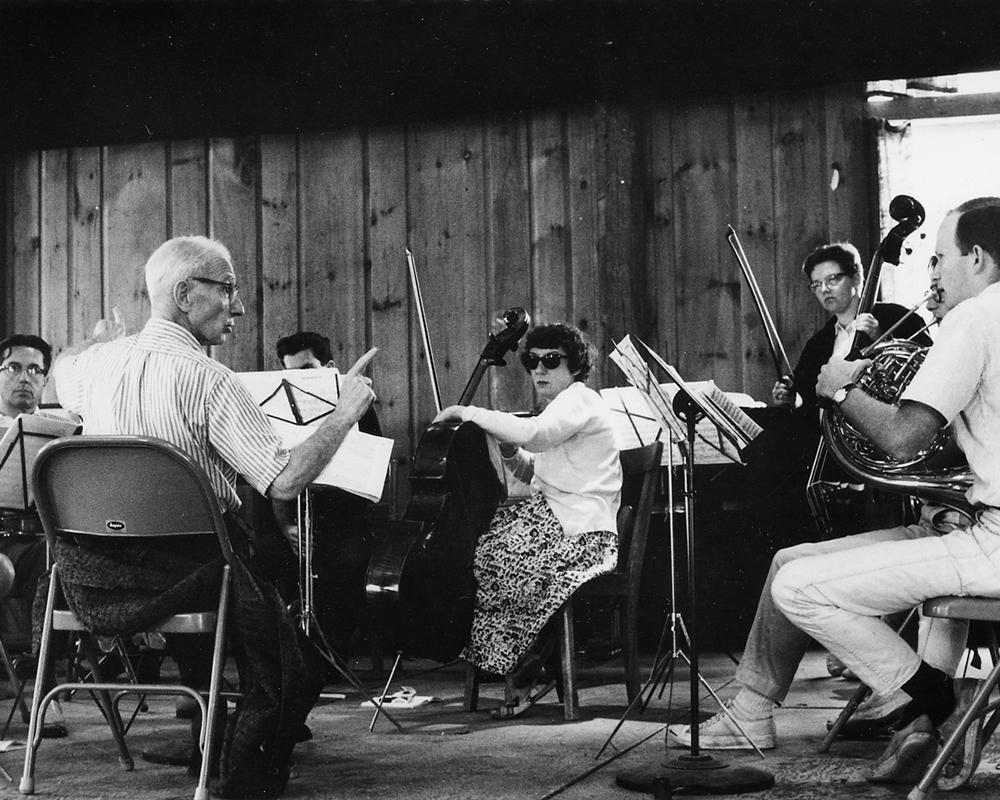
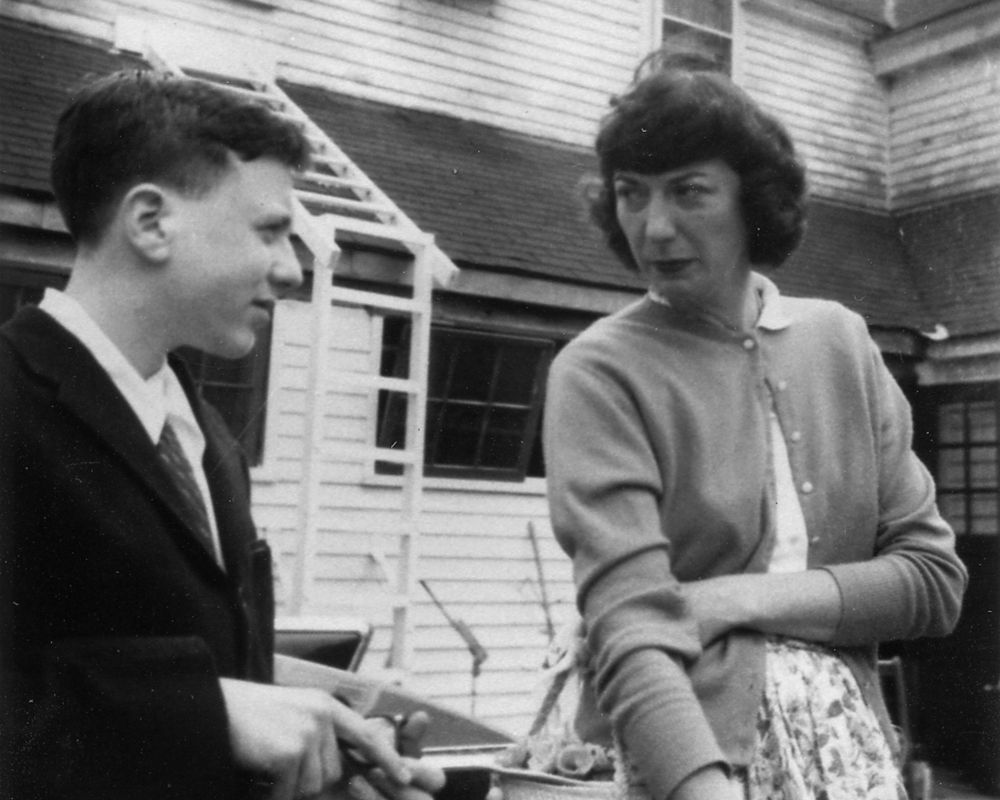
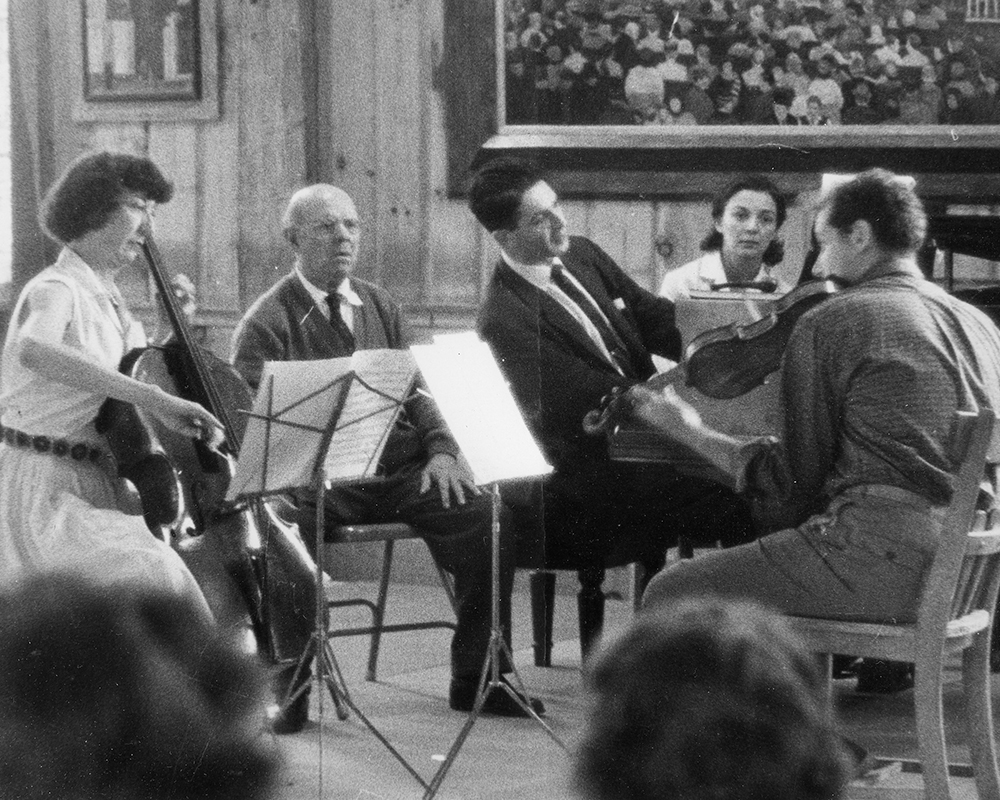
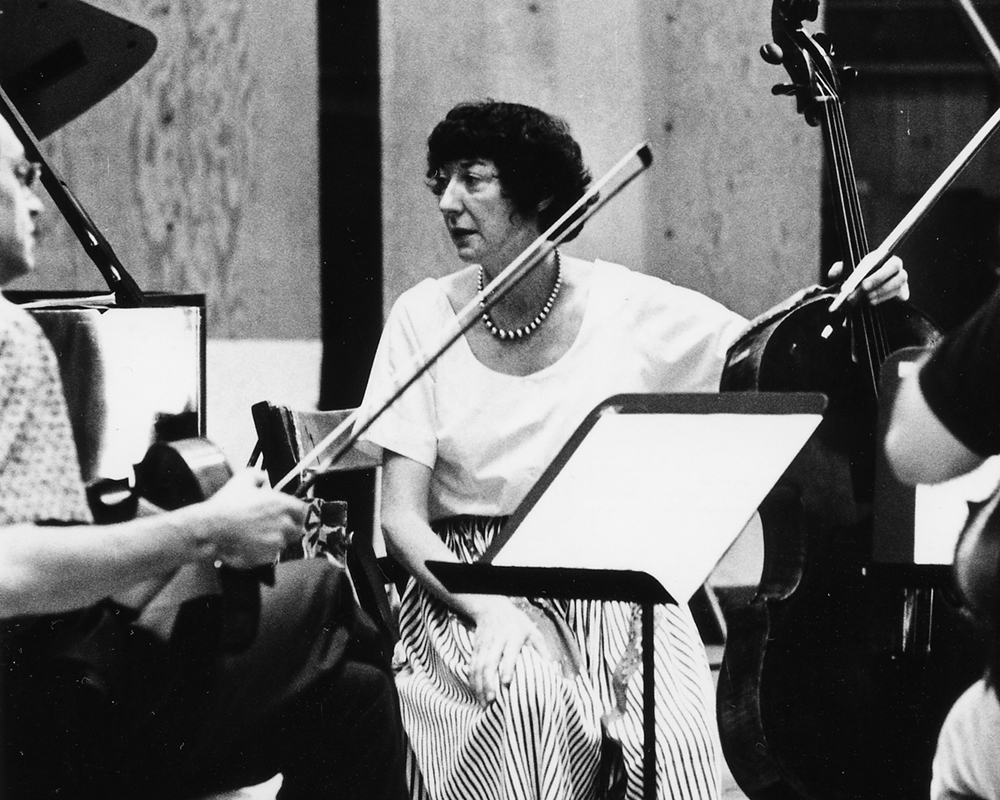
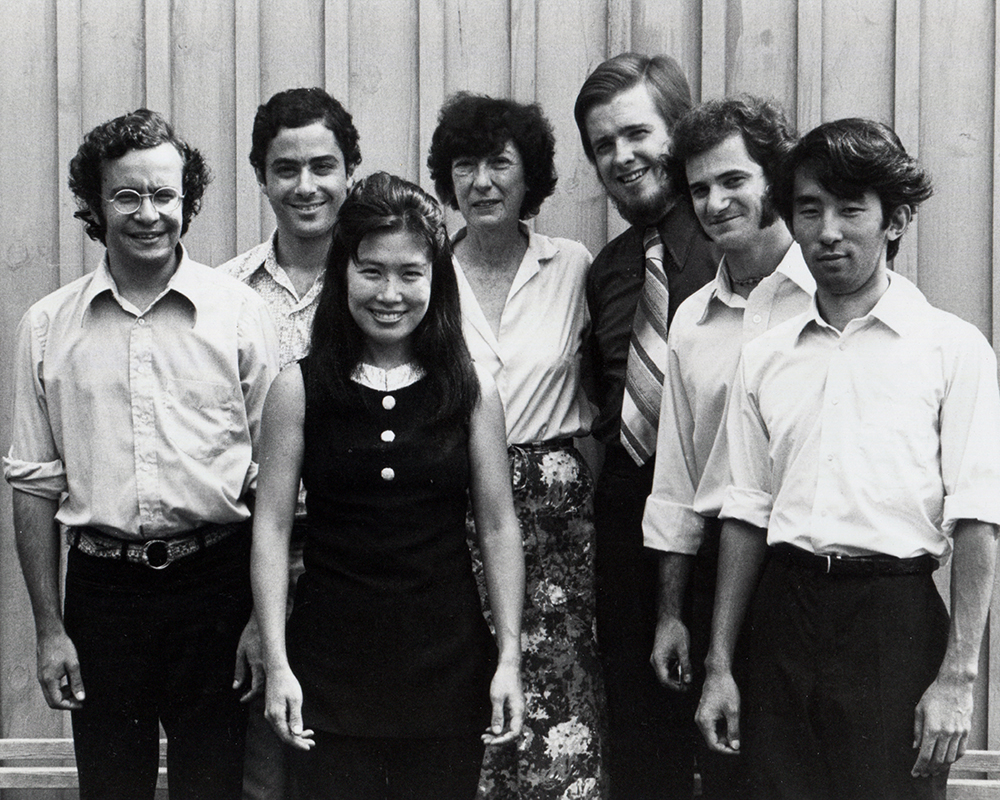
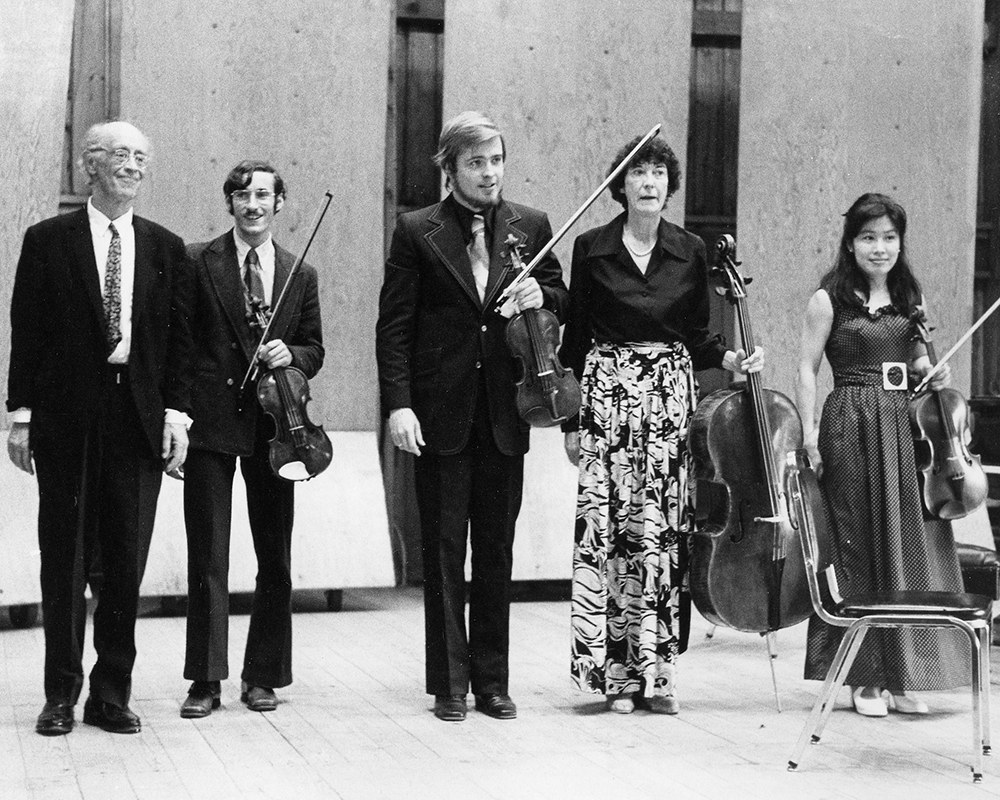
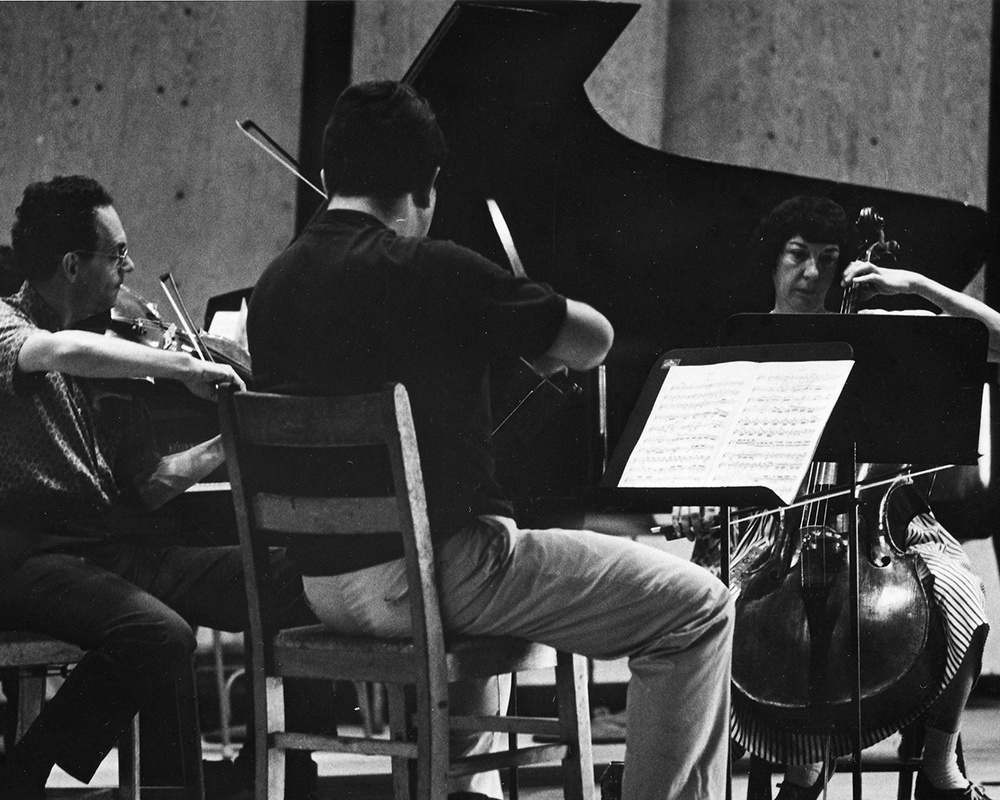
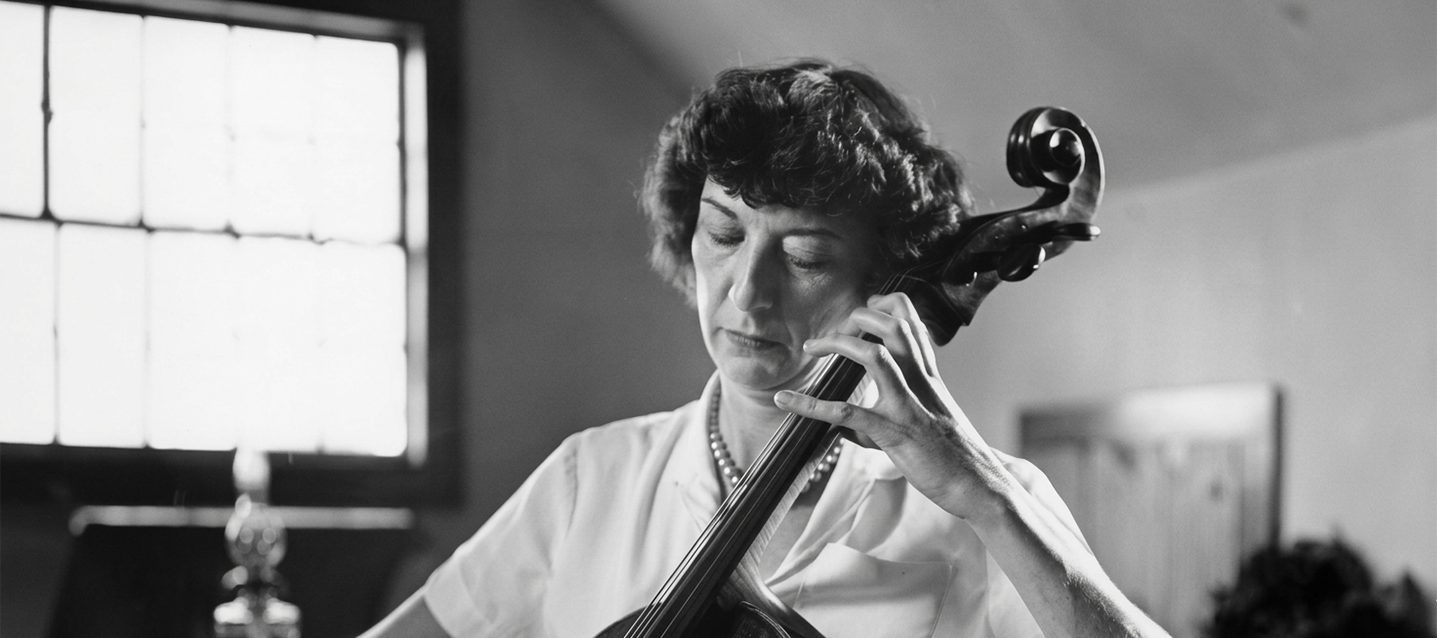
For almost twenty years, cellist Madeline Foley was a major presence at Marlboro. In her first summer, in 1956, on the opening concert of our sixth season she, together with violinist Frances Magnes and pianist Claude Frank, played two-thirds of the program: trios by Brahms and Mendelssohn on a program that also included clarinetist Harold Wright and pianist Anton Kuerti performing Schumann.  She was one of only six cellists that year and would go on to become an inspiration and important influence, through the mid-1970s, on generations of young musicians.

In a review of her Town Hall recital in 1950, the New York Times captured the essence of what Madeline Foley would offer her young colleagues at Marlboro. “Ms. Foley is an artist. She not only plays the instrument well but also has sensitive and individual musical ideas… One of the outstanding details of Ms. Foley’s playing was her attention to dynamics. Every phrase was built up and let down in a gentle diminuendo. This shaping of a phrase was especially evident in the opening of the Schumann piece: only a real musician could have handled it as she did.” We have a wonderful illustration of all these qualities in the captivating SONY recording of the Mozart Trio in B-flat Major, K. 502 with Rudolf Serkin that is included in this profile.

While Madeline Foley might not have been the best candidate for the diplomatic service, most musicians came to realize that her rather rough manner was not intentional. It was just meant to dramatically convey to her younger colleagues that they must serve the composer with honesty and sensitivity.

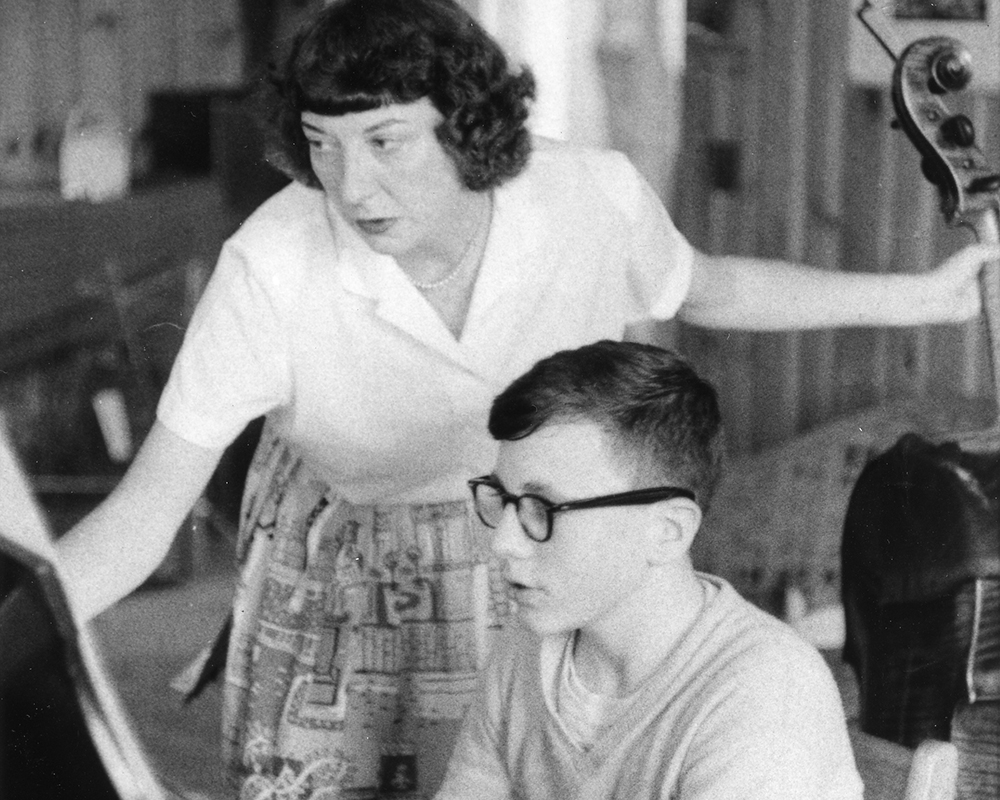
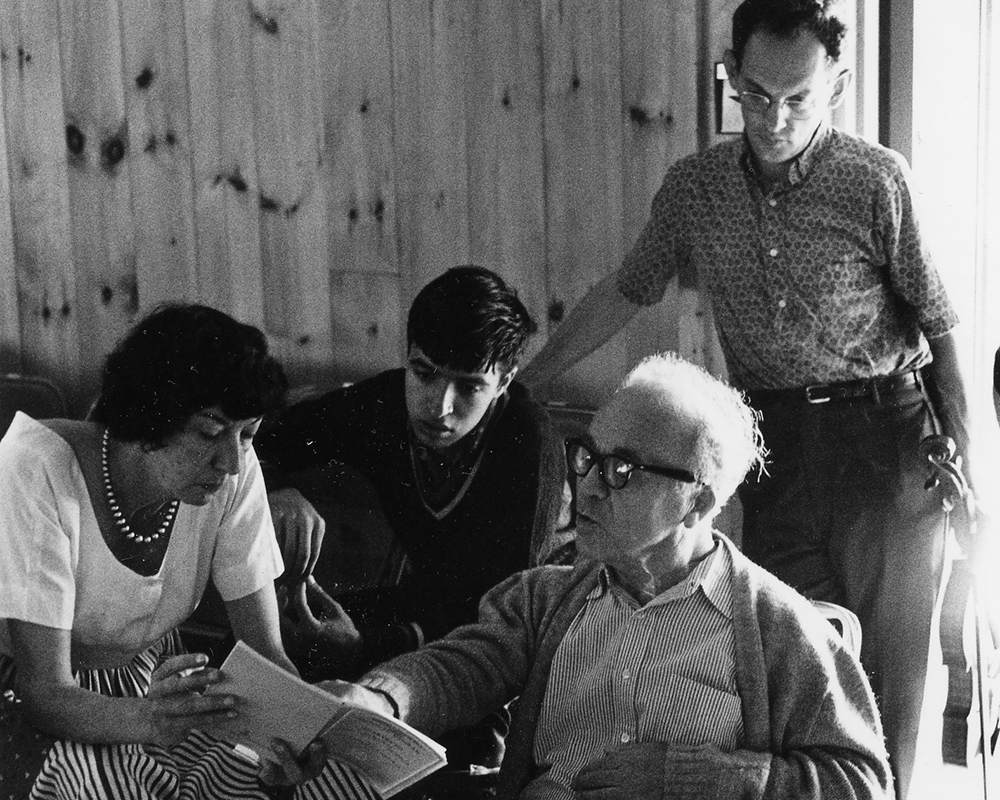
As a young musician, pianist Alan Weiss played with Madeline at Marlboro in 1974. He described her as “adorably gruff” and explained how her exclamations of “WHATCHA MEAN” helped him to understand that his playing in the opening of the Mozart G Minor Piano Quartet was a bit too timid. For him, “her somewhat confrontational manner put into the sharpest focus possible the whole idea of Marlboro: honesty and forthrightness of expression.”

Samuel Rhodes came to Marlboro at 19 and participated in many ensembles with Madeline before being invited to become the violist of the Juilliard String Quartet. “So many of my fondest memories,” he said, “are of playing in groups with her,” a sentiment shared by so many other Marlboro musicians. She helped them learn what it takes to become “a real musician.”

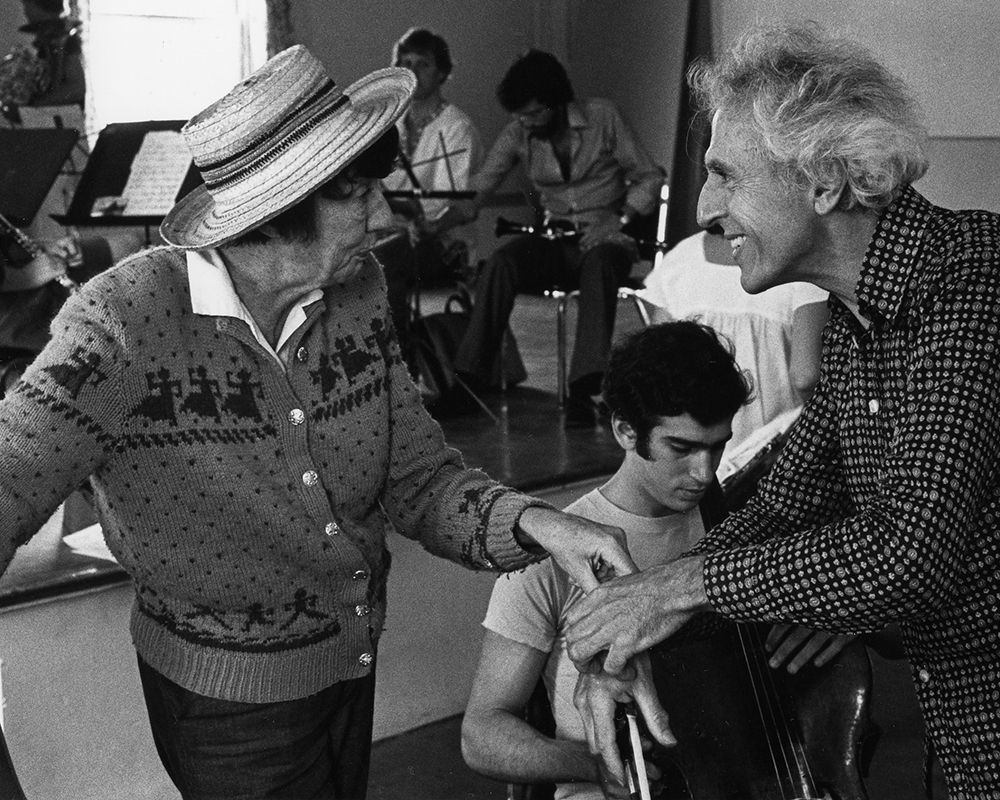
Be sure to peruse the photo gallery below for more illuminating reflections on Madeline and music from Pablo Casals, Luis Batlle, Richard Goode, Jaime Laredo, Yo-Yo Ma, Samuel Rhodes, and Arnold Steinhardt, among others.

Watch a pair of extraordinary videos of Madeline Foley with Pablo Casals. The 1955 NBC documentary is narrated by Foley and includes an extended on-camera interview of Casals by Foley. The Mannes School documentary (also from 1955) features Casals teaching Foley for an extended segment on the Prelude from the Bach Fifth Suite (3:58-8:20).

Timeline

1922

Early life

Madeline June Foley is born on June 22, 1922 in New York. Her mother, Christine Phillipson Dethier (1900-1995), is a violinist and musical pedagogue whose teaching emphasizes musical interpretation. Christine serves on the faculty at the Juilliard School, as does Madeline’s stepfather, the Belgian violinist Édouard Dethier. At age 11, Madeline—“Maggie” to friends—begins her musical studies with the Dutch cellist Willem Durieux (1879-1965). She continues at the Juilliard Graduate School of Music with Felix Salmond, the English cellist and teacher who premiered some of Edward Elgar’s most acclaimed works and who would later become the head of the cello faculty at the Curtis Institute of Music. In 1943, Madeline graduates from Smith College, where she performs as soloist with the Smith College Symphony Orchestra and is awarded the Harriet Day Barnum Memorial Prize for outstanding work in music. She subsequently earns a master’s degree from Juilliard in 1947.

1947

Studies with Casals

In 1947, Maggie travels to Pradès, France to study with the great Spanish cellist Pablo Casals. During the 1936-39 Spanish Civil War, Casals had given benefit concerts to support refugees in his home country. His vehement opposition to Spain’s dictator, Francisco Franco, compels Casals to live in self-imposed exile in the south of France, sacrificing his career as a touring musician altogether. Maggie stays with Casals in Pradès for six months, and it soon becomes clear that he sees her as his protegée: a cellist who can best carry on his musical ideals. Between 1947-53, Madeline spends half of each year in Pradès working with Casals. Maggie’s dedication to her teacher extends throughout her life: she always uses a gut A string, like Casals, and with it achieves a highly personal sound. “It was earthy, it wasn’t a pure beautiful sound in the way we think of it now” remembers violist Samuel Rhodes, comparing Maggie’s tone to that of the human voice. Later, she sets to work on a special edition of Bach’s Cello Suites—an exciting and colossal undertaking. As a student of Casals herself, Madeline takes care to notate his bowings, fingerings, and comments throughout.

1949

An Auspicious Debut

Resplendent in a white evening gown, Madeline makes her New York debut in November 1949 with a recital at The Town Hall, a historic landmark venue in the heart of New York City. With Paul Ulanowsky at the piano, the recital is a triumph— “a performance of exciting communication and uncommon beauty,” according to the New York Times reviewer, who also lauds Foley’s “remarkable imagination,” “graceful use of rubato,” and “subtle insight that made a living thing of each phrase.” Debussy’s Sonata and Brahms’s E Minor Sonata highlight a program that also includes Beethoven’s Variations on “Bei Männern” and a pair of transcriptions favored by Casals: Bach’s Aria from Pastorale BWV 590 by Rosanoff and a Haydn sonata by Piatti. The Times review concludes with a memorable description of the scene: “Miss Foley’s fashionable audience filled nearly every seat in the hall. It applauded long and loud after every selection, buzzed excitedly during the intermission, but maintained a flatteringly intent silence when she played. It complemented a musical event not soon to be forgotten.”

1950

Schneider Quartet

In 1950, violinist Alexander Schneider invites Madeline to join his eponymous string quartet, which also includes violinist Isidore Cohen and violist Karen Tuttle, all of whom will go on to participate at Marlboro. Resolving to bring a festival to Casals, whose continued self-imposed exile deprives the world of a vital musical voice, Schneider initiates the first Casals Festival in Pradès in 1950. Following their first appearance at the Festival, the quartet soon undertakes an ambitious project at the behest of the Haydn Society: recording the complete Haydn String Quartets.

1951

A Conversation with Casals

The following year, at Madeline’s initiative, NBC produces the movie “A Conversation with Casals” for its Wisdom Series. Directed by Jacques Baratier, the film features Madeline interviewing Casals at home in Pradès. Their wide-ranging conversation explores elements of style, technique, conducting, and family, as well as Casals’s introduction to music and his exile from Franco’s Spain. Casals also performs one of Bach’s suites for unaccompanied cello. A link to this extraordinary video is included within this profile.

1952

NYC Reprise

In February 1952, Madeline performs again at New York’s Town Hall, playing Schumann’s Cello Concerto with the Little Orchestra, conducted by Thomas Scherman. Despite questioning the quality of the orchestra’s playing, the New York Times critic is effusive in praising Madeline’s performance: “Every note she drew from the strings was expressive. She played its melodies with a deep songfulness, and her tone was beautiful, being full despite its lightness and always having warmth and color without ever being lush.” While she briefly serves as principal cello of the Little Orchestra, Madeline’s career centers on chamber music, to which the subtleties of her sound are best suited. She and her Gofriller cello travel across the United States and Europe, and she is in demand on the university and chamber music society concert circuit. The publicity for a 1952 performance at Western Washington University—on an artist and lecture series that also includes the Juilliard String Quartet, and poet Ogden Nash—lauds her as “an artist of the highest order.”

1953

Highly Attuned Haydn

Between 1950 and 1953, the Schneider Quartet performs and records twenty quartets for the Haydn Society, dedicating themselves to a graceful, fluid approach that is somewhat more ‘classical’ than their contemporaries and highly attuned to the period in which each work was composed. A 1952 New York Times review heralds the “richness and variety of expression” they achieve. “The approach is vigorous and vital,” writes critic Howard Taubman, highlighting the “full-blooded sweep and conviction” of the recorded performance and noting that the quartet plays as though Haydn’s quartets “were living music, which indeed they are.” While Schneider’s controlling hand leads to conflict between him and Madeline and to her eventual departure from the ensemble (Marlboro co-founder Hermann Busch succeeds her in 1953), Maggie forges an enduring connection with violist Tuttle. They “had a bond that was very wonderful to see when they were together,” recalls Samuel Rhodes. “They sort of had a language that only they understood.”

1955

Pradès & Recording with Casals

Maggie had met the American pianist Eugene Istomin at the Pradès festival in 1950, and the two spend the next five summers there. In addition to performing with the Pradès festival orchestra, in which she often plays with Casals and shares the first cello chair with future Marlboro colleague Paul Tortelier, Madeline is a part of the recording of Brahms’s First Sextet. Over time, she also assumes key administrative roles at the Festival that include hiring artists and staff and managing festival operations. From 1953 to 1955, she and Istomin serve as the festival’s guiding forces, with him as artistic director and her as secretary of the American Executive Committee. During this time, they supervise a series of Casals’s recordings for the Columbia label. It is still the early days of recording, with primitive equipment and enormous reels of tape. One of Maggie’s jobs is to carefully snip Casals’s characteristic groans out of the reels without interrupting the music, which leaves her with a unique souvenir: a bag of her teacher’s groans.

1956

From Marlboro to Broadway

Madeline is invited to the Marlboro School of Music and Festival by Rudolf Serkin in 1956. That first summer, she performs Brahms’s Piano Trio in C Minor, Op. 101 with pianist Claude Frank and violinist Frances Magnes, as well as Beethoven’s Cello Sonata in D Major, Op. 102, No. 2 with Serkin. As she had in Pradès, Maggie directs all her energy to the festival and devotes herself to her fellow musicians. As pianist Luis Batlle, a close friend personally and musically and a frequent bridge partner of Maggie’s, recalled, “Madeline Foley was one of the greatest musicians I ever met and the most honest. Honesty to a fault and with an impeccable, impeccable musical taste!” Samuel Rhodes remembers her relentless specificity about each phrase, a “sophistication to what she demanded of us and herself.” Reflecting back on rehearsals from this period, pianist Richard Goode testifies that “Madeline had an enormous fund of patience—or maybe it was mostly perseverance.” Maggie can be cynical and difficult, but when the music-making warrants praise she offers it warmly. Following her first Marlboro summer, Madeline debuts on Broadway, playing the music of the original musical comedy The First Gentleman with harpsichordist Abba Bogin, violinist Isidor Lateiner, and clarinetist Emory Davis, and performs with the Mannes Trio alongside pianist Leopold Mannes and violinist Frances Magnes.

1958

A Legacy of Honesty

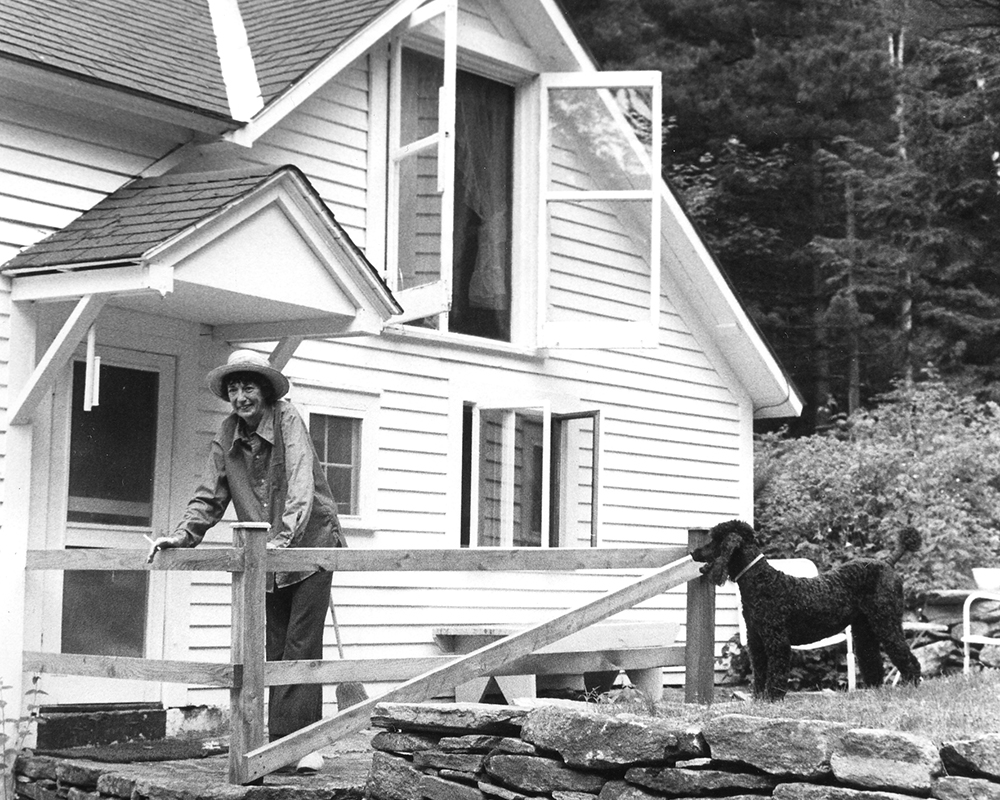
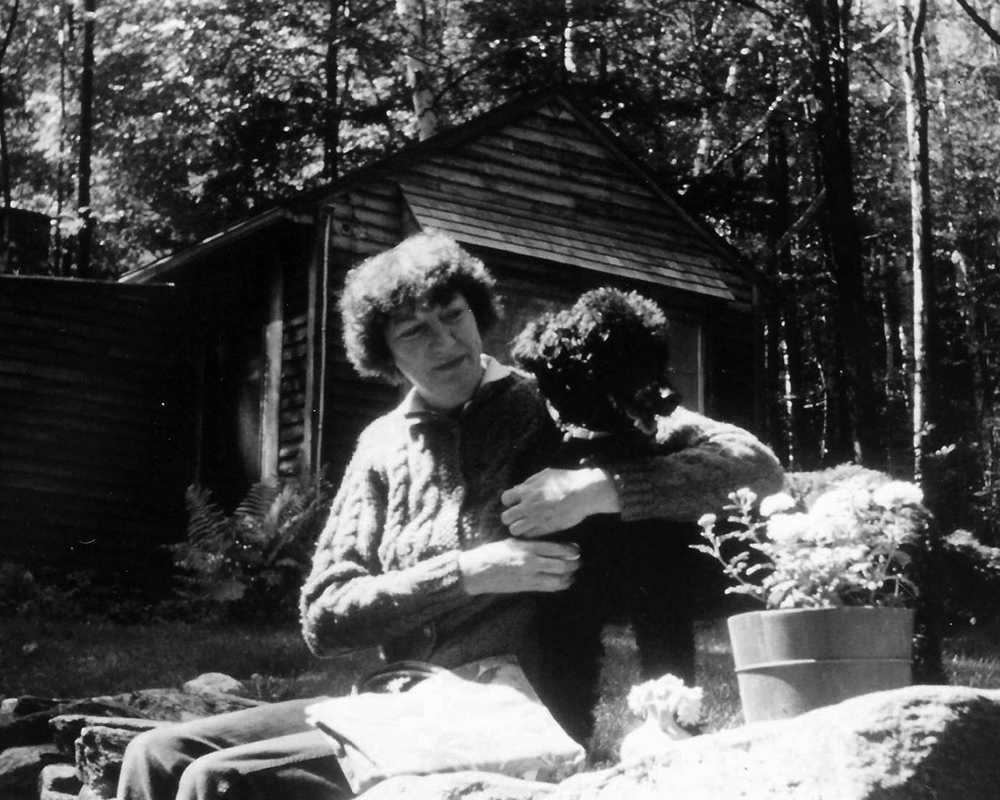
When invited to return to Marlboro in 1958, Maggie writes that “there is no place I would rather be in the summer and nothing I would rather do than teach there.” Often accompanied by her black poodle, Suzy, she spends each summer in Vermont from 1956 until 1971 and returns again in 1973 and ’74. Madeline is known for being direct: “she was never going to beat around the bush or try to cushion her criticism with praise,” violinist Jaime Laredo explains. “You knew that what she said was what she meant.” Her “irrepressible” nature could take some getting used to. Arnold Steinhardt says, “You learned right away to ignore the fact that she was often crotchety.” In time, the musicians around Madeline come to find her extreme bluntness, honesty, and musical commitment endearing. “Madeline was first and foremost a musician, a sensible musician,” adds Steinhardt. “And for someone who sometimes spoke roughly, there was sensibility there in her music making and in her personal relationships with people that you wouldn’t guess were there.”

1963

Contribution & Commitment

At Marlboro, Madeline performs less frequently than she might because she is always striving to get as close to the composers’ intentions as possible. “She always thought that the pieces were not ready enough,” remembers Jaime Laredo. Richard Goode is mentored by Maggie at Marlboro as a young artist and still remembers her passionate playing and the tremendous learning experience of working with her. Madeline is relentless in her efforts to improve her own playing. In 1963, she returns payment for a concert to Marlboro; she writes, “I feel I don’t deserve it, as I did not contribute to the school what I should have.” Tony Checchia writes back on behalf of Marlboro, “I have never read anything as foolish in my life as your saying that you did not contribute what you should have to the School. I only wish everyone at Marlboro would contribute half as much! Thanks a million for everything.”

1965

Musicians from Marlboro

Maggie participates in three Musicians from Marlboro tours. During her first tour, in 1965, she performs works by Mozart and Dvořák, as well as a neo-classical string trio by American composer Irving Fine. Her colleagues on the first tour include pianist Ruth Laredo, violinist Jaime Laredo, and violist Samuel Rhodes. The subsequent tours in 1972 and 1974 feature works by Bruckner, Bartók, Brahms, and Mozart, among others. Rhodes remembers that Madeline “was very fascinated by things she didn’t quite understand, like contemporary music. She insisted on being part of it and wanted it drummed into her head what it was that made this music inspiring to all of us.” When not touring or teaching, Maggie returns frequently to New York to visit her mother and, when there, makes time to meet with Michael Tree, Jaime Laredo, and Karen Tuttle, the four of them often playing Haydn quartets for fun late into the night.

1970

Teaching

Madeline teaches and serves as musician in residence at Brandeis University, where she works with Eugene Lehner of the Kolisch Quartet, Robert Kopf of the Juilliard Quartet, and fellow Marlboro string player Nancy Cirillo, among others. At Brandeis, she is a part of the University’s Chamber Ensemble, which performs widely with a repertory divided equally between contemporary music and canonical works. Maggie teaches at numerous other institutions, including Boston University, Wheaton College, the New England Conservatory of Music, and the Mannes College of Music. In addition to the music she makes in academic circles, Maggie continues to work with talented young musicians at Marlboro each summer. Cellist Marcy Rosen recalls working with Madeline in the ’70s: “I learned a great deal from Madeline Foley who was a wonderful cellist. She had a directness, and it was like ‘this is how it’s done, and you have to learn how to do it,’ and she was right.” Another Marlboro senior cellist, Peter Wiley, says “the word integrity comes to mind with Madeline and the Casals connection. A very, very strong personality, wonderful musician.” After getting to know her, Maggie’s fellow participants still find that her tough exterior recedes to reveal a passionate and generous musician and person.

1977

Later Years

Toward the end of her life, Madeline’s health declines, but she continues to contribute to Marlboro however she can. In 1977, three years after her last Marlboro performance, she suffers a heart attack and offers to resign from participating, saying she does not want to be a “freeloader.” In the end, she attends the festival with the understanding that her groups will be for study purposes only, not performance. In 1979, Maggie turns down the invitation to participate in the festival entirely, writing “There is no way I can be talked into accepting this.” But Maggie is an important member of the Marlboro family, and as she lives locally, she is regularly invited to campus to join the community for meals and concerts.

1982

Death

On February 2, 1982, at the age of 59, Madeline dies of a heart attack at the Four in Hand Inn in Marlboro, just two miles from the Marlboro campus. Although she is prone in her later years to loneliness and depression, musicians such as Arnold Steinhardt “have wonderful memories of her playing, of our playing together, of our friendship and interactions. You mention Madeline Foley, and I feel good. She was an artist, there is no question about that in my mind. She was an artist who was capable of not just playing beautifully, but conveying some of the mysteries of music to young people.”

2014

A Living Legacy

Maggie does not live to see the publication of her Bach Suites for Violoncello solo, but the project is completed by David Soyer and Marta Casals Istomin, passing down Casals’s pedagogic legacy to future generations of cellists. The film “A Conversation with Casals” preserves not only her teacher’s legacy but her own as well. The Schneider Quartet’s remarkable Haydn recordings remain widely treasured today for their musicality and phrasing. In response to demand from collectors worldwide, a 15-disc box set of the recordings—restored from the original Haydn Society master tapes and LP sources—is reissued by Music and Arts in 2014 and remains available today. Critic Antony Hodgson lauds the set as a “touchstone of Haydn interpretation” while Michael Ullman, in a 2015 review, proclaims that the Quartet bestowed upon listeners “the gift of the most gloriously played Haydn I know,” marveling at the “zest of the allegros, the subtlety of the dynamics and precision of the ensemble” and the rhythmic vitality of the performances. “A Schneider Quartet recording,” he concludes, “is like a passionately cerebral celebration. There’s dance, sober thinking, and pathos as well.” You can listen to the Schneiders playing Haydn’s Quartet in C Major, Op. 50, No. 2 in the Recordings section of this profile. It is another testament to Madeline Foley’s contribution to music and to the many young musicians that she impacted in her years at Marlboro.

Recordings

Enjoy a selection of chamber music recordings from Madeline Foley’s years at Marlboro, including Dvořák’s Piano Quartet No. 2 in E-flat Major, Op. 87, B. 162 with Sergiu Luca, Philipp Naegele, and a 20-year-old Murray Perahia; Brahms’s Clarinet Quintet in B Minor, Op. 115 with Harold Wright, Miriam Fried, Paul Biss, and John Graham; Mozart’s Trio in B-flat, K. 502 with Rudolf Serkin and Jaime Laredo, released commercially on CBS/Sony Classical from a 1968 live performance; and Haydn’s Quartet in C Major, Op. 50, No. 2, recorded ca. 1952 by the Schneider Quartet.

Audio Recordings from Marlboro

Gallery

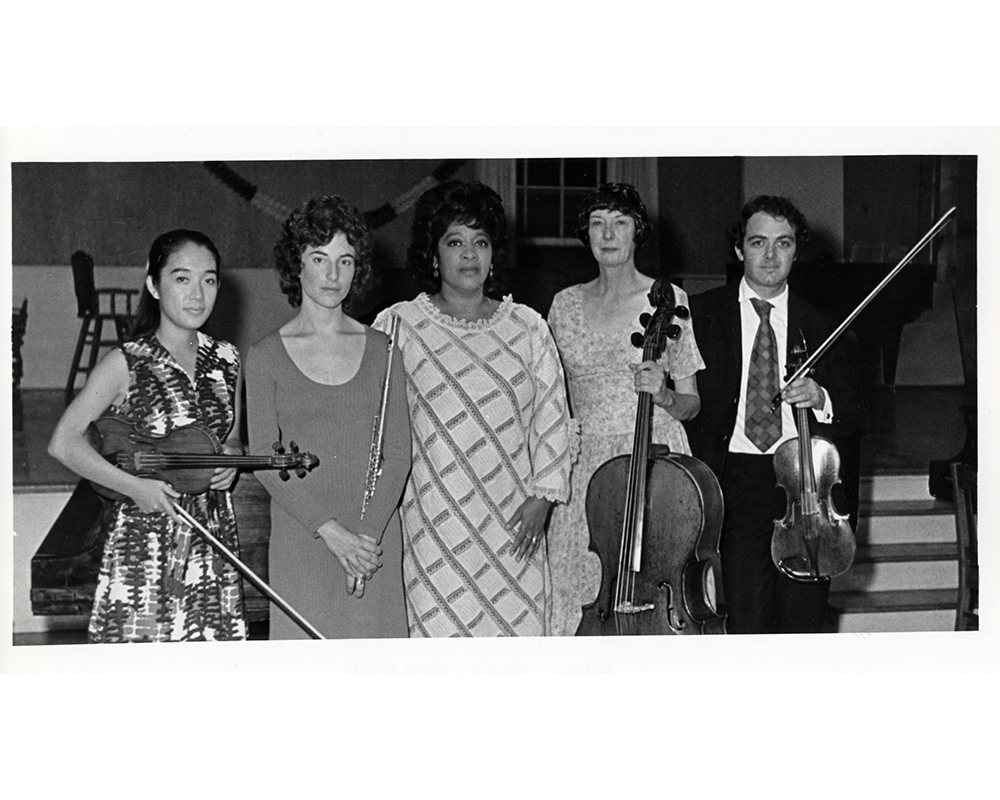
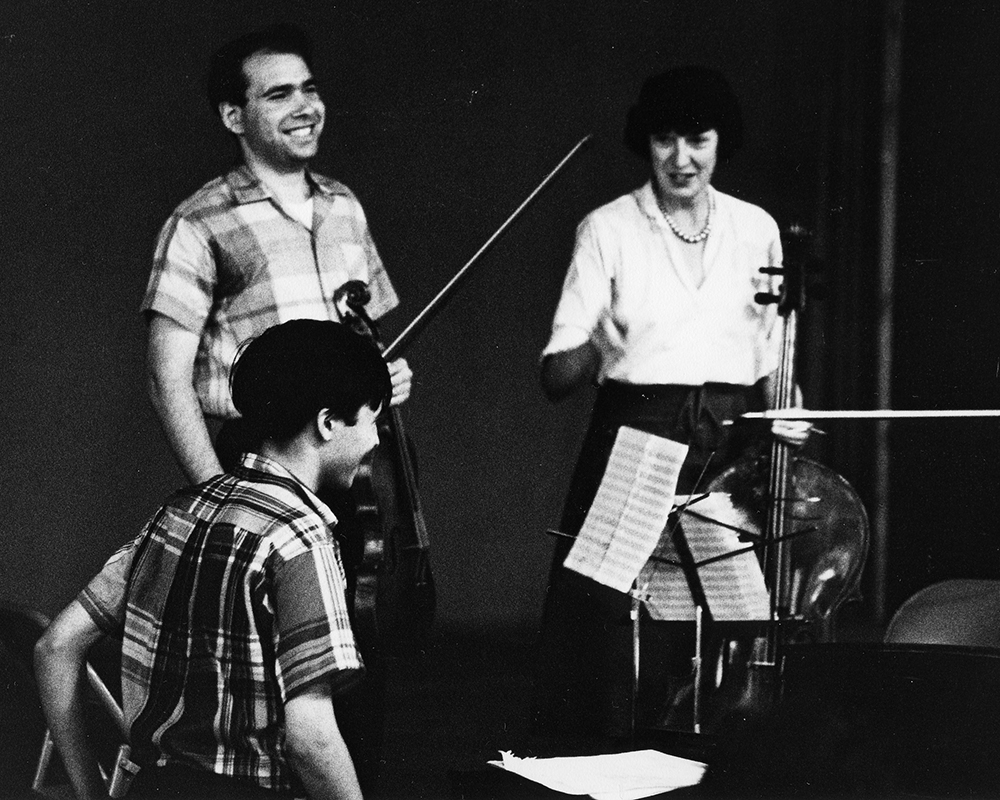
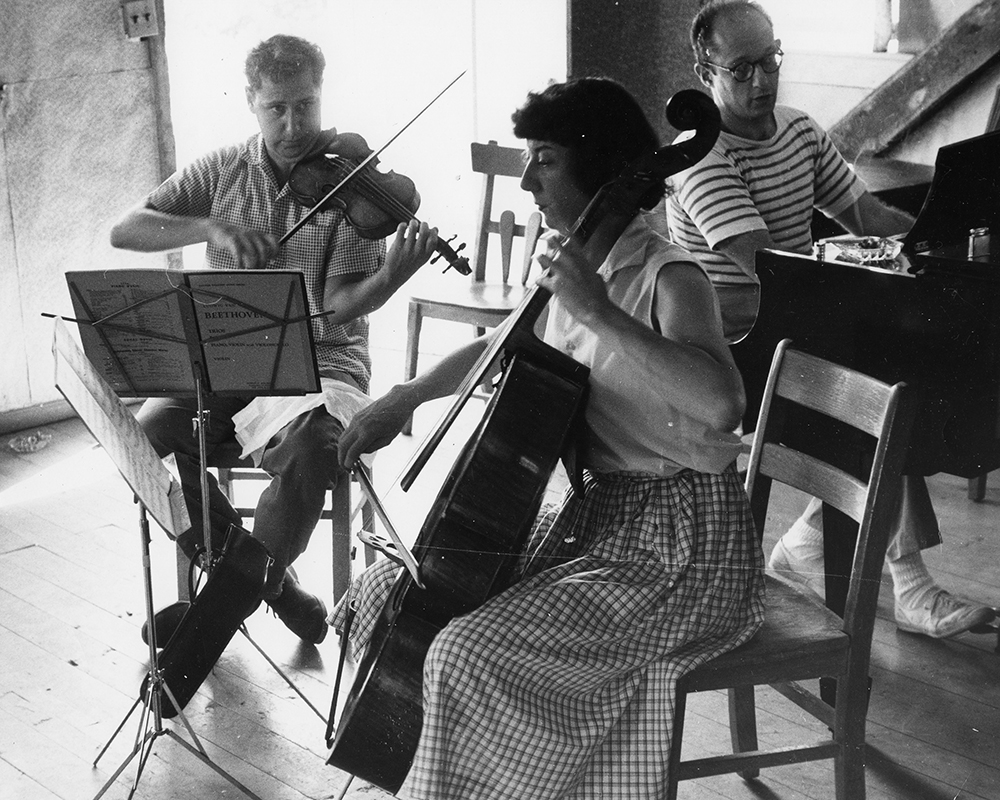
Click any of the pictures below to view an enlarged version complete with additional quotes in the captions.