From the Archives:
Pablo Casals

  • Introduction
  • Timeline
  • Recordings
  • Gallery

Introduction

The great cellist, conductor, and composer Pablo Casals first came to Marlboro in 1960. Widely considered the foremost cellist of the 20th century, he had fled Franco’s Spain for Prades, in the Pyrenees of southern France, and vowed not to play or conduct in any country that recognized Franco’s Fascist regime.

The violinist Alexander Schneider, who felt that Casals had a great gift that should be shared, brought a group of distinguished musicians to him in 1950 in order to found the Prades Festival. Rudolf Serkin was among the artists who came to Prades, and his great admiration for Casals as well as his close bond with Alexander Schneider led to the invitation for Casals to come to Marlboro in 1960 for two weeks.

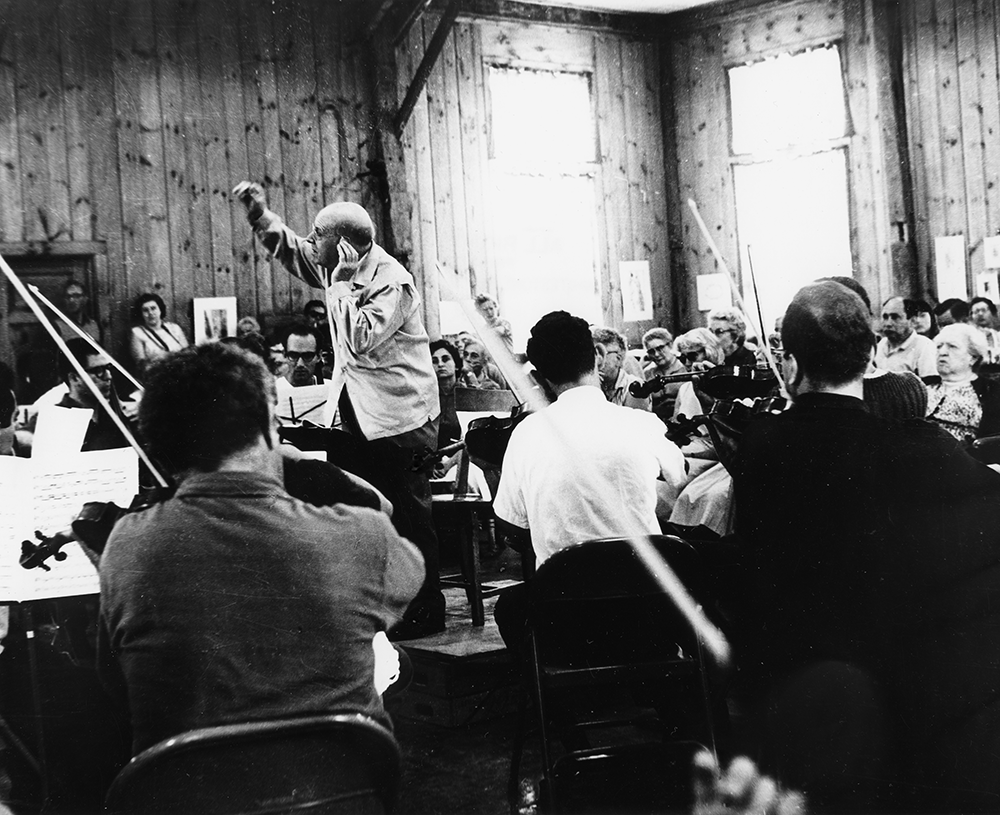
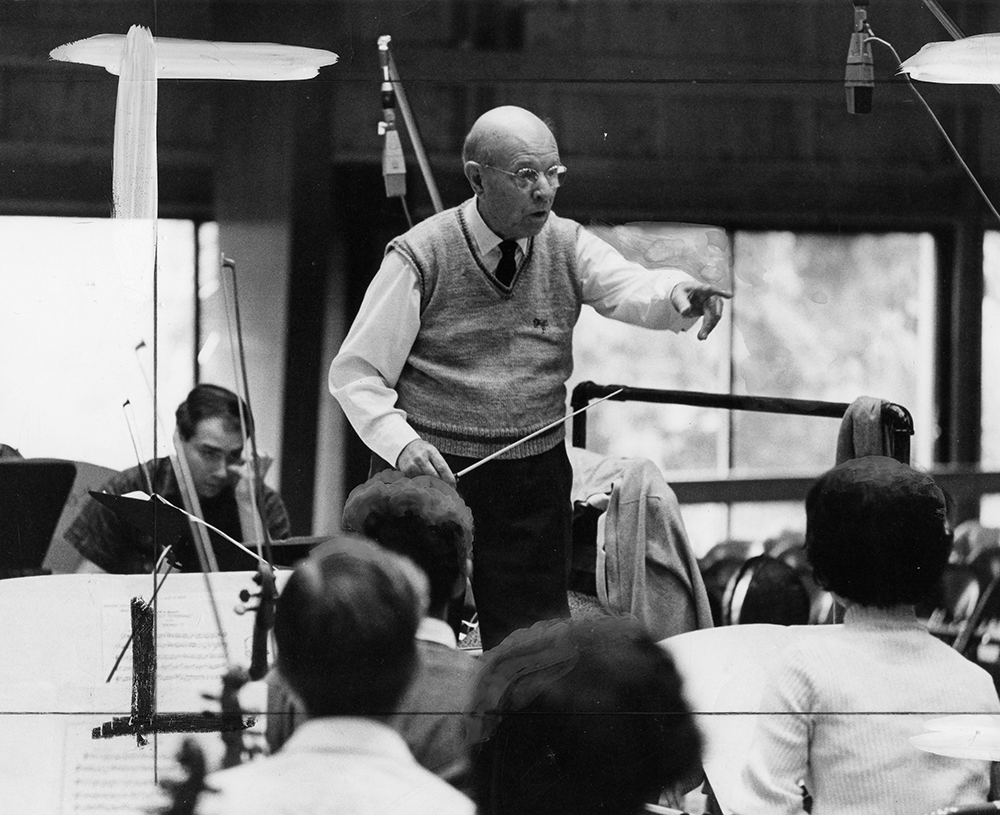
Serkin felt that Casals had something musically unique to offer Marlboro’s exceptional young musicians and the entire Marlboro Music community. The participants that summer included pianists John Browning, Richard Goode, Anton Kuerti, and Peter Serkin; string players who would go on to form or join the Guarneri and Juilliard String Quartets; others, including woodwinds, who would become principals and members of the Boston, National, and Toronto Symphonies and Cleveland and Minnesota Orchestras; and singers who would go on to perform with the Metropolitan Opera as soloists with orchestras around the country. They were all to benefit from the insights of Maestro Casals—both from his cello master classes and from the orchestral performances that he conducted, including Bach’s Brandenburg Concerto No. 5, Mozart’s Symphony No. 29 in A Major, K. 201, and Beethoven’s Symphony No. 4 in B-flat Major, Op. 60.

Even though the New York Times ran an article on Marlboro in 1956, the Festival at that time was still known only to a relatively small circle of musicians, some music-loving Vermont neighbors, and northeast fans of Rudolf Serkin. Pablo Casals changed all that. His only recent performance in the U.S. had been at the United Nations, and the rare opportunity to see him in the neutral setting of Marlboro, at a retreat for young musicians, attracted swarms of visitors and abundant international attention. Sometimes these newcomers were rewarded with one of his performances, but they also learned something else: that anything performed at Marlboro was likely to be exceptional.
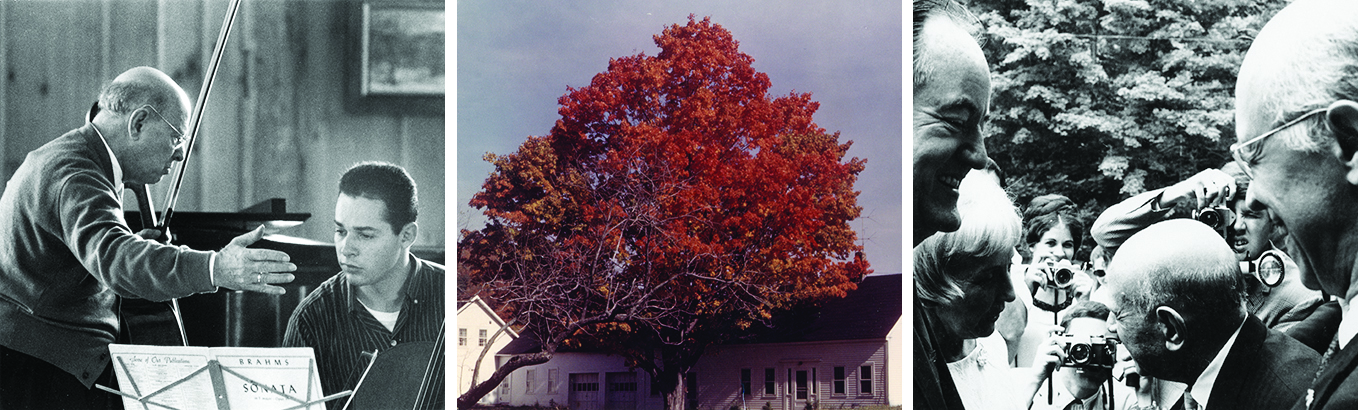
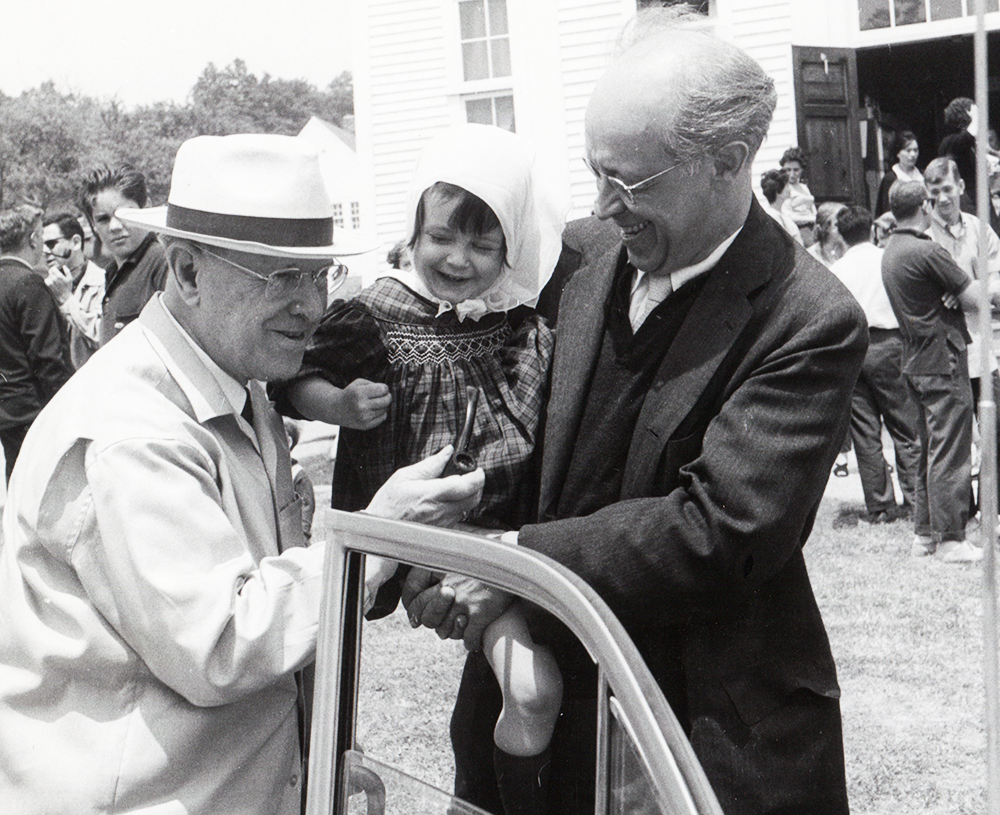
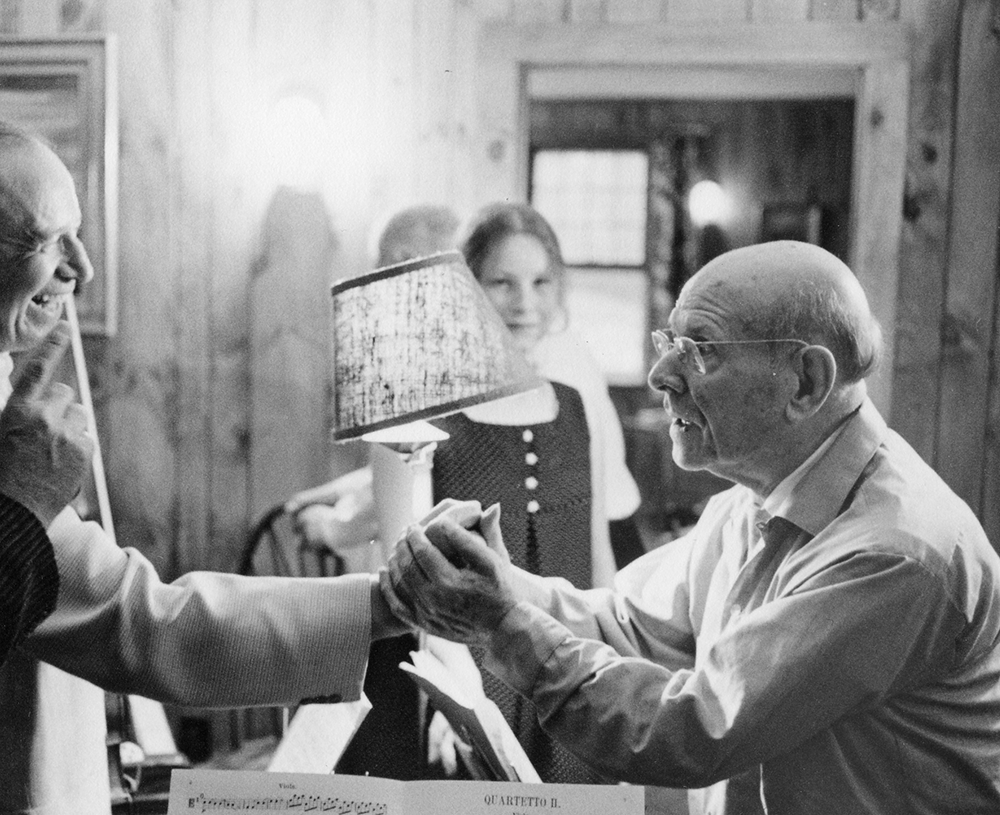
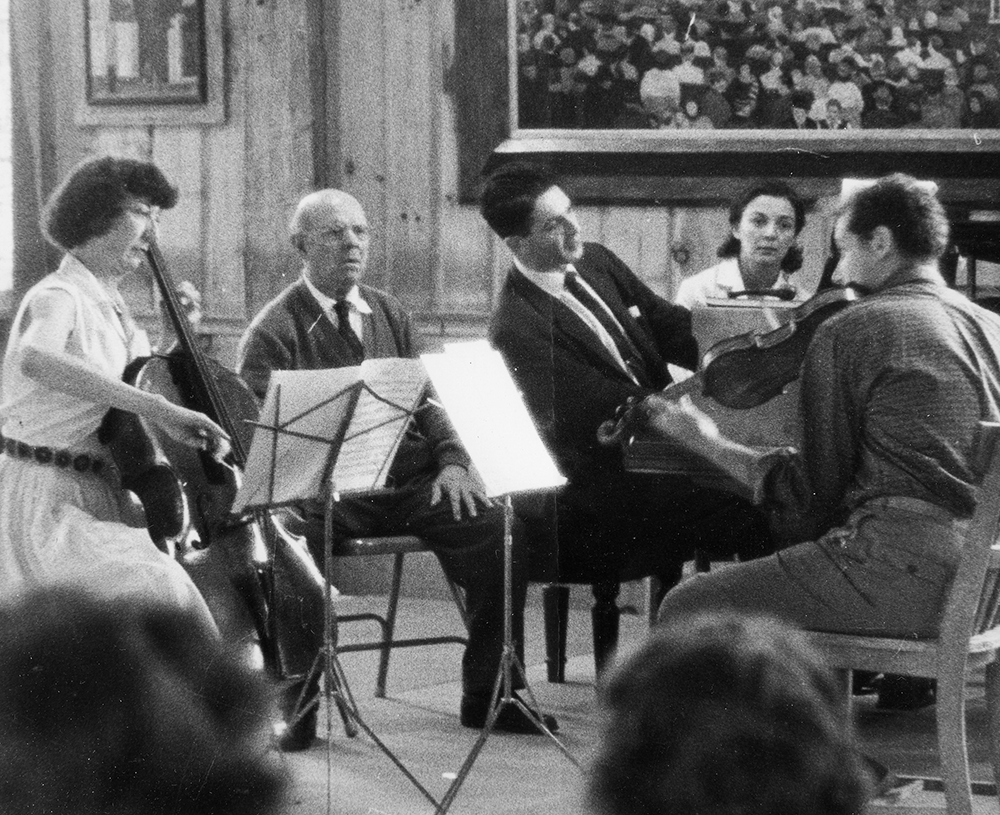
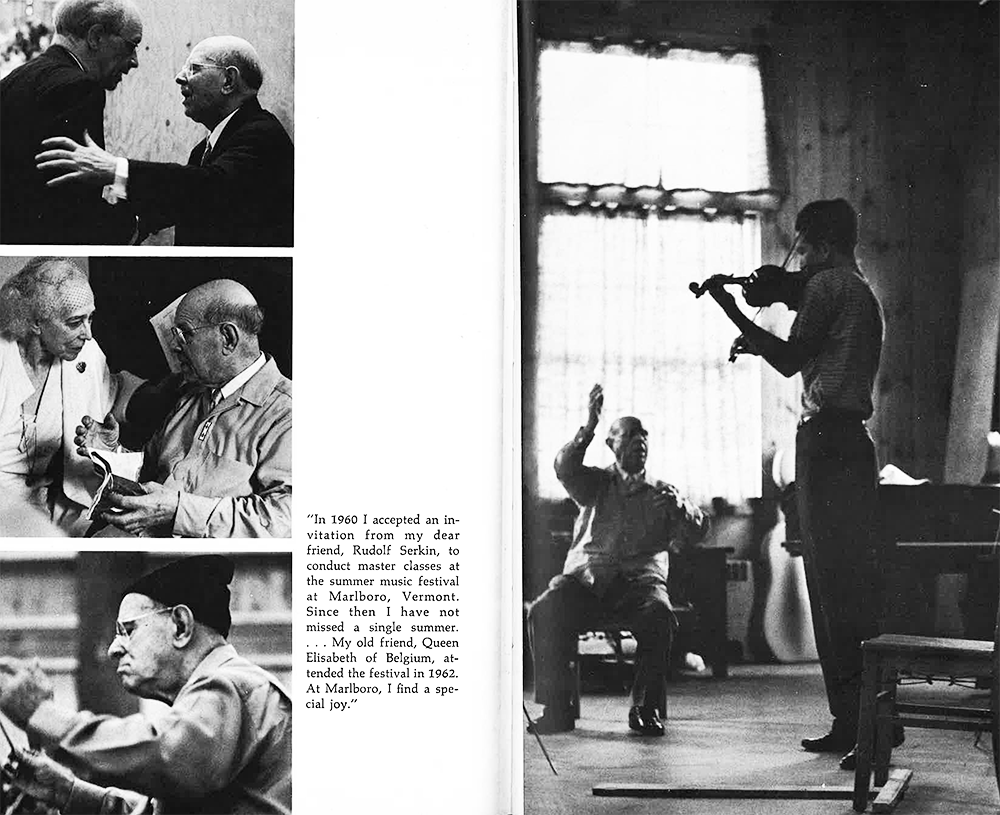
Pablo Casals coaches Michael Grebanier in a master class (photo by Clemens Kalischer); the Casals’s summer home; visiting Vice Presdent Hubert Humphrey, a friend of Rudolf Serkin from his days as Mayor of Minneapolis, greets the Maestro after a concert (photo by John Snyder).

For the 84-year-old Maestro, Marlboro proved an equal revelation. He was impressed by Marlboro’s deep devotion to the exploration of music and by the importance of passing on insights to extremely gifted and enthusiastic young musicians. Casals described Marlboro as a unique institution: “a temple of music.” It drew him back to Vermont for even longer visits over the course of 12 more summers, the last of which took place just a few months before his death in 1973, at almost 97 years old.

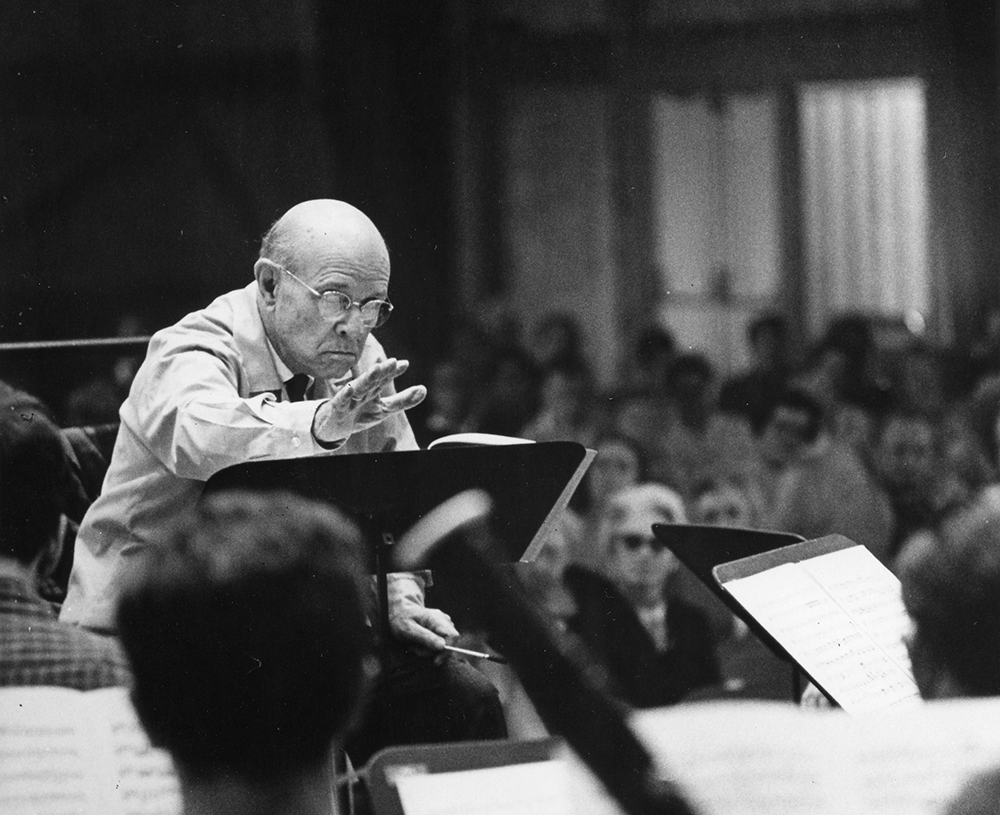
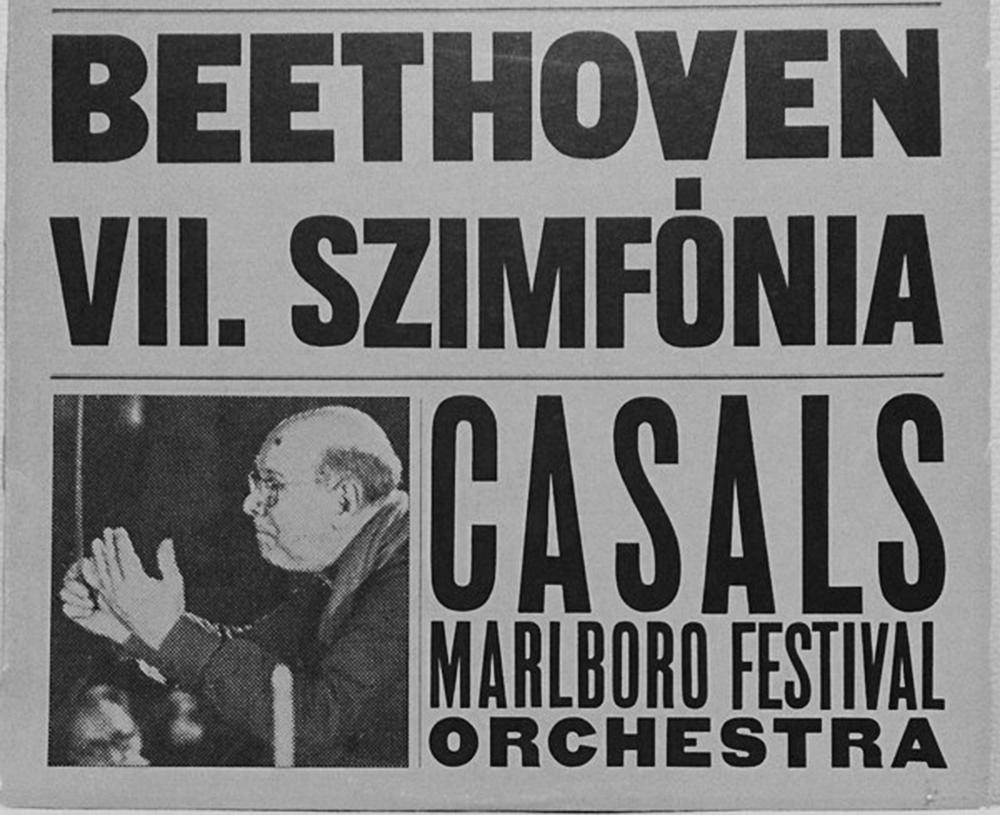
Casals left a remarkable legacy at Marlboro in rehearsals, concerts, and recordings of orchestral works by Bach (the Brandenburg Concertos and Orchestral Suites), Haydn, Mendelssohn, Mozart, Schubert, and Schumann. An orchestral focus was new to Marlboro, but in this case rather fitting, for Casals approached the symphonic repertoire as if it were chamber music. Invariably, he approached each work as if it were newly composed and infused it with his own rigorous standards of musicianship and expression.

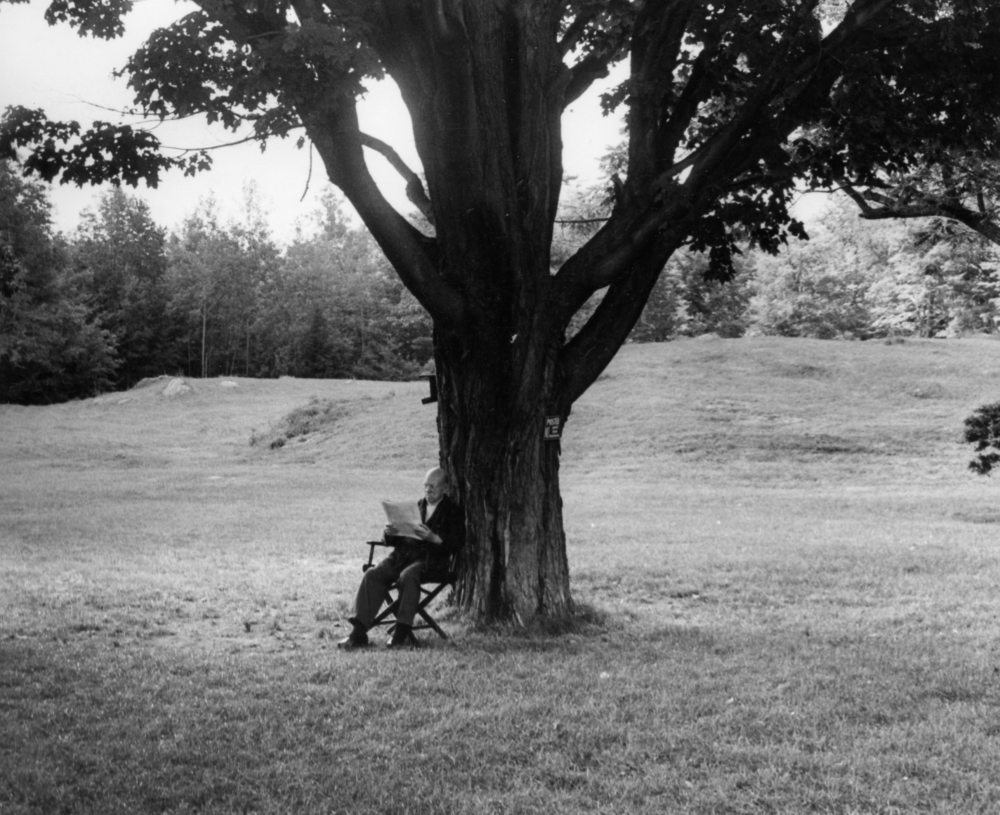
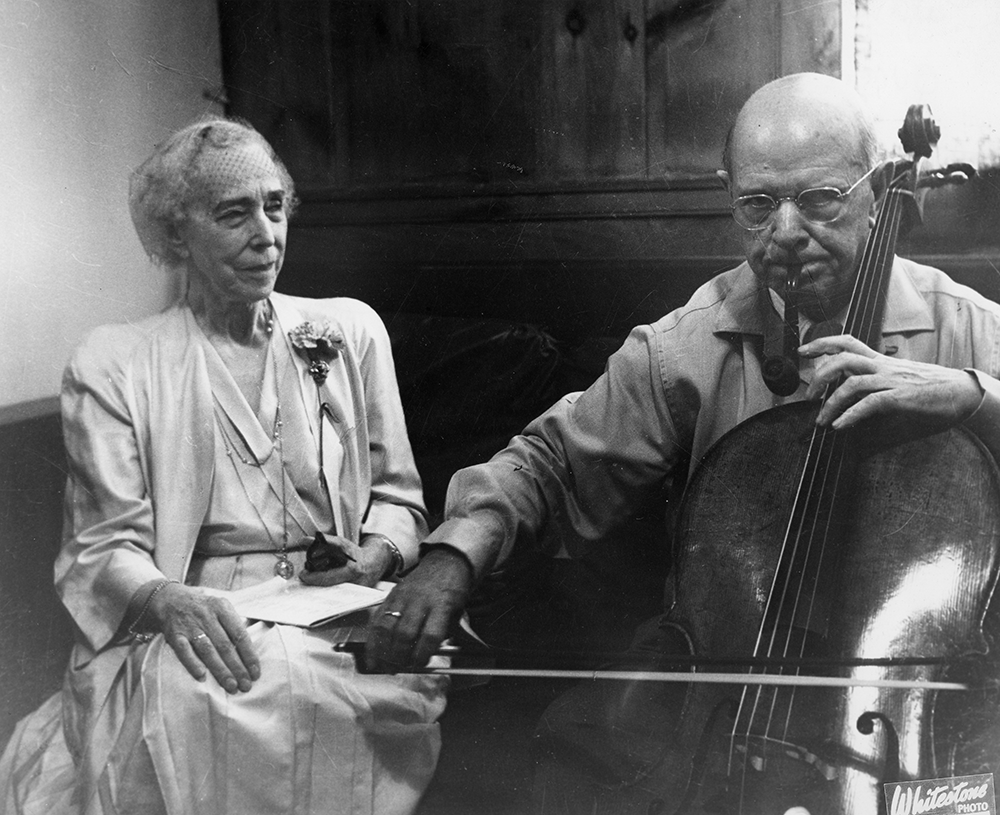
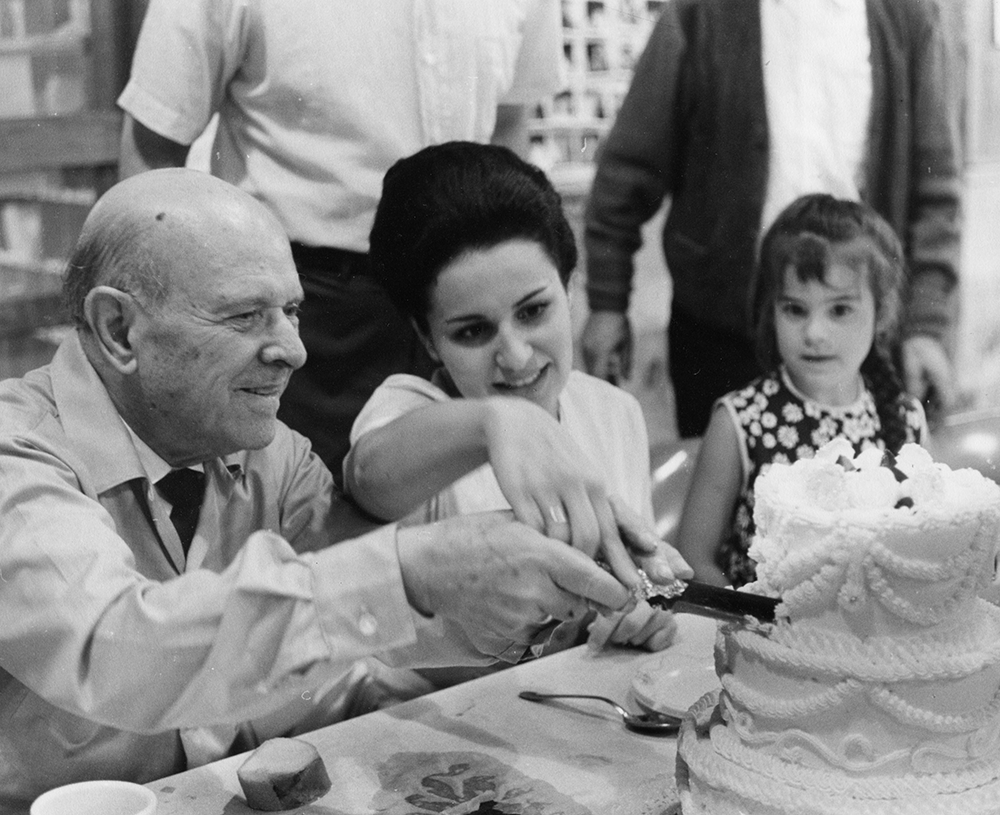
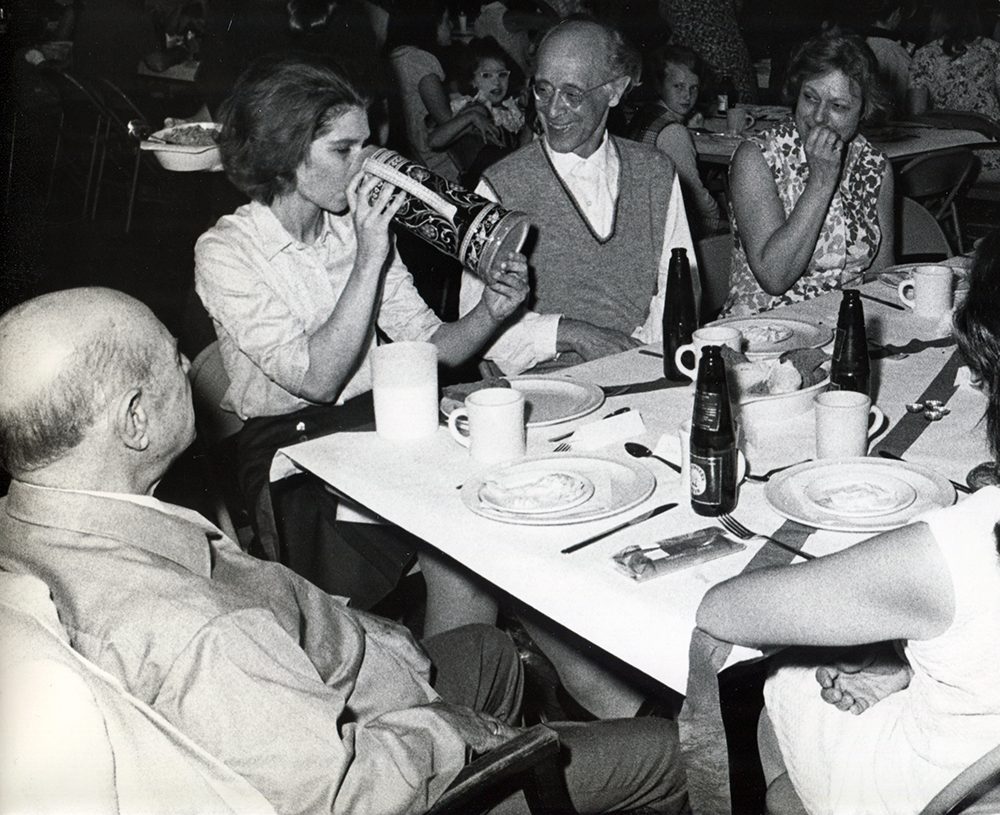
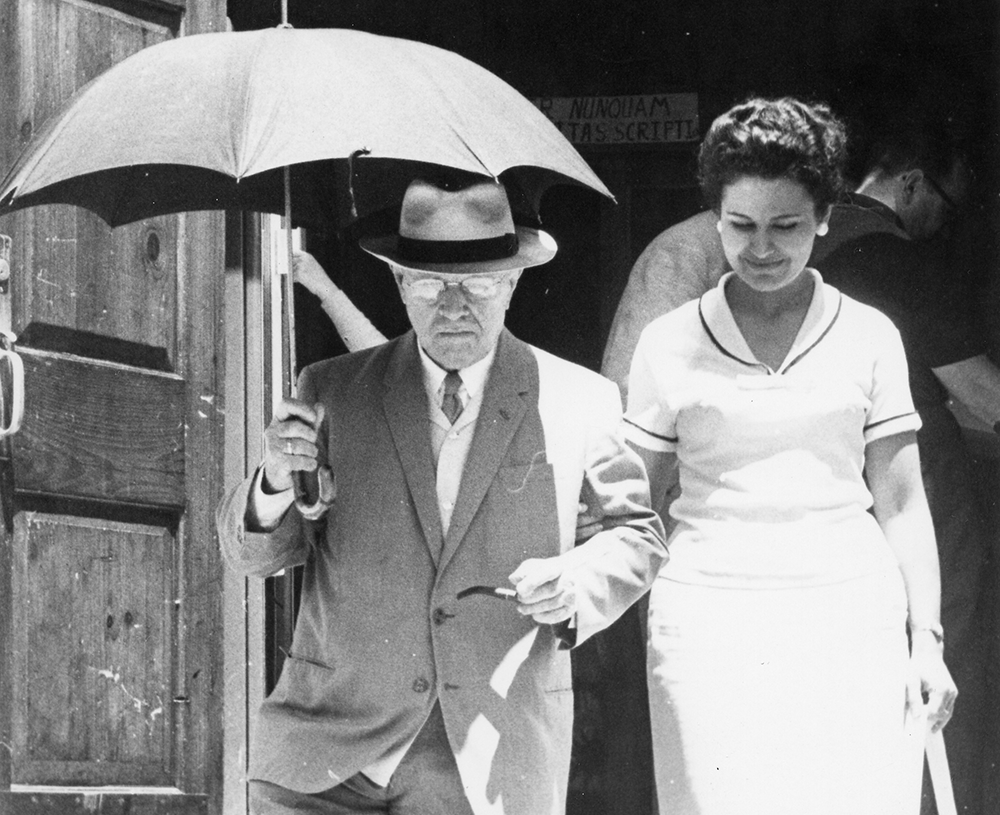
Living in a renovated farmhouse each summer, Casals and his wife Marta became an integral part of our community, enjoying the young participants, older colleagues, and the bracing Vermont air. Graciously receiving visitors from royalty to resident canines, he dressed warmly regardless of the weather, pipe in hand, his smile revealing a clear sense of contentment.

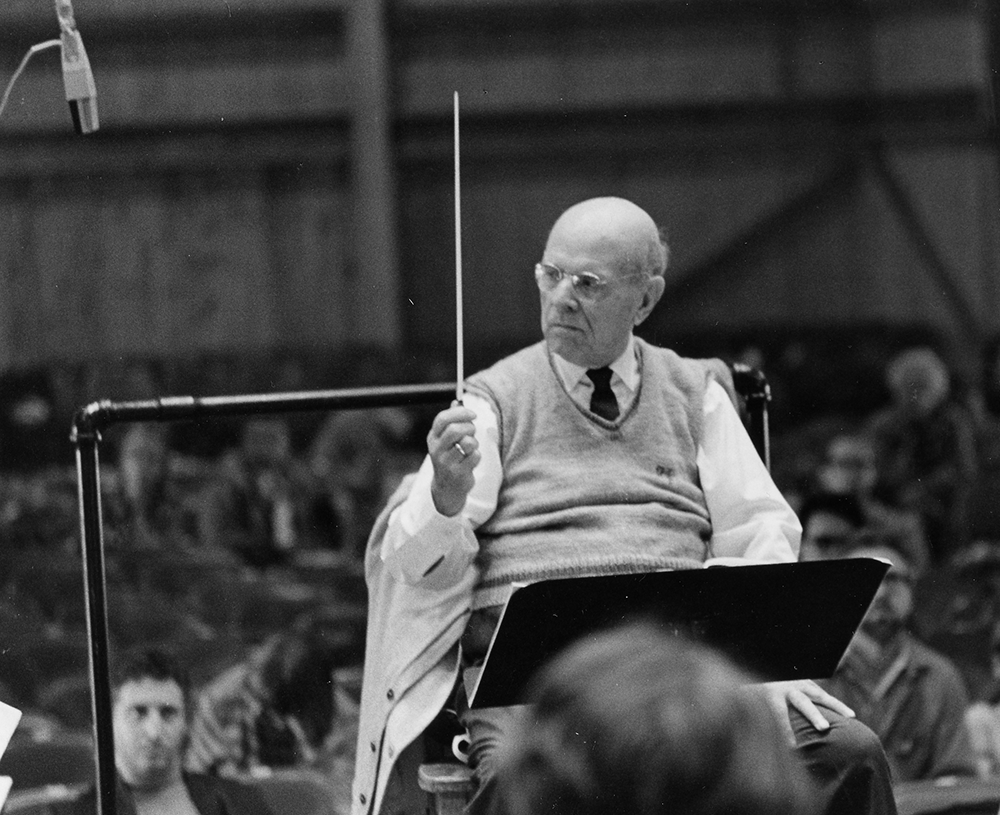
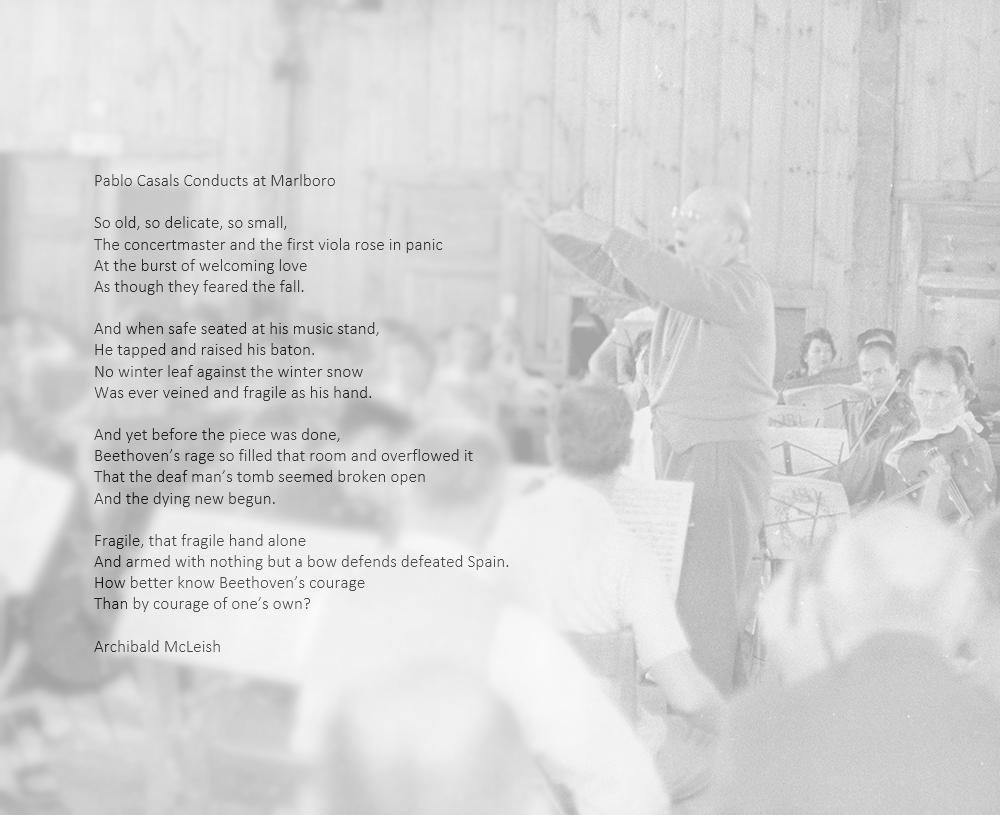
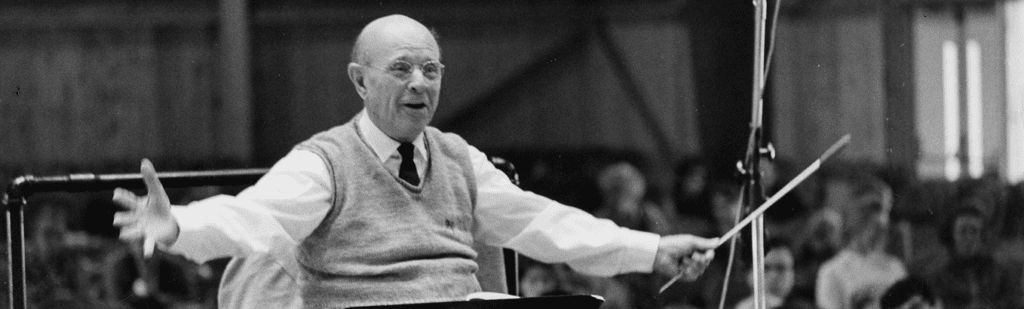
I recall going to his house in Marlboro with Tony Checchia to ask what work he would like to schedule the following week. He was seated in the living room in a large overstuffed chair, seemingly a small, frail figure of limited strength. Tony put the score of a Haydn symphony in his lap, and, as he turned the pages, there seemed to be a magical transformation. His body seemed to expand, his eyes shone, and as he came to the second movement, he said with great emotion, “Ah, when I conducted this work in Barcelona in 1897, the oboe player phrased the opening soooo beautifully.” We experienced similar revelations at his concerts. Slowly and carefully, he was helped to the podium by two musicians, but once he brought down his baton, he became a dynamic figure. He seemed to be in another world, inside the music, having shed at least 20 or 30 years. The musical results were extraordinary.

His masterclasses were also unforgettable. Not only did Casals offer technical and musical wisdom, when he demonstrated a point on his cello, he drew a sound from his instrument that amazed us all in its volume and quality, often dwarfing the sound of the young cellists who were playing for him. Rudolf Serkin, who had an uncanny sense of what was important for Marlboro and our young players, proved to be right once again.

As Casals’s fellow cellist, David Soyer, once said, “When you heard him play, he gave one the feeling that music was the most important thing at that time. There wasn’t anything else, that was it. That was an incredible gift–a gift to his listeners, and a gift to his students, and a gift to the public.” We all gained enormously from Pablo Casals’s 13 summers at Marlboro.


Filmed in celebration of Casal’s 91st birthday, this Bell Telephone Hour special on Casals at Marlboro features illuminating comments from Rudolf Serkin and Maestro Casals as well as a glimpse into Marlboro rehearsals at a time when icons such as Alexander Schneider, Felix Galimir, and Leon Kirchner were participants.

Timeline

1876

Birth and Early Life

Pau Casals i Defilló is born in Catalonia to a musical family of modest means and strong principles. His father is a mild-mannered and workmanlike church organist, his mother is an intelligent and opinionated woman originally from Puerto Rico, and both parents believe fiercely in democratic ideals and the beauty of Catalonian culture. As a boy, Casals sings in the church choir and studies piano with his father, waiting expectantly until his feet can touch the pedals of the organ so he can begin his instruction in the instrument. Surrounded by the beautiful mystery of church music as well as the exotic excitement of music brought by itinerant street musicians, Casals grows up absorbing all the music he can and describes music as “a natural element, an activity as natural as breathing.”

1887

A Cello in Barcelona

It isn’t until Casals is 11, however, that he hears a cello for the first time. His intense desire to play the instrument, combined with his hard work at the keyboard and natural affinity for music, reflects his mother’s conviction that Casals is destined to become an artist. His father, though supportive of Casals’s initial musical education and a lover of music himself, has serious misgivings about sending his son off to play cello instead of gaining steady employment as a carpenter. But just half a year after Casals first hears the cello, his mother arranges for him to study the instrument in Barcelona, 50 miles away from their hometown of Vendrell. Casals arrives in the city without having played or ever held a cello and receives his first ¾ sized instrument once he settles into his new home.

1888

Learning and Teaching

Not only does Casals study cello performance at the Municipal School of Music in Barcelona, he learns counterpoint and composition and begins to experiment on his own with his fundamental playing posture. At the time, students are taught to play the cello with their elbows so close to their sides that they can play with a book tucked under the bowing arm; Casals begins to practice with a more active, natural form that shocks his teachers at first, but which is gradually adopted by the other students and which is used by cellists to this day.

1889

Music for the Masses

Casals secures his first job as a café musician and slowly introduces the music of Bach, Brahms, Mendelssohn, and Beethoven onto the programs. The patrons of the café appreciate these supplements to the light, popular musical fare that had been predominant before the young cellist arrived, and Casals gains his first experience of popularizing and championing great works. During the summers, he travels the countryside in a horse-drawn bus to play folk music and dances all through the night at festivals and fairs just like the roving musicians that so fascinated him when he was a child.

1890

The Bach Cello Suites

Casals is still only 13 years old when, on the same day that he receives his first full-sized cello, he famously discovers the Bach cello suites crumpled on the shelves of an old music shop. Bach’s cello suites are not unknown to scholars, but it is Casals who discovers that they are, as he puts it, “the very essence of Bach, and Bach is the essence of music.” Though the suites eventually become instantly recognizable and are heralded as masterworks, it takes Casals over a decade to perform the pieces in public at a time when they are considered to be little more than exercises.

1893

Barcelona to Madrid

The young artist is able to clearly spot beauty in things that are otherwise derided as commonplace. However, he is also sensitive to the crushing poverty that is widespread in Barcelona at the time. Facing a moral crisis, Casals decides to leave Barcelona for Madrid in order to further his studies so that he can return in the future with the connections and capacity to help his countrymen in need.

1894

For Count and Queen

Casals uses a note of introduction from Isaac Albéniz to become situated in the Spanish capital. He is quickly taken under the wing of Count Guillermo de Morphy, a Renaissance man descended from exiled Irishmen who nevertheless serves the Spanish monarchy with zeal. The Count and his wife, a former student of Liszt’s, personally instruct Casals in subjects ranging from music history to rhetoric, painting, modern languages, geography, philosophy, and mathematics. Count Morphy also introduces Casals to the royal family, including the Infanta Isabel and the Queen María Cristina.

1895

A Fine Bourbon

Though Casals believes firmly in the principles of republicanism and the right of Catalonian autonomy, he appreciates the guidance that he receives from the Spanish monarchs while still acknowledging the imperialism of the Spanish monarchy. He enjoys playing sonatas with Queen María Cristina, a capable pianist whom Casals considers his protector. He uses textbooks with notes in the margins from King Alfonso XII’s childhood, and he plays games with a young Alfonso XIII. The Queen awards him the Medal of the Order of Isabel la Católica when he is 18 years old, and she and the Count urge Casals to continue his musical studies. The queen promises to fund the enterprise so long as Casals takes lessons at the Conservatory of Music in Brussels.

1896

The Brussels Conservatory

With his mother and two younger brothers in tow, Casals travels outside of sunny Spain for the first time in his life. The city of Brussels is shockingly cold for the young Catalan, and his reception at the Conservatory proves to be similar. Mocking Casals for his nationality and small stature in front of an entire class, a Belgian professor quizzes the cellist on his command of repertoire and eventually challenges Casals to play a flashy piece that is popular at the Conservatory. The young musician’s facility astounds him, and a hush falls over the lecture hall. Though the professor beckons Casals into his office and promises him prizes and great success, Casals and his family leave the next day for Paris.

1897

The Worst of Times

Upon hearing that Casals never joined the Conservatory, Queen María Cristina withdraws her financial support, and Casals, his mother, and two brothers are virtually stranded in Paris for the winter. His father is unable to send aid from Catalonia, and Casals finds freelance work where he can but eventually falls ill and becomes housebound. His mother sews late into the night to make a little money and keeps up the children’s spirits even when she returns to the house with a shaved head from selling her hair. When the family finally has sufficient funds, they return penniless to Barcelona but are overjoyed to be reunited with family in their own country.

1899

The Best of Times

As luck would have it, Casals’s first cello teacher moves to Argentina just as Casals returns to Barcelona. The young cellist is offered his former teacher’s old position at the Municipal School of Music and takes charge of his private students. Between these commitments, an appointment at a second school, musical duties at church services, and playing as the principal cellist of the opera orchestra, Casals is kept busy until the summer break. Travelling through Madrid, he hesitantly reaches out to the Count de Morphy and is happily surprised to be welcomed warmly by not only the Count but the Queen. It is she who tells Queen Victoria of Casals, whose playing the British monarch finds “delightful” when he performs for her in England. The Count subsequently introduces Casals to the French conductor Charles Lamoureux, who recognizes him as “one of the elect” and arranges for his proper debut in Paris, which Casals remembers as the true beginning of his career.

1901

International Career

Casals begins to concertize extensively and makes his first trip to America in an 80-concert tour. He is impressed by the republicanism and expansiveness of the country at a time when the west is still wild and cars are a novelty. He meets Gertrude Stein and Theodore Roosevelt, recovers from a hand injury sustained in a hiking accident in California, and begins to perform about 250 concerts per year. He forms a trio with Alfred Cortot and Jaques Thibaud in 1905, befriends the music-loving Queen Elisabeth of Belgium, and meets a very young Mieczysław Horszowski, whose mutual musicality and longevity leads to a lifelong friendship. In the midst of all these new experiences, however, Casals’s father passes away. At his mother’s urging, Casals builds a seaside home in his native Catalonia as a refuge from the pressures of an international career.

1914

WW I

Neither a fleeting marriage to the American mezzo-soprano Susan Metcalfe nor the approach of World War I represses Casals’s touring activities. Though he longs to remain with his countrymen in Catalonia through the difficulties of the war, Casals understands that he can help his homeland the most by continuing to perform, returning periodically to bring aid and visit his mother. He faces the danger of trans-Atlantic travel yearly, living part-time in New York and touring the United States, affirming the beauty and unifying nature of music—even German music—and raising funds to support those whose lives are upturned by the war.

1919

Orquestra Pau Casals

When Casals moves back to Catalonia full time after the war, he is surprised to learn that Barcelona has no major orchestra. Though he begins with no intention of starting his own, he soon realizes that nobody else believes that the city’s musicians have the commitment or talent to form a great orchestra. Using his own funds to provide a living wage, Casals holds auditions for 88 positions and pays the musicians through the first several months of rehearsal even though he himself becomes too sick to attend. After he recovers, Casals begins the orchestra season with just two concerts a year, but the ensemble eventually draws large audiences and engages guest conductors such as Serge Koussevitzky, Richard Strauss, Igor Stravinsky, Arnold Schoenberg, and Fritz Busch, the brother of Marlboro Music co-founders Adolf and Hermann Busch.

1928

Workingmen’s Concert Association

Casals is thrilled by the success of the Orquestra and dedicates himself to making its concerts accessible to the working class of Catalonia. As he asks, “They were the people who had produced most of the wealth of the country, why, then should they be kept from sharing its cultural riches?” He suggests the idea of a Workingmen’s Concert Association to a local night school, explaining that members would pay an annual fee of six pesetas (about one dollar) to be able to attend concerts given by the Orquestra. Though initially met with skepticism, the Association, run entirely by the workers themselves, grows at an exponential rate and inspires its members to write their own concert reviews, publish their own magazine, form their own orchestra, and give their own concerts in Catalonian hospitals and prisons. At its height, membership numbers in the tens of thousands.

1931

Second Spanish Republic

In the midst of such success, Casals learns while he is touring in Switzerland that his mother has passed away. Though he mourns for her for the rest of his life, her death is followed quickly by the birth of the Second Spanish Republic, which is founded on the ideals of equality and autonomy that Casals’s mother had instilled in her son. If Casals was admired by the royal family despite his egalitarian beliefs, he is lionized by the Republic for having championed them. Casals is overjoyed to be able to conduct Beethoven’s Ninth Symphony at the ceremony celebrating the beginning of the new republic.

1938

Civil war and Franco’s Spain

But the Spanish Republic is short-lived. Political unrest and economic depression cause turmoil and civil war, and Casals sees Spain crumble from bombings, starvation, and combat each time he returns to his home country. He calls for aid from the democratic countries of the world, but England, France, and the United States fail to intervene, and fascists led by Francisco Franco seize power in Spain aided by Hitler and Mussolini. Casals is in Catalonia when Barcelona falls. The city is under incessant bombardment from Italian planes, and he receives an honorary doctorate from the University of Barcelona as the institution’s final act before it closes. Days later, Casals flees the country for France to live in permanent exile.

1939

Prades

Though he goes first to Paris, Casals soon learns of the thousands of Catalonian refugees who crossed the Pyrenees to escape fascist Spain only to be rounded up into camps by the French government. He settles in Prades, a small town settled by Catalonians, and makes it his duty to aid his exiled countrymen in any way he can. He writes day and night, both to solicit support from the outside world and to communicate directly with inmates of the camps. Fascism, which goes unchecked in Spain, metastisizes throughout Europe, and World War II begins.

1940

WW II

Casals seeks a way to escape Europe, but after a harrowing journey to Bordeaux, where he hopes to board a ship to America, he learns that the ship has been sunk by the Germans. There is no other place for him to go but back to Prades, where he lives under constant surveillance on a diet of turnips and beans with no coal and no medicine. A pair of Nazis come to Casals during the depths of the war and attempt to lure him to Germany, where they say that he will be adored by the Germans. He refuses and continues to compose his nativity oratorio, ‘El Pesebre,’ the creation of which sustains him creatively for two long years until the war is over.

1945

War is Over, Struggle Remains

The end of the war is like a dream for Casals. Newspapers that had excoriated him now publish stories on how many honors are being heaped upon him by the democratic governments. He plays in France and in England and continues to raise money for those affected by the war, but he realizes with dismay that while these countries celebrate their freedom from fascism, Spain, the first to suffer, remains unfree. Casals campaigns for Spanish democracy and against weapons of mass destruction and decides that he cannot concertize in countries that recognize Franco’s government as legitimate. He retreats to Prades yet again.

1950

Prades Casals Festival

Because Casals does not go out in the world, the world comes to him. Letters from every continent congratulate him on his 70th birthday. He receives numerous requests to play abroad, which he politely refuses, but musicians begin to visit him in Prades. The irrepressible violinist Alexander Schneider is one of his most remarkable visitors, and Schneider and Casals strike up an immediate and long-lasting friendship. Schneider convinces Casals to hold a festival in Prades to celebrate the bicentenary of Bach’s death, the proceeds of which go to a local hospital. Casals’s old friend Horszowski plays, and so do Rudolf Serkin and Eugene Istomin as well as Joseph Szigeti and Isaac Stern. Catalonians still living in Spain cross the border on foot to attend, one man comes from China, two bishops lead a standing ovation at the final concert, and recordings of the festival are heard all over the world, including in Hiroshima, where children born after the bomb write Casals to tell him how much his music means to them.

1957

Puerto Rico Casals Festival

The Prades Festival is such a success that it continues with Casals’s attendance until 1966, just before his 90th birthday. It is at the second annual festival that Casals meets Marta Montáñez Martínez, a young cellist from Puerto Rico, who comes to study with him three years later. Marta and Casals grow extremely close, and she brings him to Puerto Rico, the birthplace of his mother, for the first time in his life. Casals feels a bond to the country and organizes a 12-concert festival at the University of Puerto Rico with Alexander Schneider again by his side. It is Schneider who has to lead the orchestra from the concertmaster’s chair when Casals suffers an unexpected heart attack, but the festival proves immensely successful nevertheless. Marta is Casals’s constant companion throughout his recovery, and the two are married amongst close relatives at the end of the summer.

1960

Casals at Marlboro

With the enthusiastic backing of Alexander Schneider, Rudolf Serkin, who also counts Casals as a close friend, invites the maestro to Marlboro. Casals quickly recognizes it as a special place, saying “Over the years I have held classes in many parts of the world—in Paris, Berlin, Zermatt, Tokyo—but the mood in Marlboro is unique. I know of no place where I am more conscious of the affinity between nature and music; at Marlboro, I find a special joy.” He leads masterclasses with young cellists including Miklòs Perènyi, Toby Saks, and Timothy Eddy and conducts large scale works that are recorded by Columbia Records. His participation at Marlboro attracts attention from the press, international audiences, and even the Queen Mother Elisabeth of Belgium who visits in 1962, but his love of Marlboro also acts as a confirmation of the festival’s dedication to music, its egalitarianism, and its commitment to artistic excellence and genuine community.

1963

A Life Dedicated to Peace

Over the remaining 12 years of his life, Casals returns summer after summer to Marlboro. During the rest of the year, he continues to campaign for peace by imploring the American and Soviet governments to end the arms race and instead pursue nuclear disarmament. He is invited to perform at the United Nations and accepts, finally beliving that it might make an even greater impact than his years of refusal. He plays Bach and a haunting Catalonian tune called ‘El cant dels ocells,’ the song of the birds. He performs for President Kennedy at the White House alongside longtime friends Horszowski and Schneider and is also awarded the Presidential Medal of Freedom in the same year as Serkin and Marian Anderson as designated by John F. Kennedy shortly before Kennedy’s assasination. Approaching his 85th birthday, Casals decides to tour ‘El Pessebre,’ the oratorio that he wrote during the war, in order to promote peace, and in 1971, he is awarded the United Nations Peace Medal by U Thant.

1973

Death and Legacy

Casals passes away on October 22, 1973, just two years before Francisco Franco’s death transitions Spain towards democracy. In his last years, Casals and Marta live in Puerto Rico in a seaside house, which stands about 50 miles from San Juan and which he christens ‘El Pesebre.’ Until the end, he continues to play Bach each morning, immersing himself in music and morals, politics and pedagogy. During his final summer at Marlboro, two months before his death, Casals conducts one symphony by Haydn and three symphonies by Beethoven; the year after his death, his old friend Mieczysław Horszowski accompanies soprano Olga Iglesias in a performance of six songs by Casals. Casals’s presence at Marlboro had had incredible impact. He inspired the resident musicians with his musical ideas, and his concerts and recordings with the Festival Orchestra brought Marlboro new recognition. His love of music and nature, as well as his musical and political integrity, all left a vibrant legacy for the Marlboro Music community.

Gallery

Click any of the pictures below to view an enlarged version complete with additional quotes in the captions.