From the Archives:
Rudolf Serkin

  • Introduction
  • Timeline
  • Recordings
  • Gallery

Introduction

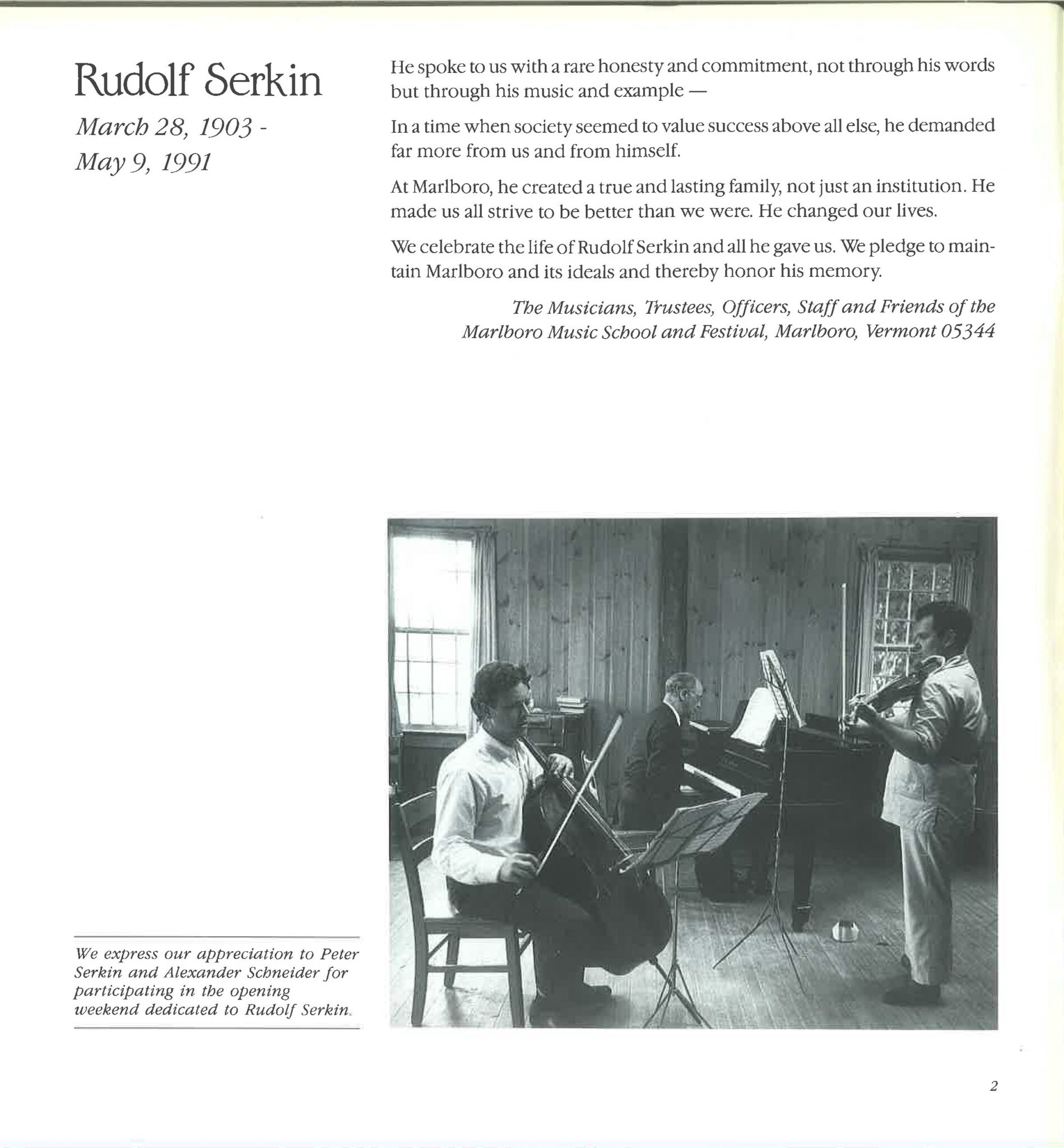
Over the last century, music has been blessed with some remarkable artists whose performances have set standards for their instruments and for the repertoire they have made their own. One of those artists has given us even more. Rudolf Serkin has not only been a major influence through his probing musicianship, he has left a singular and far-reaching legacy, one that has impacted every area of the classical music field.

In setting the standards and creating the structure for Marlboro Music, he opened new worlds for generations of exceptional young musicians who have gone on to become some of the most cherished artists in music.

Serkin had the vision to realize that immersing them in exploring chamber music for two months in the summer with unlimited rehearsal time and in the context of a family environment could provide invaluable musical and life lessons. He knew that chamber music provided all the essentials for successful personal as well as musical relationships — one has to learn the score, not only one’s own part; one has to learn to listen and to compromise; and one has to make multiple voices into one.  At Marlboro, four generations have drawn from these musical and human lessons, sharing them with audiences, colleagues, and students around the world.

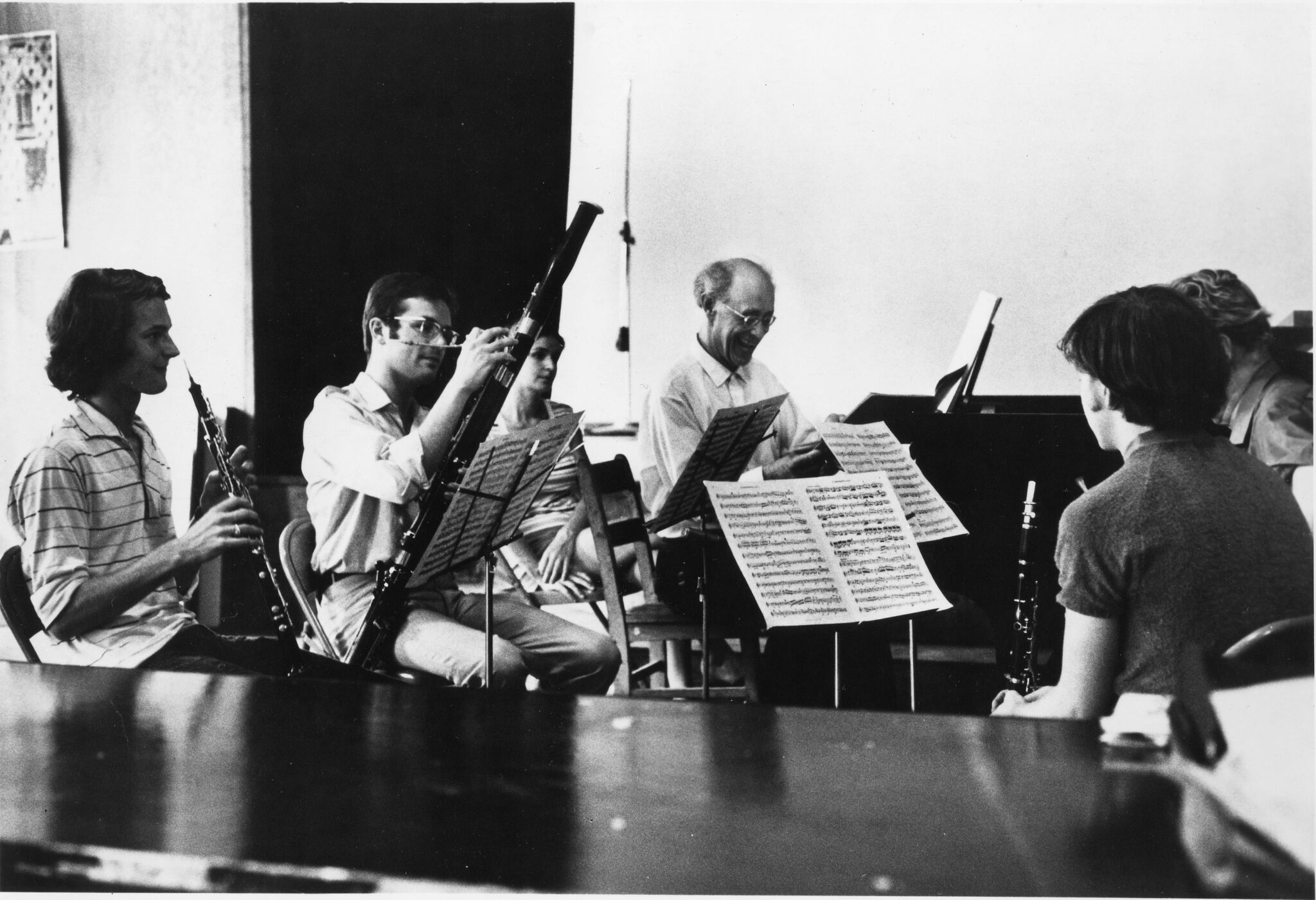
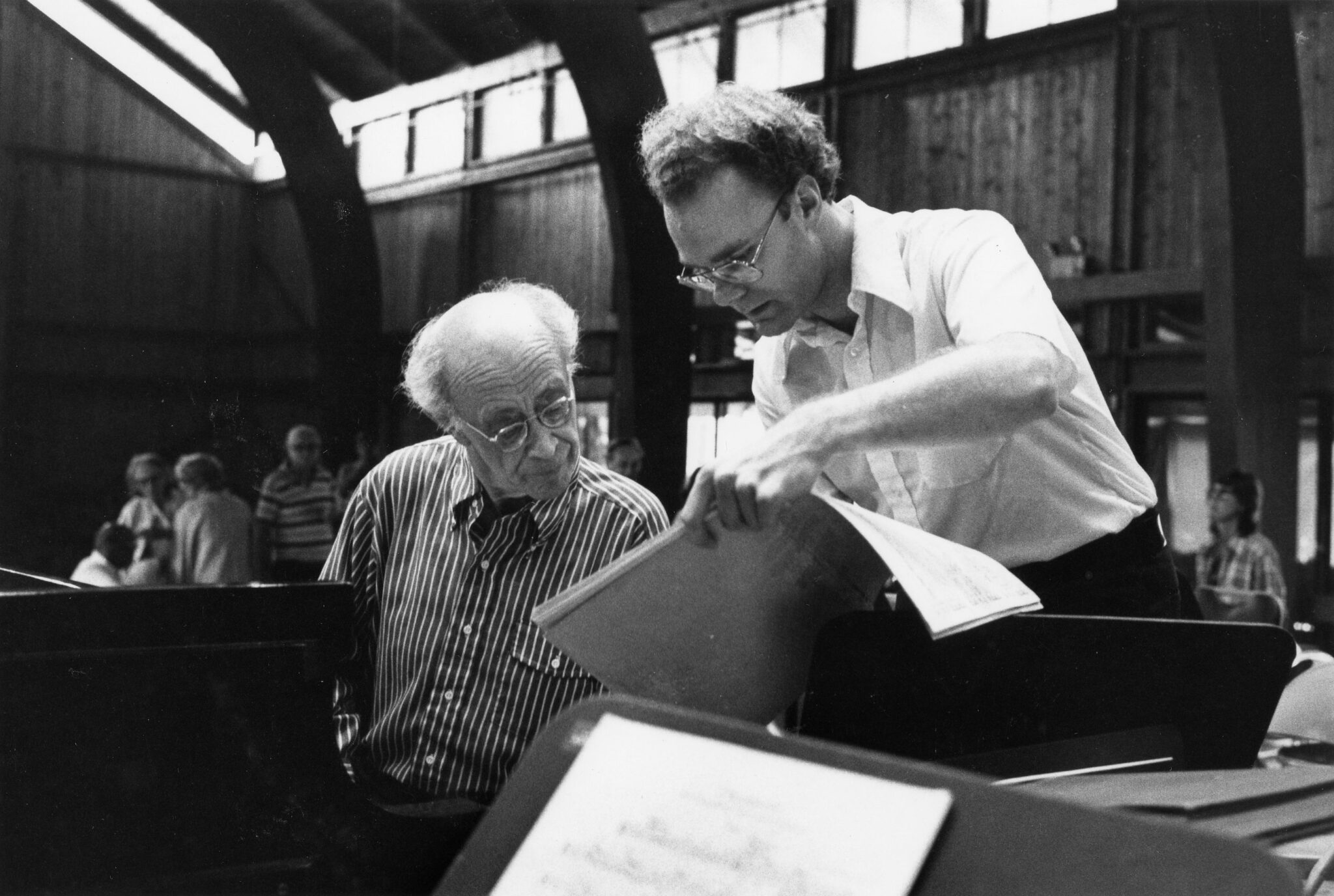
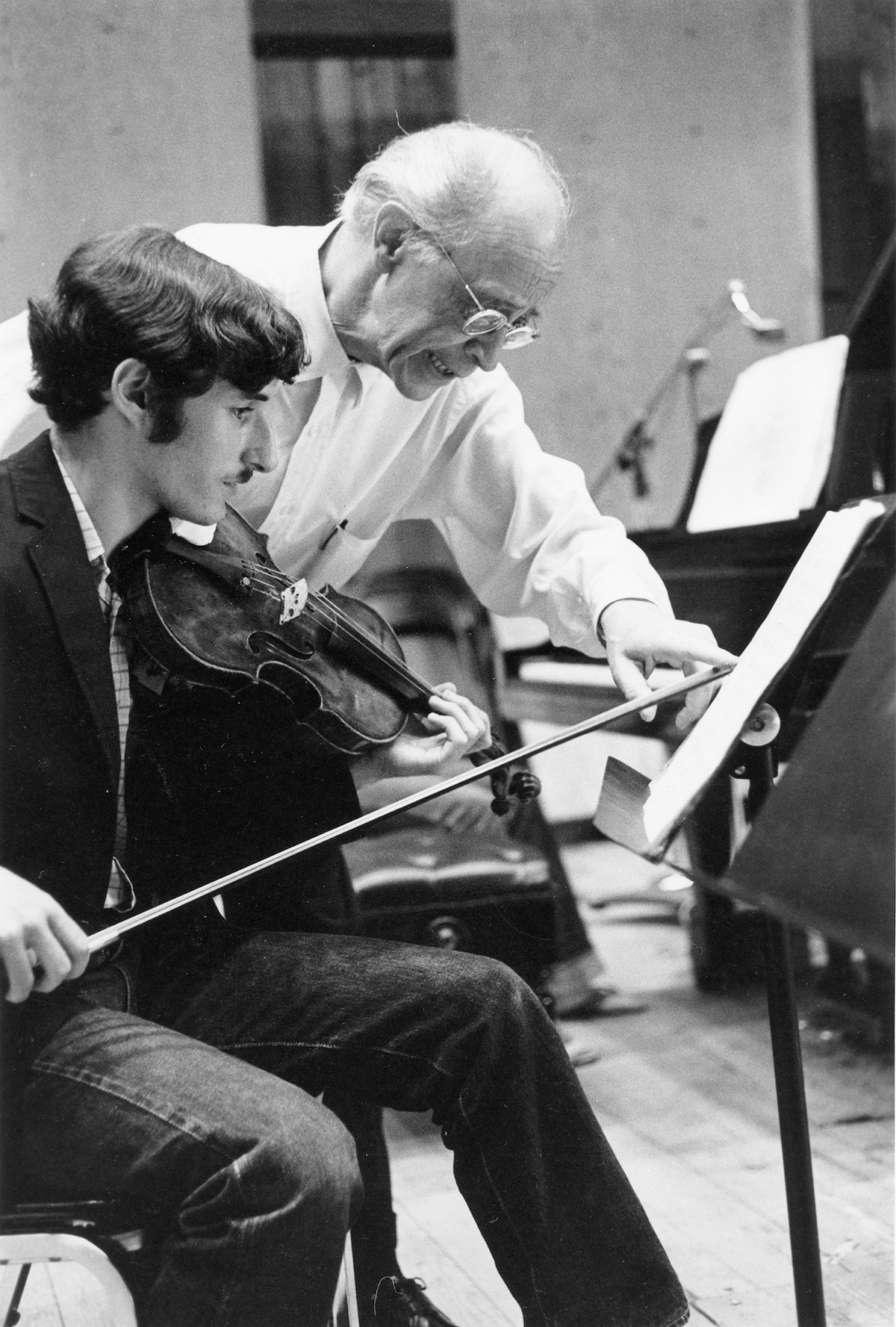
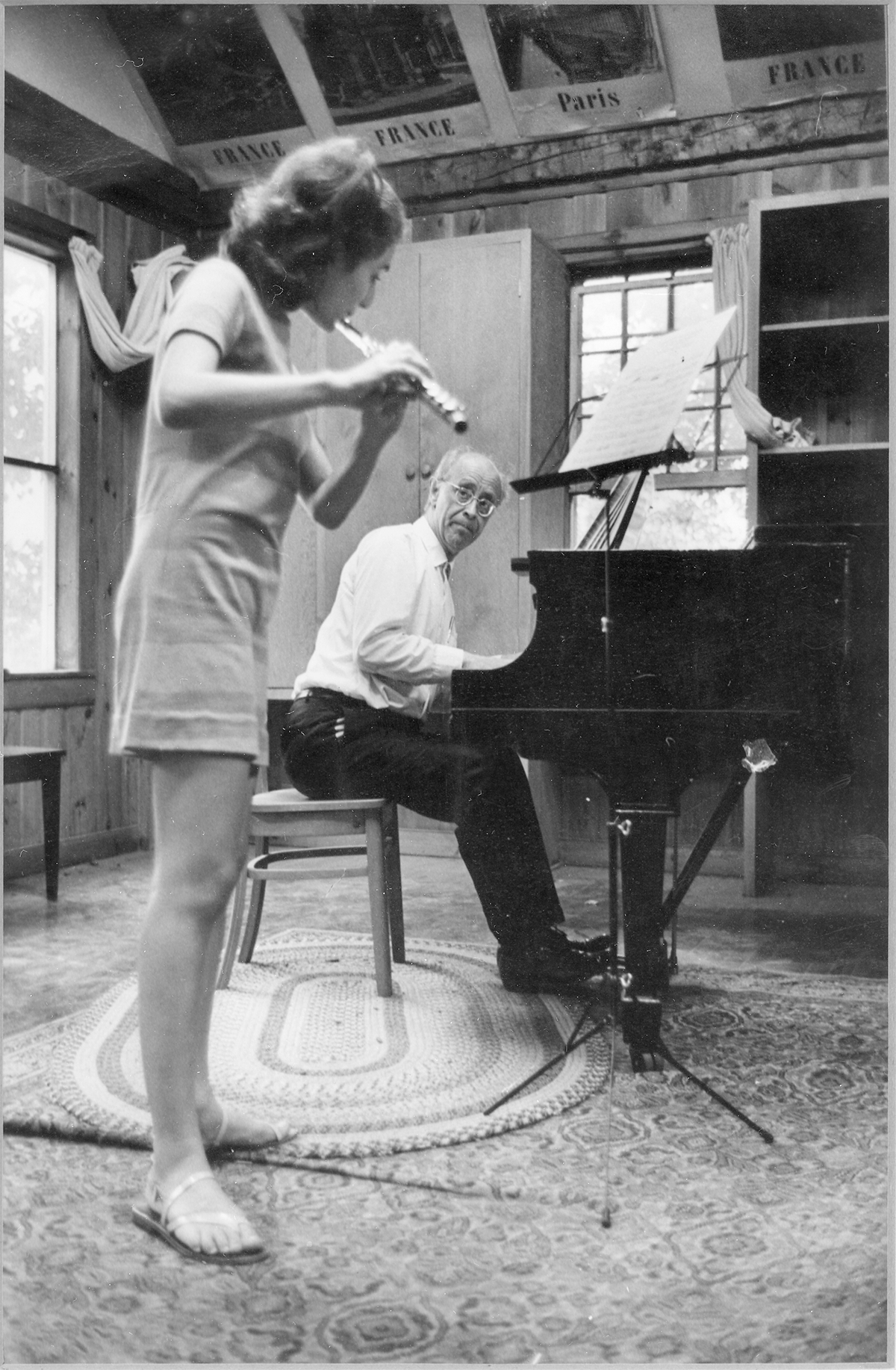
In rehearsal, Serkin was a man of few words; he taught by example; one learned through experience and personal discovery. But an overriding principle of his was that a true musician should strive to serve the composer. Music should not be about the performer but about how one could honestly serve the intentions of the composer. As society accelerated in so many ways, as normal concerts were prepared with fewer rehearsals, Serkin felt that the concept of exploring a piece of music in depth at Marlboro for three to seven weeks was even more important and would offer invaluable discoveries to young artists who had the potential to become musical leaders.

Today, there are four generations of musicians who have benefited from Rudolf Serkin’s musical and humanist vision, and there are programs around the world that have emulated aspects of the special community he fashioned in the rural beauty of Vermont. He created a true and lasting family, and he made us all strive to be better than we were. He changed our lives. It is a legacy for which music and all those who have been affected will forever be grateful.
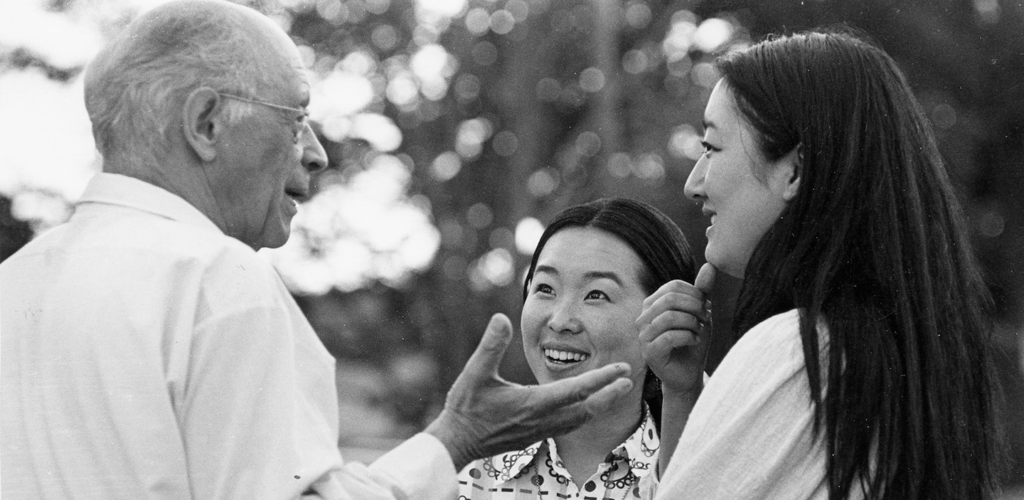
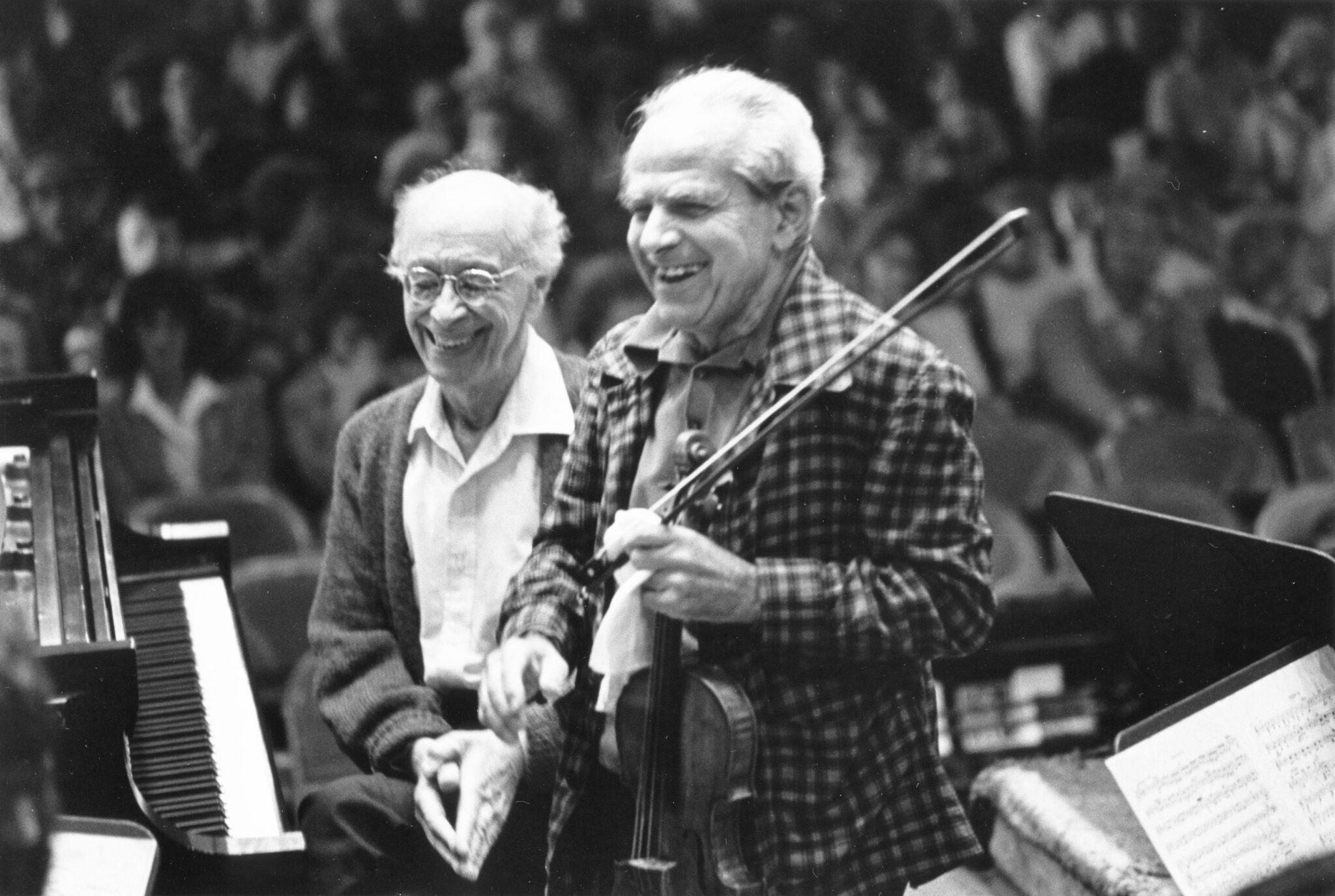
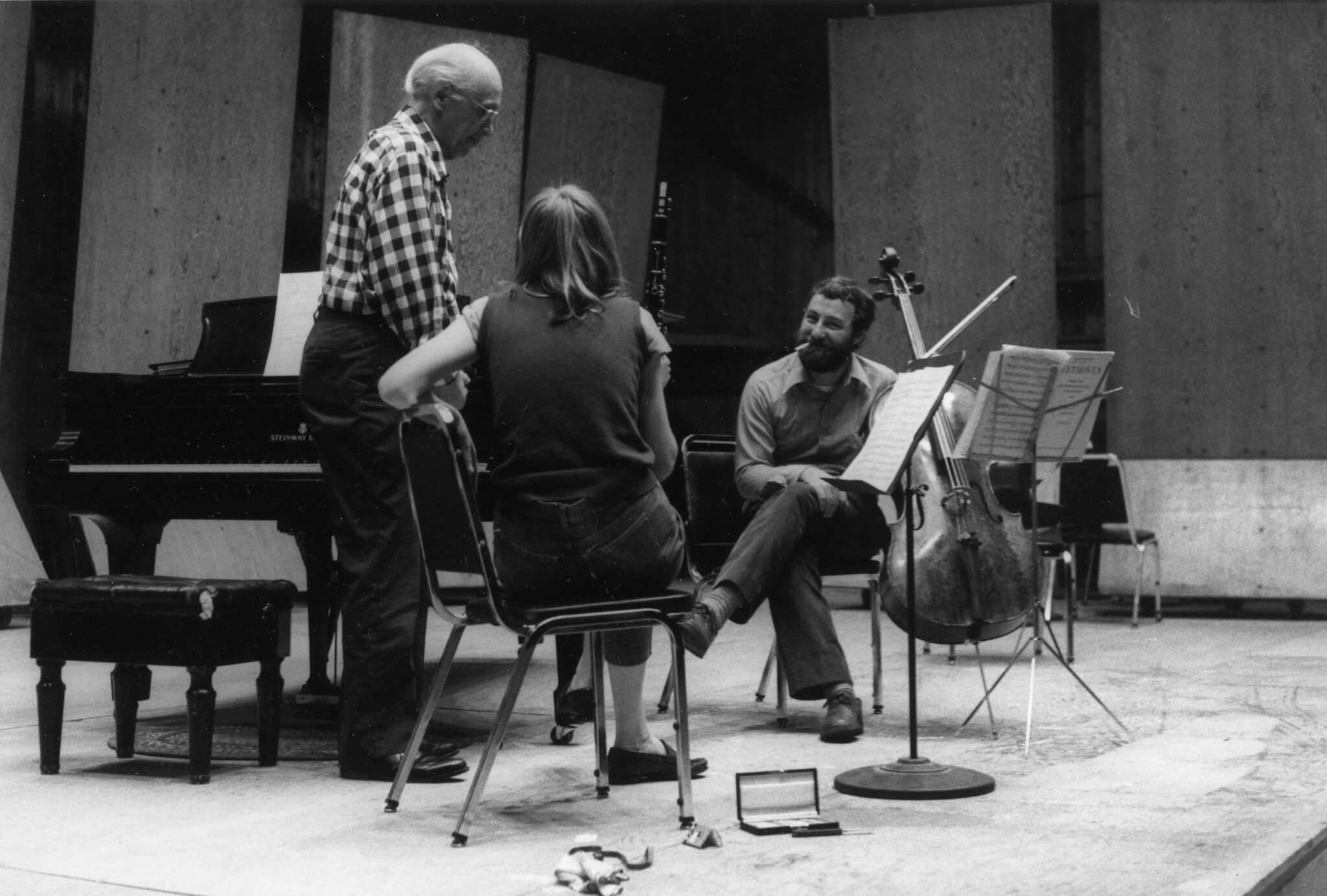
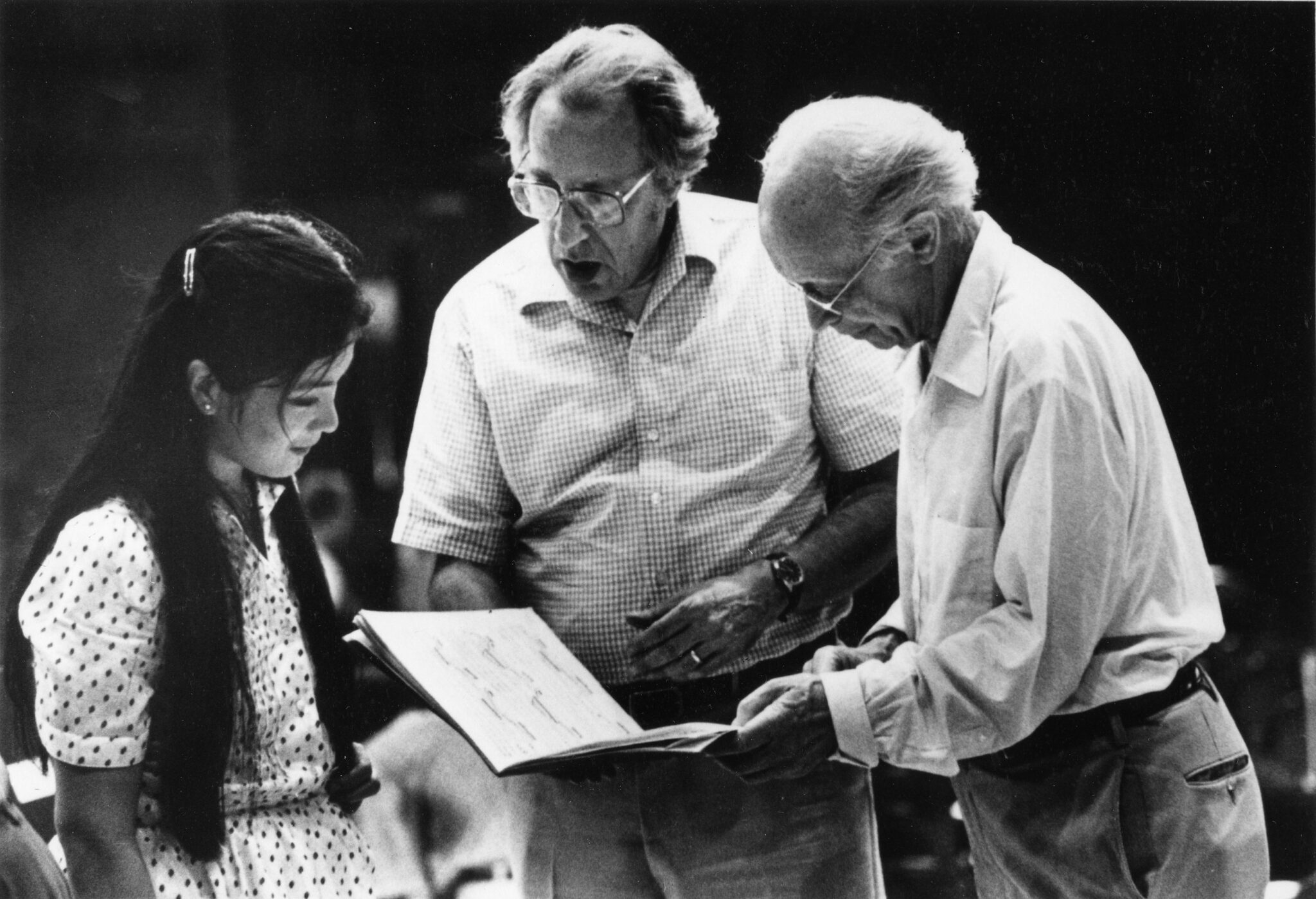
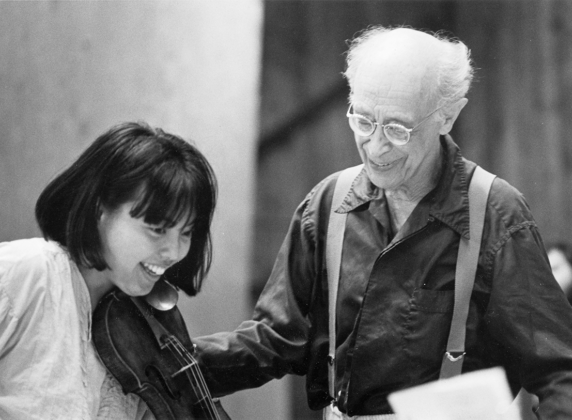
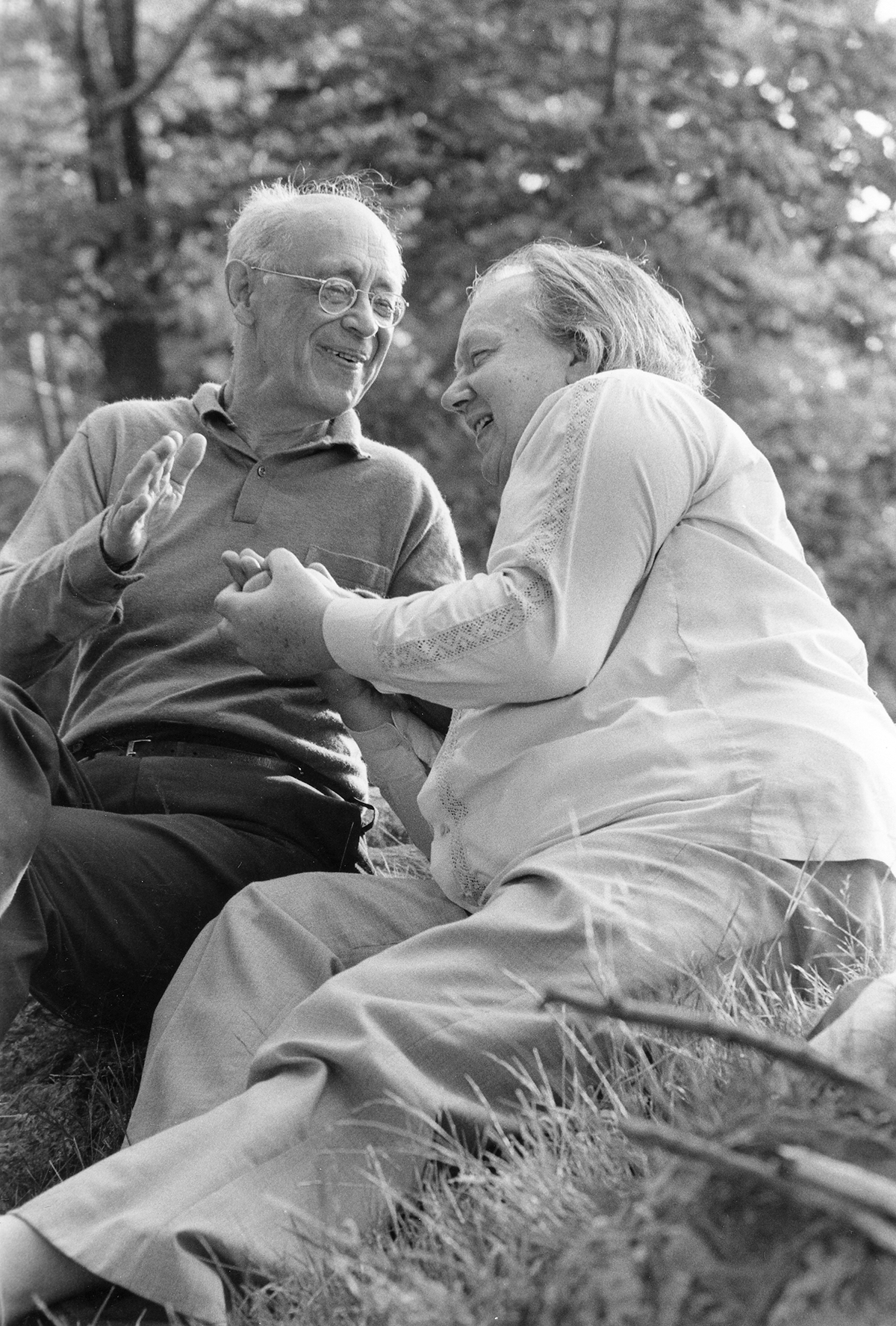
Rudolf Serkin, Yuuko Shiokawa, and Mitsuko Uchida at Marlboro in 1974. Photo by Woodrow Leung.

An Open Door: Mitsuko Uchida & Jonathan Biss on Serkin’s Enduring Spirit

“He was a person who was always searching… and that searching never stopped until the very end. He taught us that the intensity of the search is the music itself.” —Mitsuko Uchida

“Serkin made the ‘searching’ more important than the ‘finding.’ To be at Marlboro today is to feel that his uncompromising honesty is still the air we breathe… You feel his ‘searching intensity’ in every barn on this campus.” —Jonathan Biss

“We are not here to preserve a museum; we are here to continue the search. Rudolf Serkin didn’t leave us a finished building; he left us an open door. Our job is to keep walking through it with the same curiosity and the same ‘searching’ intensity that he had until his very last breath.” —Mitsuko Uchida


A Grandson Remembers

Christopher Serkin

It is almost impossibly difficult to capture a single image of my grandfather. On the one hand, he was absolutely devoted to music. He practiced 6-8 hours per day day, every day that I knew him, because he felt a kind of moral compulsion to the serve the music as well as was he could. In conversation, over dinner, his hands were never still, as if he were practicing trills and particular passages on the table or on his lap. I heard once that the Zen Buddhist Philip Kapleau said he had encountered two enlightened people in his life: the Dalai Lama and my grandfather for whom practice was the most intensive meditation. His mind was always in music. He told me once that he had complained to Arturo Toscanini that he always had music running through his head and had trouble sleeping. “Yes, isn’t it wonderful?” Toscanini had replied. My grandfather said, “Well, you have all the symphonies. I only have the piano repertoire!”

But he was also the most mesmerizing grandfather, sly and full of fun. When I was in 8th grade, my grandparents took some of the family to the Waldhaus in Switzerland. This is one of the grand European hotels, up in the Engadine, with nearby hiking the alps. The hotel itself was elegant and very Swiss. Everyone would dress for dinner and would be assigned a table for their whole stay. Because of his stature, we were given the center table; a large elegant circular table in the middle of the dining room. The first evening, we all gathered for dinner and Papa Rudi—as I called him—immediately started misbehaving. He took one of the crispy bread sticks on the table and stuck it up his nose and then made an exaggerated show of eating it. I think he threw a dinner roll at me. In these moments, he would have an overly serious look on his face while studiously avoiding making eye contact, and I loved it. For the next meal, the Waldhaus moved us to a remote table in the corner, as far from the other guests as possible.

Easter was always a big family gathering in Guilford, Vermont. This may be surprising. My grandfather was Jewish, of course, and had fled Germany in the 1930s. But we always celebrated the major Christian holidays. And so Easter was a time for family traditions. My grandmother would give us all chocolate bunnies and would boil and hide dozens of Easter eggs around the house and the kids would race around trying to find them. We would then come together for the meal and engage in a ritual egg-smashing contest. You would challenge someone and then smash your eggs together. The shell of only one would break, and that person had to eat their egg. Last egg standing won. I challenged my grandfather and his shell broke. But because my grandmother made an enormous quantity of eggs, boiled in overlapping batches, she sometimes made mistakes. This time, his egg was nearly raw. When his shell broke, the barely congealed albumen started to ooze out of the cracks. But with an impish look, he opened the egg the rest of the way and slurped down the raw egg, just to amuse and horrify us. It worked.
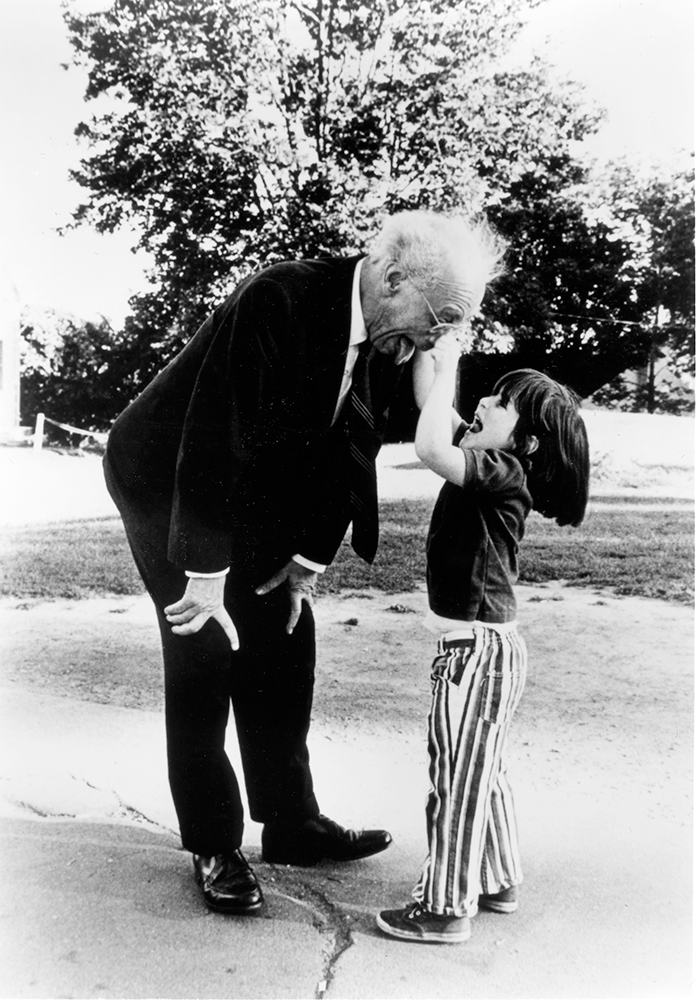
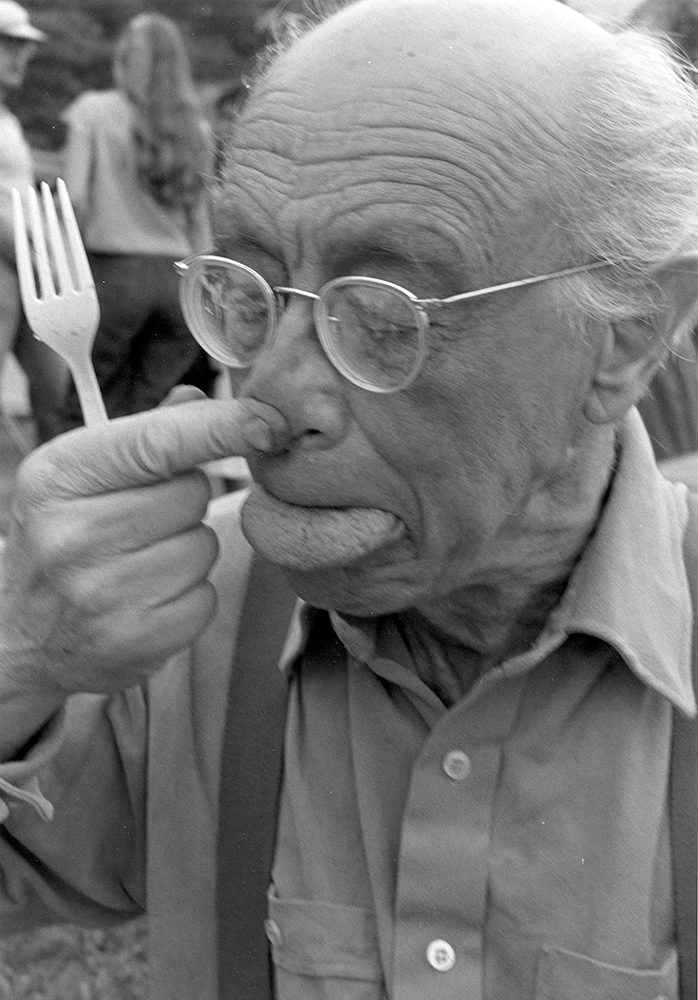
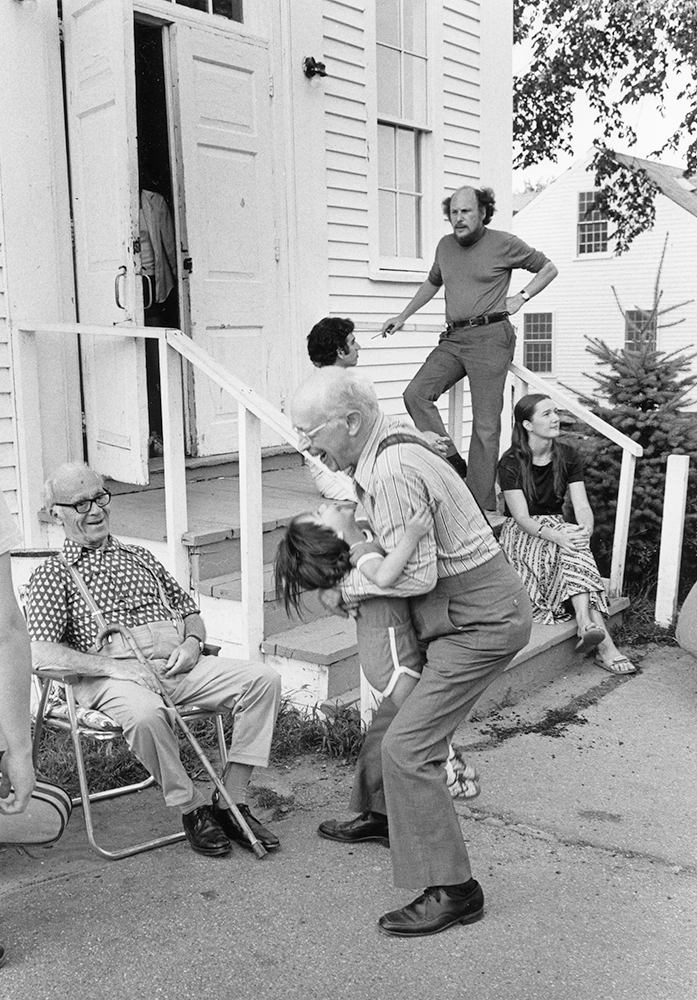
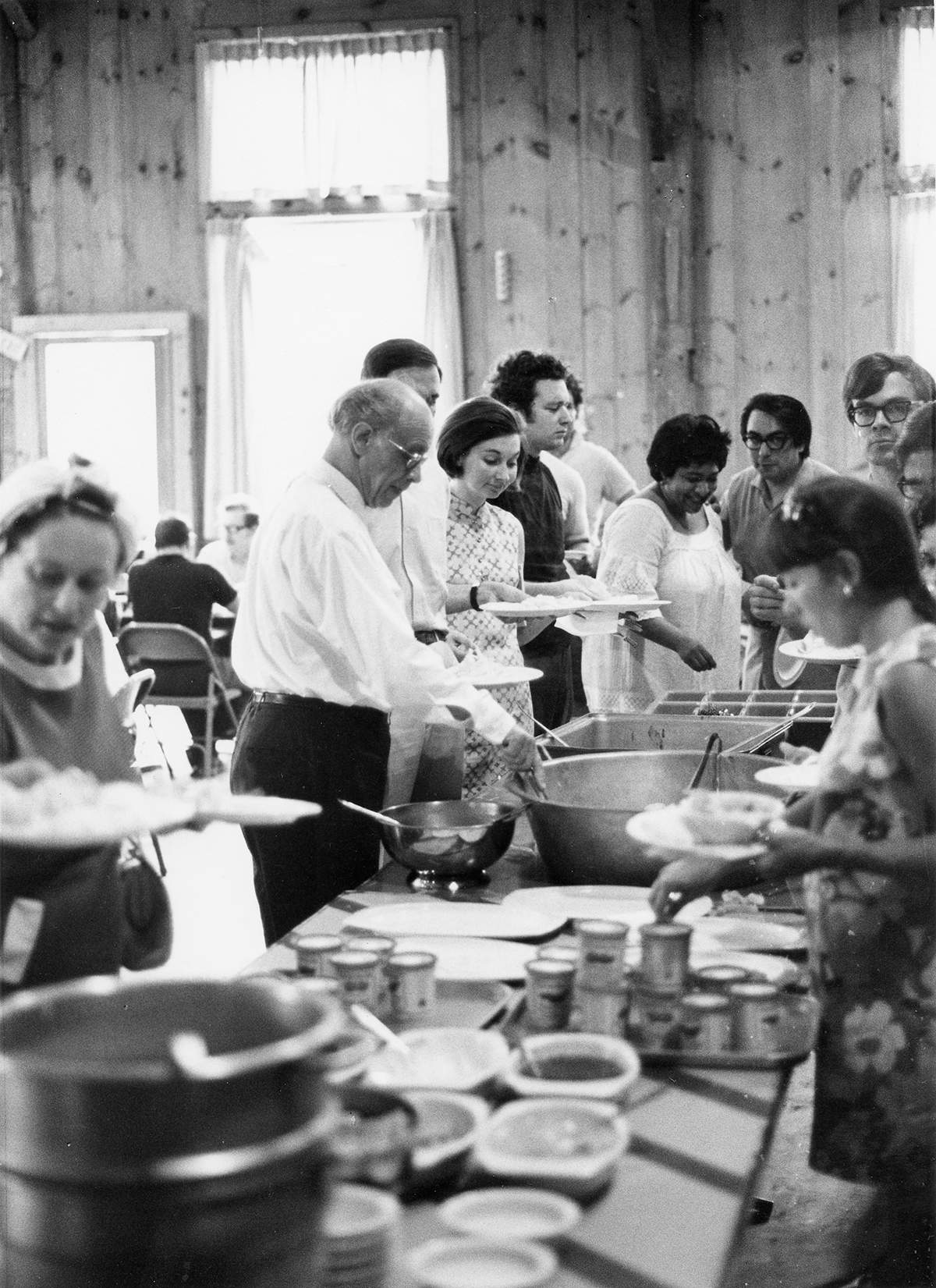
At Marlboro, he was an inveterate prankster. One summer, he had found at a novelty store a bag of fake plastic ants. He kept them in his pocket and, when given the chance, would sprinkle them on to some unsuspecting musician’s food when they weren’t looking. He threw wadded-up paper napkin balls at everyone. He made funny faces, pulling his mouth wide apart. He always held people’s jackets for them as if to help them put it on, but would then move the arm just out of reach, making them turn in an absurd circle chasing the armhole. One year, as a practical joke, the violinist Pina Carmirelli sent him a block of blue cheese from Italy, third class surface mail. When it arrived, it was so ripe that the post office called to demand that he pick it up immediately. He kept it for the whole winter and left it under Pina’s pillow on campus, waiting for her the next summer.

He could joke about anything, other than music. One summer, someone left a whoopie cushion on a piano bench. As much as my grandfather liked whoopie cushions, that person was almost not invited back to Marlboro because it implicated the music. For music, he was completely uncompromising both for himself and others. I was his driver one summer and drove him home after a concert. I knew had hadn’t liked a particular performance featuring a senior musician who was an old friend. He was quiet for much of the ride and then said, “Playing like that makes me dislike him as a person.” I asked him how he could be so hard on someone else when he was always confronting his own limitations as a pianist. I remember his answer verbatim: “It’s not that I am any good. It’s that he was so bad.” Another time, I think I was with my mother, and we asked him whether he ever felt happy with his own playing. He said that twice in his life, onstage, he had felt himself disappear and Beethoven replace him at the piano, playing through him. He made it sound like those had been the two transcendent moments of his life and he was always trying to recapture them.

When I was 16 or 17, my grandfather invited me to come with him to Vienna for three weeks—during the school year—to stay with him while he was performing and recording with Claudio Abbado and the Chamber Orchestra of Europe. He had always told me he wanted to take me to Vienna, but usually in a way that sounded more like an expression of affection than anything like an invitation. But this was an actual invitation. And it would be just the two of us. He often took family with him on tour, and so I had been to many places with him before, but always with my parents. This was my first time in Vienna, and my first time traveling alone with him. Vienna held a real magic to me, mostly because of his stories. He had lived there for some of his very formative years, from the age of 7 into his teenage years. I had heard his stories about studying with Schoenberg, about his close friendship with the painters Oskar Kokoschka and Egon Schiele and with the architect Adolf Loos. They used to pay visits to the “old man” Gustav Klimt and snickered behind his back about his decadent style of painting.

My grandfather was probably 82 or 83. We stayed at the Hotel Ambassador on the Käntnerstrasse. It was an extravagantly elegant hotel, but for him it was a necessity. He required a good Steinway grand piano in his suite. We had arrived in Vienna about a week before his first rehearsal with the orchestra to give him time to acclimate to the time difference and to practice. He was then to play and record a Mozart Piano Concerto. All told, we were to be in Vienna for just over two weeks together, before traveling to Italy for another concert. We established a daily rhythm. We would meet for an early breakfast in the hotel. And then we would take a long walk—maybe an hour or and hour-and-a-half—and he would tell me stories from his childhood about the places we discovered. We’d go back to the hotel and he would practice for the rest of the day while I wondered around the city, and then we would meet again for dinner in the hotel and another stroll in the evening, usually involving some Sacher-Torte or other pastry from a shop.

The stories were the high point, but just being in the hotel with him was memorable. My little room was next to his suite and so I heard him practicing constantly. But I never heard music. He began each day with at least an hour of scales and arpeggios, starting painfully slowly and then gradually picking up speed. Up and down, up and down, endlessly. And then he would start to work on the Mozart he was to perform. But this was not practicing the way I imagined. He would move from from one tricky passage to another—maybe just one fingering or one jump—and play it over and over. Never in context. Never as part of a phrase. Just the one jump, again and again. One day, I asked him if was ever going practice the piece. He said, “I am practicing, but always up here,” pointing to his head. “The playing is just for the muscles.” At one point, we were being driven somewhere. It was a long trip, maybe we were in Italy already. He said, “I have to practice.” He pulled out his pocket watch, looked carefully at the time and the leaned his head back and closed his eyes. Approximately twenty minutes later, he opened them again and looked down at his watch. “Ahh,” he said. “It’s still a little faster than I want.” Maybe he was just napping, but I don’t think so.
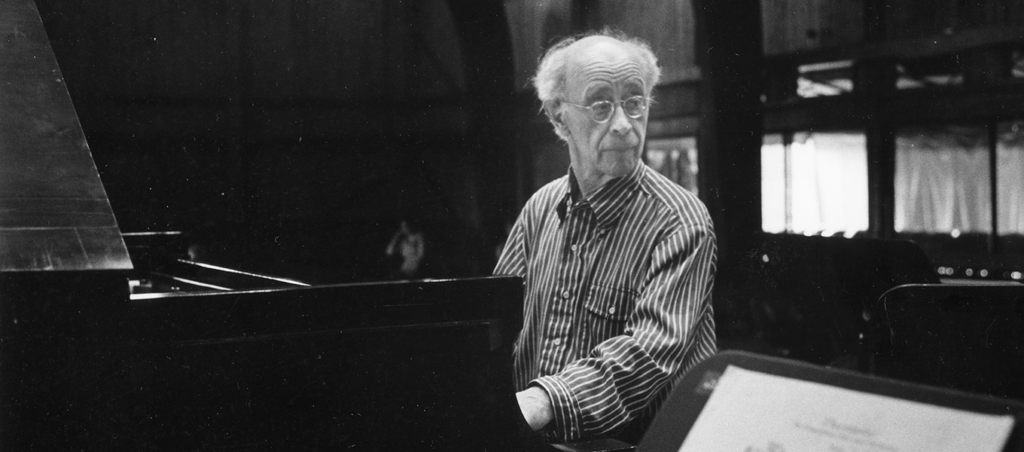
One time I went to his hotel room to retrieve him for dinner but he was still practicing. I opened the door quietly, but the piano was directly in front of me and he was facing me from the other side, the piano bench facing the door. He didn’t notice. His eyes were open, but he seemed completely absorbed. It took maybe ten minutes for him to notice me, even though he was staring right at me most of the time. All of a sudden he saw me, jumped up, and just like that we were out the door. Wandering Vienna with him was, for me, a kind of third-person nostalgia. The streets were still familiar to him, three-quarters of a century later. There, he recalled where Sigmund Freud had lived—the only person in the city who locked his door, according to my grandfather. In that direction was the house where he had lived when he was still very young. It was where a lot of prostitutes had worked. He said they looked out for him and would give him candy on his way to his lessons. One of them later became a mistress of Hermann Göring. She would see lists of names of Jews being sent to concentration camps. She recognized my grandfather’s brother’s name on a list and asked Göring to take him off—which he did. I don’t know how my grandfather knew that story and never thought to ask.

He said he often had a walk to his lessons. He had so little money that he used to think about whether it was less expensive for him to walk than to take the tram, because walking he kept wearing out the soles of his shoes and he couldn’t afford to have them repaired. He described how, once, he had worn through the seat of his pants but couldn’t afford a new pair, so he spent weeks walking holding his music behind him to cover his backside. It was a walking posture he still had when I knew him—fingers interlaced, hands behind his back, tilting slightly forward, and walking quickly regardless of the destination. We found ourselves caught in the rain once, on our way back to the hotel. He asked whether I thought we’d get wetter if we walked quickly or walked slowly. I thought, slowly, for sure. “That’s not what Einstein told me,” he said. They had played in a trio together. At the opera house he said that he had been in the clapping klatsch when he was little—maybe eight or ten years old. It was a protection racket. Clappers would be planted in the audience. If a singer had paid off the right person, the clappers were instructed to clap after every aria. But if a singer had not paid, then the clappers were instructed to boo. For my grandfather, compensation came exclusively from free tickets to the opera, which he attended regularly. After about a year, though, a soprano came to Vienna who dutifully paid her dues to the klatsch. My grandfather said she was so terrible, however, that he could not bring himself to clap and instead booed. That was the end of his clapping career. The organizer kicked him out. But he had already befriended some of the ushers who said that they could continue letting him sneak in if he just came a little late. When I knew my grandfather seven decades later, he still loved opera but claimed he had never heard the overtures or first acts of many of them.

I took a day trip to the opulent Schoenbrunn Palace while my grandfather was practicing. When we met for dinner that night and I told him about my excursion, he said that he hadn’t been there since he used to go and play for the workers and orphans during the War—by which he meant World War I. As he recalled, communists had turned the palace into a kind of makeshift orphanage, and he would go and play concerts for the children.

He had never gone to school in any formal sense and had only studied piano. Nevertheless, he had been in rarified circles in Vienna. I complained once about high school. When he seemed surprised, and said that school was wonderful, I asked what he knew since he’d never gone to school. “I took a class once,” he said. I was surprised, having never heard this before. I asked him what class. “It was a composition class. Schoenberg was the teacher. And there were three of us in the class. It was Anton Webern and Alban Berg and me.” I remarked that my public high school in Brattleboro, Vermont did not have any classes like that.

He seemed to love the Konzerthaus. He explained that there were two main concert halls in Vienna, the Musikverein and Konzerthaus. As he described it, the Musikverein was overly opulent and ornate. The Konzerthaus was the more “honest”. In various ways, through many different recollections, he painted a picture of fin de siècle Vienna as a place of generational conflict. The first secessionist school—already reacting against their more decadent predecessors—were seen by the second secessionists as too decadent. He and his circle saw themselves as purists, trying to invent a new form of expression. For my grandfather, Schoenberg was the leader, demanding an approach to music that was always striving to present the work in its most honest form. The architectural preference for Konzerthaus was part of that same approach. I know many people thought of my grandfather as one of the great classical pianists, focused on the classical repertoire. But I think he always viewed himself as a kind of artistic revolutionary, committed to an approach to music that he learned in Vienna at the turn of the century.


Timeline

19031912

Birth

Rudolf Serkin is born at the beginning of a new century in the antisemitic Austro-Hungarian town of Eger, today part of the Czech Republic. His parents—Mordko, a Russian-born Jew, and Auguste, who hailed from the Austro-Hungarian province of Galicia—have settled in this predominantly Catholic western Bohemian market town, a place known as a hotbed of German nationalism. Serkin’s father, moving away from the Orthodox Judaism of his own family, devoted his early years to music as an itinerant cantor and stage singer before becoming a shopkeeper as a condition of marriage to Auguste. Rudolf is the fifth of their eight children, all of whom Mordko encourages to pursue music, even as the family moves frequently due to various financial exigencies. At one point, all eight children and their parents share a tiny apartment where Rudolf must practice amidst the noise and chaos of seven siblings.

19121915

Vienna

Young Rudolf learns to read music before he can read words. At age four, he begins his studies on the piano after having eschewed the violin for, as he puts it, “producing a sound too close to the ear.” Of his first public performance, the local paper writes “Little six-year-old Rudi Serkin delighted his audience with his extremely precise playing,” recognizing a dedication to exactitude and the intense regime of practice and preparation for which Serkin will be known throughout this life. He plays so impressively by age nine that the celebrated pianist Alfred Grünfeld suggests that Rudi study in Vienna with noted pedagogue Richard Robert. 

19151918

Seeds of Art, Nature, and Community

Professor Robert proves a kind and thorough teacher and takes Rudi under his wing. Robert himself studied with Bruckner and can trace his pianistic lineage from Czerny to Beethoven and Haydn. Although Serkin does not receive a formal, conservatory-based musical education, Prof. Robert instructs him in theory in addition to his studies at the piano, and Serkin also studies composition with Joseph Marx. At age 12, Rudi debuts with the Vienna Philharmonic, conducted by Oskar Nedbal. While his performance of Mendelssohn’s Concerto in G Minor is a massive success, his father and Robert ensure that the young prodigy remains focused on his studies. Moreover, Prof. Robert introduces Serkin to the progressive education reformer and philanthropist Eugenie Schwarzwald. She welcomes the young pianist into the creative sanctuary of her home, and her idealistic vision of music and the arts as an engine of social progress provides an early blueprint for Serkin’s own future institutions. In 1915, in the midst of wartime hardship, he first participates in Wiener Kinder aufs Land, a program conceived by Schwarzwald that provides gifted, underprivileged Viennese youth with retreats from the city to the Austrian countryside.The experience of living in a non-hierarchial creative community, surrounded by nature, is foundational to the young artist’s development and future trajectory. Through Schwarzwald’s salons, Serkin also becomes part of a vibrant artistic circle that includes the painter Oskar Kokoschka, the architect Adolf Loos, and the composers Egon Wellesz and Arnold Schoenberg.

19181920

Schoenberg

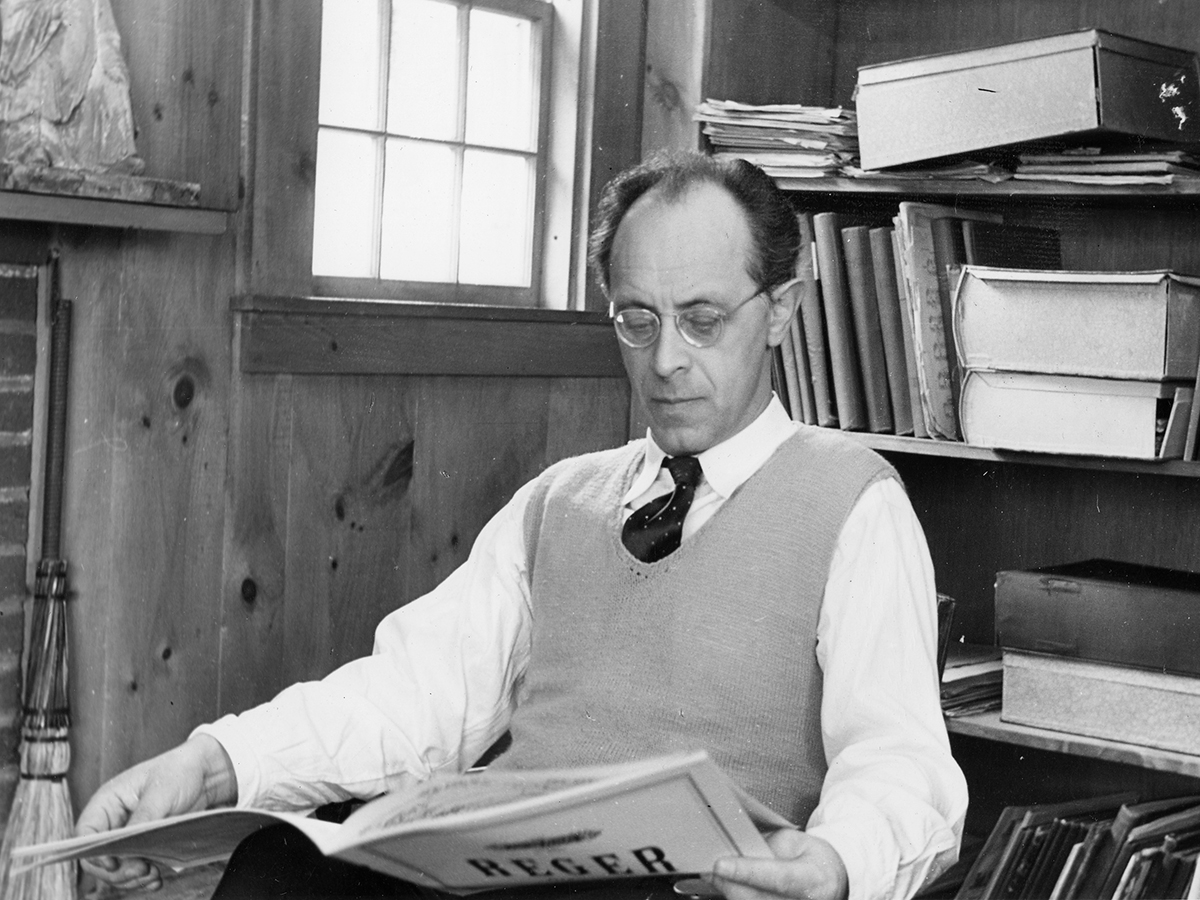
It is Adolf Loos who introduces the teenage Serkin to Arnold Schoenberg, who becomes another decisive influence. At their first meeting, the composer submits the young pianist to a grueling, hours-long “test” of his musical knowledge and technical facility. Soon thereafter, Rudi begins studying composition with him. Despite the seeming contrast between Serkin’s classicist nature and Schoenberg’s radical atonality, the composer imparts important musical lessons, refining Rudi’s pianistic approach, fueling his propensity for relentless preparation and practice, and perhaps most importantly, demanding absolute fidelity to the music. Rudi learns to apply the same analytical rigor to Beethoven and Mozart that Schoenberg insists upon for modern works, and that a performer’s ego should never come between the composer and the listener. Rudi performs regularly for Schoenberg’s Society for Private Musical Performances, a laboratory for new music at which the Viennese artistic elite—including Alban Berg, Hanns Eisler, and Anton Webern—gather to rehearse new work and debate music theory. The Society’s commitment to anti-commercialism and deep musical exploration also resonates deeply with the young artist. Serkin eventually turns away musically from Schoenberg, but for the rest of his life he champions the works of Max Reger, a composer who influenced Schoenberg with his use of advanced but structured chromaticism.

19201927

Busch

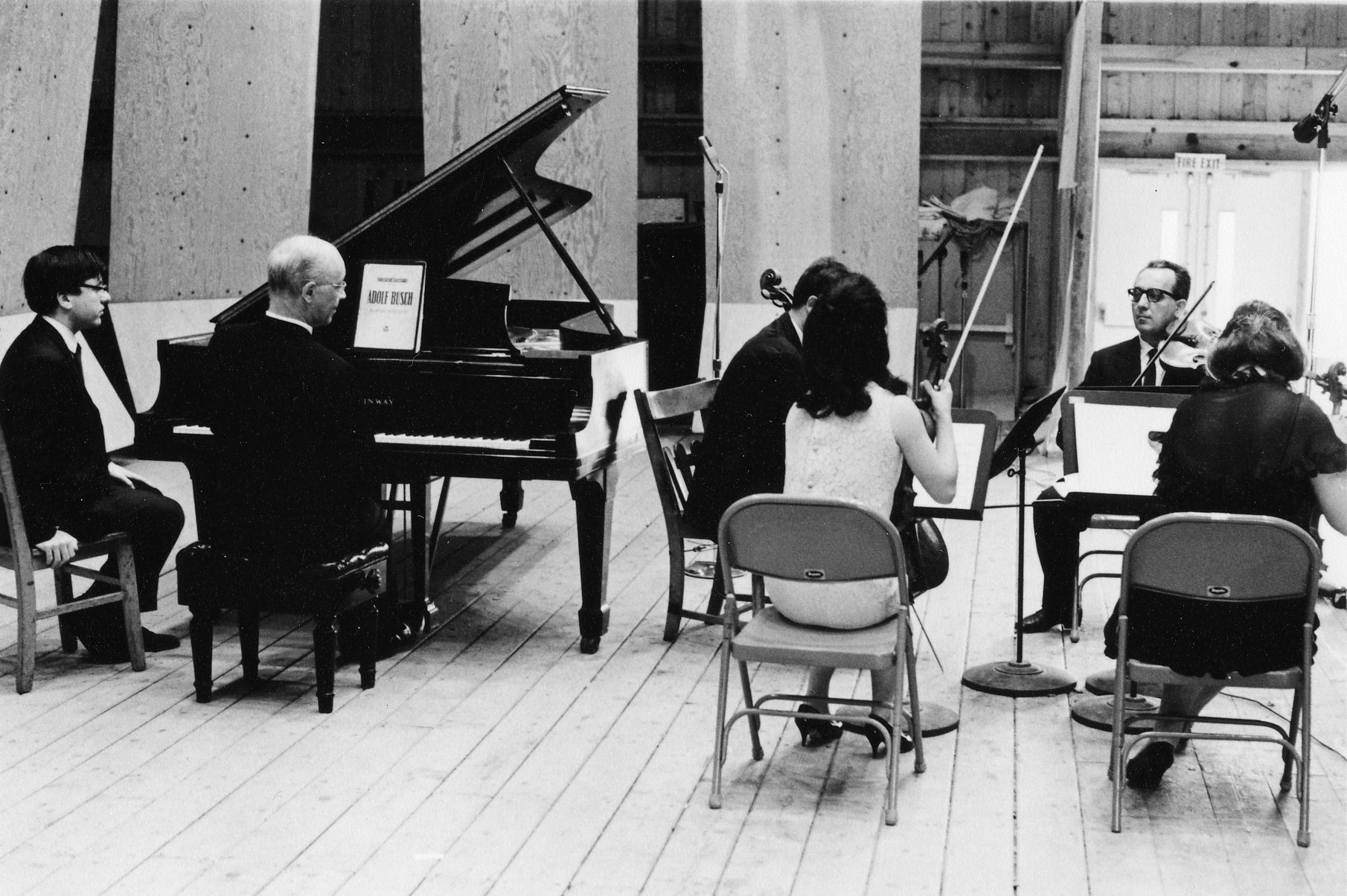
A defining partnership begins in Vienna in May 1920 when violinist Adolf Busch first encounters Serkin at one of Eugenie Schwarzwald’s salons and is stunned by the 17-year-old pianist’s interpretation of Reger’s Variations and Fugue on a Theme of Bach. A few days later, Busch’s regular pianist falls ill before a rehearsal at Vienna’s Hotel Imperial, and Serkin is sent as a substitute. After hearing him play for only a few minutes, Busch famously declares, ‘That’s it. I don’t need to hear anyone else.’ He immediately invites the impoverished young pianist to join him in Berlin to live and work with his family. Later that year, while bound for Paris to study at the Conservatoire, Serkin loses his train ticket—a providential mishap that redirects him to Berlin instead. There, he is welcomed into the Busch household, living with the violinist, his wife Frieda, and their three-year-old daughter, Irene. Busch is regarded as the preeminent German violinist of his time, and his mentorship transforms the young pianist, leading to the acclaimed popularity of the duo’s Sonata Evenings. The programs feature traditional repertoire including Bach, Beethoven, Schubert, and Brahms, as well as the music of Reger, who had been a close friend of Busch. Over time their relationship progresses to a true musical partnership, despite Busch’s role as a mentor and the difference in their ages. During their 1921 Berlin debut together, the 17-year-old Serkin and Busch perform the Brandenburg No. 5, and the audience demands an encore. Busch jokingly tells Serkin to play the Goldberg Variations, and Serkin, illustrating both his literal-mindedness and his staggering stamina, proceeds to perform the entire hour-long work. By the end, only five people remain: Adolf and Frieda Busch, pianist Artur Schnabel, Albert Einstein, and Serkin.

19271932

Switzerland

Life with the Busches provides Serkin with a level of stability and bourgeois comfort foreign to his early life. Moving further from Berlin as time passes—first to southern Germany, then to Switzerland in 1927—they grow closer together. The home that they build for themselves in Riehen, Switzerland reflects that closeness, with a smaller house for Serkin joined by the library to a larger, Bauhaus-inspired house for the Busches, all sharing one address. Although the Riehen home offers a bucolic reprieve from the unrest in Germany, its proximity to the border serves as a constant reminder of the encroaching political darkness. Within this serene yet uneasy sanctuary, the bond between the two men deepens into something far more profound than a standard professional apprenticeship. As they share their lives with admiring friends such as the writers Hermann Hesse and Thomas Mann—who will continue to follow their careers into the mid-century and the New World—Busch models for Serkin an unyielding personal integrity that matches the duo’s musical exactitude. By the time the political climate reaches a breaking point, Busch has become to Serkin not only a musical mentor but a moral beacon.

19331935

Art as a Moral Act

Serkin and Busch continue to play for enthusiastic crowds in Germany even after Hitler is named Chancellor, but signs of dissonance begin to show in the months that follow. In an emblematic instance, an audience member stands during a performance to present the Nazi salute and is shouted down by an infuriated Busch. Busch is criticized by German newspapers for playing with the Jewish Serkin and furiously breaks with former friends who refuse to repudiate Hitler. At a time when many non-Jewish German artists make quiet compromises, Busch’s public “No” is a thunderclap that sparks Serkin’s own lifelong refusal to separate art from ethics. Serkin’s alienation from Germany is such that he refuses honors many years after the war. The Judenboykott, the state-organized campaign against Jewish businesses that bans Jewish musicians from the stage, is a final outrage that prompts Busch to send an impassioned telegram to his German agent canceling all his remaining concerts and refusing future performances in the fascist state. Serkin and Busch hereafter forego concertizing in Germany and, due to the loss of income, extend their reach elsewhere, making their American debut together at the Library of Congress later that year.

19351938

Family Life, Touring Life

In the midst of political turmoil, Rudolf Serkin and Irene Busch marry in 1935. Having grown up with the sound of Rudi practicing in the next room, Irene, a talented violinist, is devoted to her new husband and the idea that music is less a vocation than a sacred, familial duty. Fiercely protective of Rudi’s time and talents, she provides the emotional stability and structure he needs to commit himself utterly to the music and to keep his performance anxiety in check. While Serkin’s reflexive kindness often leads him to overcommit himself out of sheer politeness, the practical-minded Irene becomes his indispensable buffer, living in the world of train schedules, contracts, and meal planning so Rudi can inhabit the “Spirit of the Score.” The relentless global tour schedule—with its mix of solo performances, orchestral appearances, and duo recitals with Busch—is exhausting for the Serkins, particularly as they begin their family with the birth of their first daughter, Ursula. Yet they are carried forward on a wave of artistic success. While still in Europe, Serkin and the Busch Chamber Players give the then-rare complete performances of the Bach Brandenburg Concertos, making the first recordings to bring these now ever-popular works to a large global public. In February 1936, Serkin makes his American orchestral debut with the New York Philharmonic, an engagement secured through the staunch advocacy of Arturo Toscanini, who had been deeply moved by Serkin’s playing in Europe. Performing Mozart’s Concerto No. 27 and Beethoven’s Concerto No. 4, Serkin is met with a level of acclaim rarely afforded to a newcomer; Olin Downes of the New York Times hails the performance as ‘monumental,’ effectively crowning Serkin as the preeminent heir to the great European tradition on American soil. This triumph does more than solidify his career; it provides the professional stature and financial foundation that will soon allow the family to seek permanent refuge in the United States as clouds of war darken over their native land.

19381941

Curtis, Leventritt, and America

A chance encounter with composers Samuel Barber and Gian Carlo Menotti on a ship from New York to Le Havre sets up an introduction to Mary Curtis Bok, which leads to Serkin’s appointment as the head of the piano department at the Curtis Institute in Philadelphia. The post provides the requisite stability for Serkin to transition from a touring guest to permanent resident. Aided by the support of Rosalie and Edgar Leventritt and Agnes Meyer, Serkin and the Busches finally emigrate to the United States in the fall of 1939, arriving in their new home on one of the last passenger ships just as Europe is engulfed by war. Once settled, Serkin inspires Rosalie Leventritt to establish the Leventritt Competition to help promote young musicians, for which he serves as an early advisor and judge. Even as his solo career reaches a fever pitch, Serkin remains anchored by restorative time with his family in the Green Mountains of Vermont. The landscape reminds them of Switzerland, and they find a summer haven there in 1939 while continuing to live in New York during the year.

19411946

Resilience in a New World

In 1941, Serkin’s solo career reaches a new height with a landmark performance of Beethoven’s ‘Emperor’ Concerto with the New York Philharmonic under fellow refugee Bruno Walter—a collaboration that heralds the resilience of European culture in the U.S. That same year, Busch reconstitutes his chamber ensemble, the Busch Chamber Players, in their new American home. Despite his burgeoning solo commitments, Serkin remains devoted to the group, performing and recording Bach concertos that bring their rigorous European standards to American audiences. However, as Serkin’s calendar grows ever more crowded, Busch must turn to other pianists such as Mieczysław Horszowski and Eugene Istomin for the ensemble. In 1945, seeking to put down permanent roots, the Serkins purchase a homestead in the rural town of Guilford. The farm becomes a vital counterweight to the pressures of the concert stage—a sanctuary where music, nature, and family life are one. Tending to his cows, Daphne and Clover, Serkin embraces a rural New England humility that mirrors his musical philosophy: that the most profound beauty is found in simple, honest labor. Years later, his role as a ‘farmer’ is recognized when the Philadelphia Orchestra presents him with a tractor on-stage to celebrate his 100th appearance with the Orchestra. The farm also becomes a playground for a new generation of Serkins: Ursula and Elizabeth, who had been born in the shadow of Europe’s collapse, are soon joined by John, the first of the Serkin children to be born in America, and later by Susan (who dies in infancy), Peter, Judith, and (10 years later) Marguerite. The family lives simply, in a home filled with books and scores where music is a “way of being” and hard work and intellectual rigor are valued above all. Amidst it all, Rudi practices up to eight hours a day, often beginning before the children are awake and continuing long after they go to bed.

194650

Postwar Return to Europe

In 1946, Serkin returns to Europe for his first tour since the war, playing in Switzerland, Italy, and England—a triumphant but bittersweet reconnection with a continent forever changed. The most transformative encounter of this era, however, occurs in 1950. Violinist Alexander Schneider had successfully coaxed the legendary Pablo Casals out of a self-imposed silence in the village of Prades, France, where the cellist lives in protest of Spain’s Fascist regime. Schneider brings Serkin and Casals together for a historic Bach bicentennial festival, and the two men recognize in each other a profound moral kinship. Busch also participates in this first Prades festival, and the intense, selfless atmosphere—where the ‘business’ of the music world is stripped away and world-class musicians play together as equals in the festival orchestra—inspires their own dreams while laying the groundwork for Casals’s later visits to Marlboro.

19501955

Marlboro Begun

Although Adolf Busch’s American career is hampered by misperception and ill health, he persists in his dream of starting a summer music school where musicians of all ages and backgrounds can come together in service to music. With the encouragement of Walter Hendricks, founder of the fledgling Marlboro College, the former dairy farm-turned-campus in the town of Marlboro becomes the place where his idealistic vision is realized. In 1951, amidst his touring, teaching, and family responsibilities, Serkin joins his father-in-law, cellist Hermann Busch (Adolf’s brother), and members of the Moyse family to preside over the first official summer of what will be described decades later by The New Yorker as “the classical world’s most coveted retreat.” Some two dozen musicians gather this first summer on the bucolic hilltop campus, rehearsing in repurposed barns, sharing meals, and dedicating themselves to chamber music and one another. On the eve of its second season, however, the sudden death of Adolf Busch in June 1952 threatens to derail the experiment. While in deep personal mourning, Serkin takes the reins of the nascent institution, feeling an almost sacred obligation to carry on his mentor’s dream. Drawing on his earlier experiences with Schoenberg and Schwarzwald and with the support of his fellow founders, he devotes himself to making Marlboro “a place to make music,” as Busch fondly called it, creating a community dedicated to the composer rather than the performer, in which generations of musicians share musical and life lessons in a spirit of inquiry and play. Serkin supports Marlboro both artistically and financially, often pouring his own solo concert earnings into the school to sustain it during its first precarious years.

19551960

Marlboro Sustained

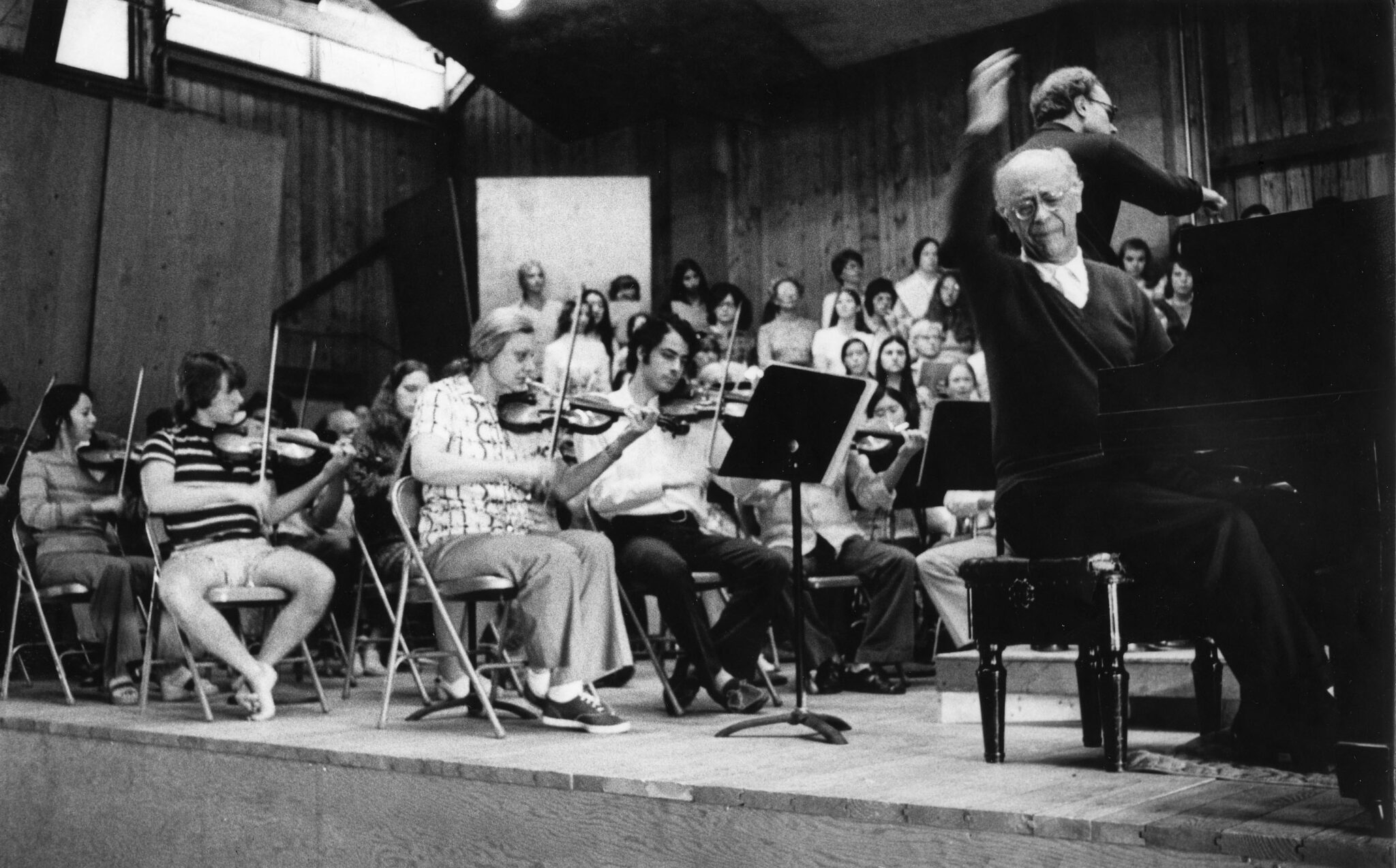
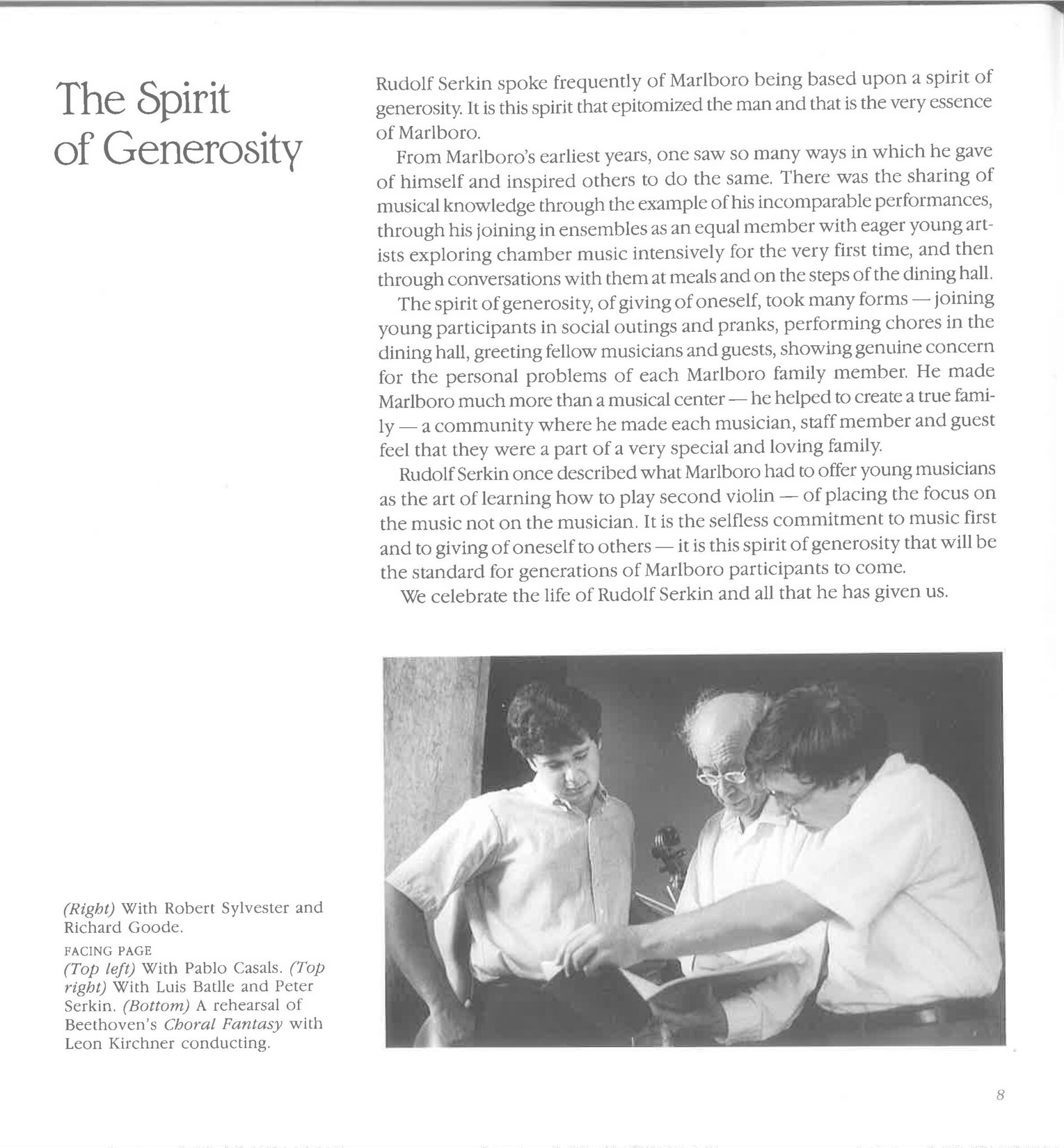
While the inaugural seasons include students and dedicated amateurs, the mid-1950s bring a transformation of the caliber of Marlboro participants. Exceptional young woodwind players and promising singers arrive in greater numbers, attracted by the school’s growing reputation as a place that approaches music with singular devotion. The arrival of violinists Alexander Schneider and Felix Galimir and cellist Madeline Foley also helps solidify the string department. Serkin’s vision expands: Marlboro would become a place where the world’s most gifted young instrumentalists and singers are immersed in chamber music for two months, emerging as musicians of profound depth and future leaders of the art form. Among the many traditions Serkin nurtures—from a dedicated program for young composers to a culture of complex, legendary pranks that leaven the sometimes-intense musical atmosphere—none resonate more deeply than his closing of the season with Beethoven’s Choral Fantasy. This “secular hymn” of the Marlboro family is a communal triumph, with practically every participant joining Serkin on stage. As he tackles the virtuosic piano part, world-class soloists play in the orchestra and a motley, inspired chorus of spouses, children, and Vermont neighbors sing behind him. It is the ultimate manifestation of the Marlboro ethos: a joyful merging of art and life. This immersion provides a vital seasonal contrast for the Serkins. From 1956 to 1963, the family spends the academic year in Philadelphia, where Rudi leads the piano department at the Curtis Institute. Yet, as each spring wanes, the migration back to Vermont signals a return to his spiritual center, where the rigors of city life give way to the beauty and freedom of the countryside.

19601965

Casals at Marlboro

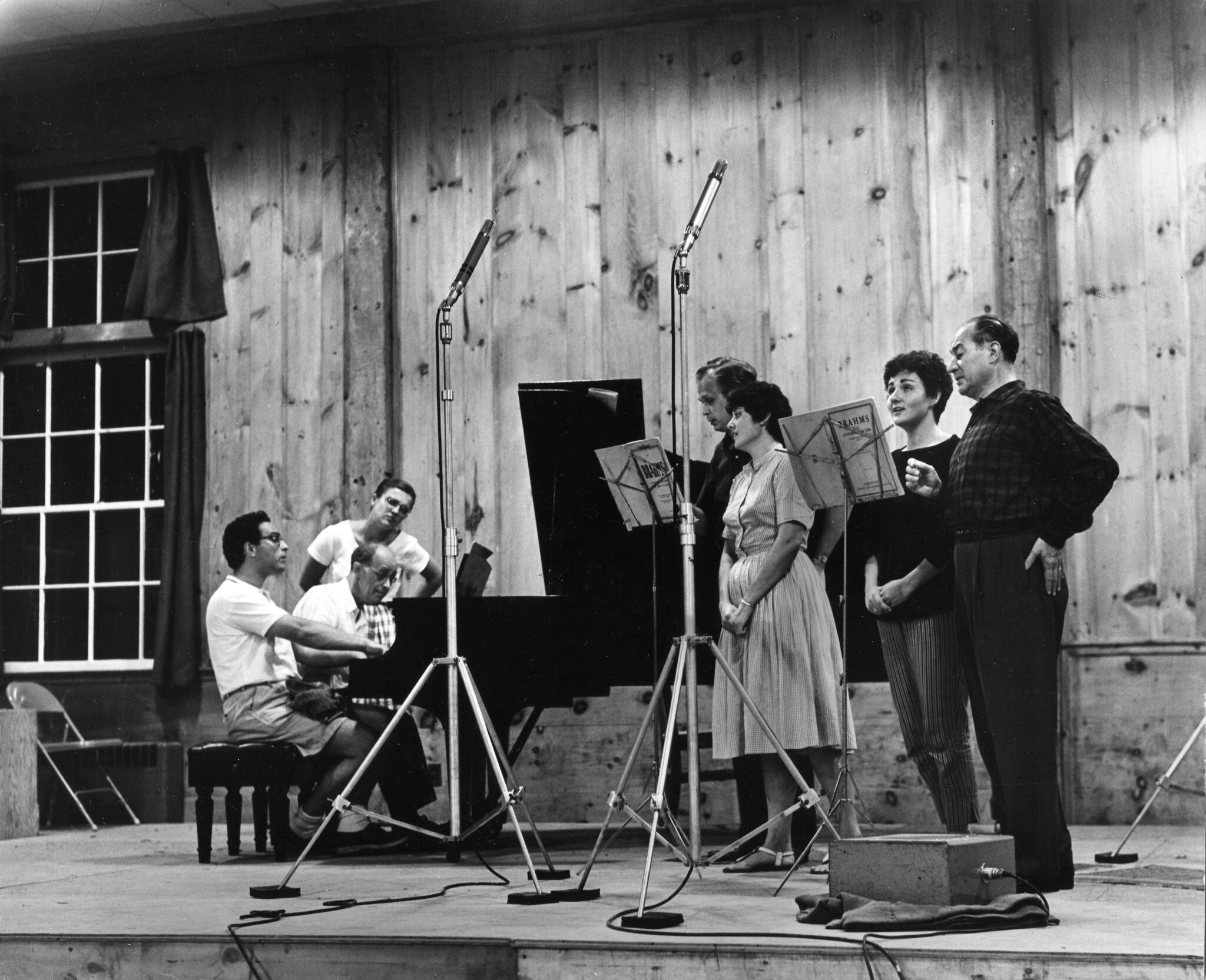
After a decade of Serkin’s faithful appearances at the Prades and Puerto Rico festivals, Pablo Casals finally accepts Serkin’s invitation to Vermont in 1960. Casals had vowed not to perform in the United States as long as it recognized Franco’s Spain but, coming to view Marlboro as sovereign moral territory of sorts, he makes an exception. Casals is so taken with the talents and spirit of the young Marlboro musicians that he not only holds master classes but also leads the Marlboro Festival Orchestra. Conducting the orchestra almost as if it were a giant string quartet, he insists on the same transparency and spontaneity in a symphony that Serkin demands in a sonata. In his performances, he captivates a new generation with his musical ideas and humanity. For Serkin, Casals’s presence is a validation of the sanctuary he and his fellow founders have built—a place where the moral and the musical are inextricably linked. Casals, for his part, is so inspired by the atmosphere at Marlboro, which he calls “a temple of music,” that he returns for 12 more summers until his death in 1973, making many recordings for Columbia Records/SONY with the Festival Orchestra. This era also sees the birth of the ‘Music from Marlboro’ recording series with Columbia Masterworks: recordings that become global touchstones of the chamber music canon, capturing the spontaneous energy of Marlboro and introducing future luminaries such as Richard Goode, Benita Valente, and Murray Perahia. Serkin himself collaborates on a touchstone 1960 Marlboro recording of Schubert’s Shepherd on the Rock (with Valente and Harold Wright) and Brahms’s Liebeslieder Waltzes (also with Valente and with Leon Fleisher at the second piano). At this same time, he is making his own landmark solo and concerto records for Columbia Masterworks, including Beethoven’s Appassionata and Pathétique sonatas and Brahms Piano Concertos with George Szell and the Cleveland Orchestra. Szell, a lifelong friend from their youth in Vienna, shares Serkin’s demand for uncompromising structural clarity, and their collaborations remain the gold standard for these works.

19651968

Mid-Sixties Projects

The 1960s also see major tours of Asia, where Serkin finds a profound cultural affinity, particularly in Japan. Moved by his self-discipline and lack of artifice, Japanese audiences reward him with a level of reverence that inspires lifelong mutual devotion. At home, confirming his status as an American treasure, Serkin performs for President Kennedy at the White House in 1962 and is awarded the Presidential Medal of Freedom in 1963. Remarkably, in less than 25 years, Rudi has gone from refugee to receiving the nation’s highest civilian honor for contributions to its ‘moral and cultural life.’ In 1962, Serkin embarks upon a monumental project at New York’s Metropolitan Museum, joining Alexander Schneider and Leslie Parnas to perform the complete Haydn trios in a historic nine-concert cycle. This spirit of musical exploration extends to the 1965 Marlboro tour of Europe and Israel—a five-week, 35-musician journey, sponsored by the State Department, that serves as a landmark of Cold War cultural diplomacy. As the decade progresses, Serkin’s intellectual rigor remains undimmed. In 1966, he champions the centenary of Ferruccio Busoni and begins preparing for the 1970 Beethoven bicentenary. Characteristically, he eschews the ‘prestige’ of a complete cycle, choosing instead to perform only the 14 sonatas whose essence he feels he has come closest to, alongside the Op. 77 Fantasy.

19681978

Curtis Directorship and Honors

In 1968, Serkin is appointed Director of the Curtis Institute of Music, a role he holds until 1976. Instilling the perspective that even the most brilliant soloists need to learn to listen to others, he seeks to emphasize chamber music and opera to foster a more collaborative spirit among the conservatory’s virtuoso students. The Serkin family splits its time between Philadelphia and the farm in Guilford, which Irene manages with a quiet, fierce devotion, ensuring the home remains a haven amidst the pressures of Rudi’s public life. This period of institutional leadership coincides with a fascinating domestic contrast: while Rudi remains the embodiment of old-world discipline, his son Peter, now a major pianist himself, emerges as an apostle of new music and a counter-culture icon. Though their styles are opposites, Peter’s fidelity to the “purity” of music (especially contemporary works by Messiaen and Schoenberg) mirrors his father’s own uncompromising search for musical truth. Father and son remain deeply respectful of each other and occasionally perform together, bridging the era’s generation gap through the language of Mozart and Schubert. The other children also begin to carve their own paths; Judith becomes a cellist and John a horn player, ensuring the Busch-Serkin legacy of musicianship continues into the next generation. On the national stage, Serkin’s presence remains constant. He performs for President Nixon at the 1970 White House dinner honoring Andrew Wyeth, and in 1972, he marks his 100th appearance with the New York Philharmonic. His moral authority also continues to guide his public life; in 1974, he tactfully refuses Germany’s highest civilian honor, the Grosses Verdienstkreuz, still unwilling to accept such a tribute from the nation he forsook. However, as the decade closes, his monastic side and his love of rural life win out: after leaving Curtis, he establishes the Institute for Young Performing Musicians in Vermont in 1978, where he can mentor a small circle of pianists in the same spirit of inquiry that defined his own youth.

19781983

Marlboro Well-Established

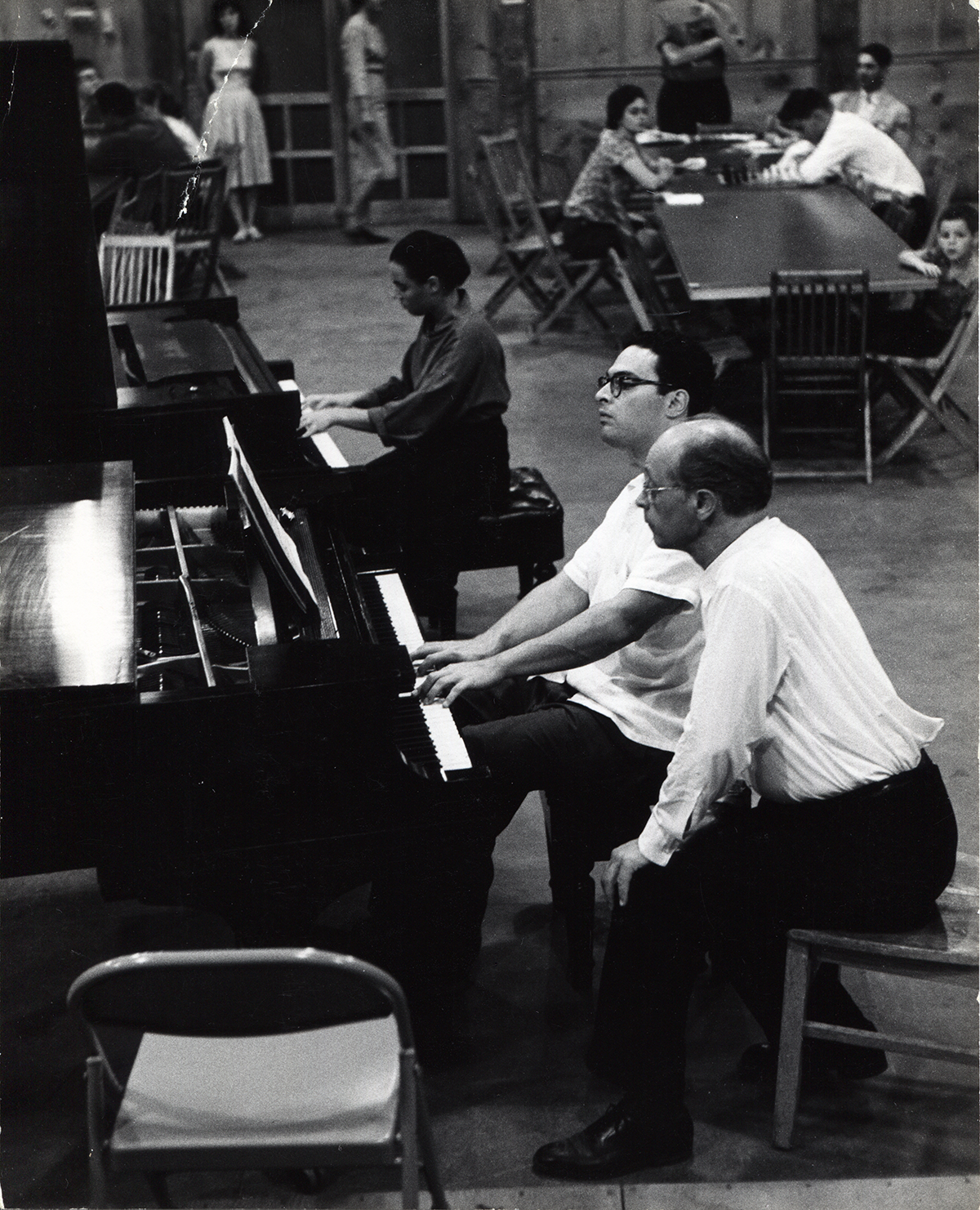
Over its first three decades, Marlboro becomes a major influence on American musical life, elevating chamber music from a niche interest to a primary art form. By 1980, the core Busch-Serkin philosophy—that rehearsal is a sacred end in itself and the concert merely a byproduct—has taken root for a new generation. Serkin models the school’s ethos with characteristic humility, often taking the second piano part or a minor chamber role to support younger colleagues. The ‘luxury of time’ that exists at Marlboro allows for a depth of study unheard of anywhere else in the professional world, and the environment serves as an incubator for nascent ensembles. From the 1964 founding of the Guarneri Quartet to the emergence of the Cleveland, Vermeer, Emerson, and myriad others, the ‘Marlboro style’ of communicative, edge-of-the-seat playing comes to define the genre. As participants move into principal chairs of major orchestras or become world-class soloists, they carry Marlboro’s communal ethos with them. Many return to Vermont to help carry on the school’s mission, including Richard Goode, András Schiff, and current co-director Mitsuko Uchida.

19831991

A Searching Spirit

The 1980s serve as a luminous coda to Serkin’s career. In 1981, he finally returns to Germany in a deeply personal way, accepting the Order Pour le Mérite for Sciences and Arts. The ceremony is less a state function and more a reunion of kindred spirits, as Rudi is joined by lifelong friends and fellow refugees Ernst Gombrich, Victor Weisskopf, and Karl Popper—a final, poetic reconnection with the Schwarzwald circle of his youth. That same year, the American public celebrates his legacy at the Kennedy Center Honors, where he is recognized alongside Count Basie, Cary Grant, and Helen Hayes as a pillar of American culture. In 1983, the music world marks Serkin’s 80th birthday with an outpouring of affection. He gives a landmark recital at Carnegie Hall, after which critics observe the radiant, ethereal transparency of his playing: the pianist who once seemed engaged in physical combat with his instrument now appears to be channeling the music through it. Even on such grand stages, Serkin’s focus remains on the music itself. This quest is captured in a definitive series of recordings with Claudio Abbado and the London Symphony Orchestra, in which his interpretations of Mozart concertos achieve a valedictory wisdom and clarity. In 1984, the French Government names Serkin a Chevalier in the Legion of Honor, and in 1988, he receives the National Medal of Arts. Throughout these years, he remains the heartbeat of Marlboro, gleefully throwing ‘napkin balls’ in the Dining Hall and rehearsing and performing with his characteristic searching intensity until his final season in 1988.

1991

Death and Legacy

On May 8, 1991, Rudolf Serkin passes away at his beloved farm in Guilford, surrounded by his family, books, scores, and the Vermont hills that inspired him for half a century. The musical world mourns the loss not just of a peerless musician but of a humble man of conscience, whose life embodies artistic integrity and the power of simple joys and stands as a singular, unbroken protest against vanity, superficiality, and injustice. While he leaves behind a monumental discography of over 100 recordings—many of which remain definitive touchstones—his ultimate legacy is found in the enduring spirit of Marlboro. Today, as seasoned musicians and exceptional emerging artists gather each summer on the same Vermont hilltop, they, like Serkin, revel in exploring great works for weeks on end, with the aspiration to simply get a little closer to the music each day. New generations of Serkins continue to advance the vision of their forebears: Judith remains a beloved cello participant, granddaughter Natalya Rose Vrbsky is a senior bassoonist, and grandson Christopher leads the organization’s board of trustees. In the end, Serkin’s life demonstrates that music is not merely a profession but a moral act—one that involves rigorous discipline, an uncompromising devotion to the truth, and a childlike wonder that finds its highest expression in the service of others.

Biography

The biography “Rudolf Serkin, A Life” was an invaluable resource for this timeline. Written by Stephen Lehmann and Marion Faber, it contextualizes Serkin’s conception of Marlboro by detailing his formative experiences both musical and personal, offering an insightful and engaging perspective on Serkin’s lifelong development as an artist.

Videos

The first two videos originate from a Bell Telephone Hour episode focusing on Marlboro, shown on NBC in December 1967. In the first, Mr. Serkin speaks about the founding of Marlboro and its enduring values, followed by a rehearsal of the first movement of the Schubert ‘Trout’ Quintet, in which he is joined by violinist Jaime Laredo, violist Philipp Naegele, cellist Leslie Parnas, and double bassist Julius Levine. The complete theme-and-variations fourth movement of the work is heard in the second video, from a performance in July 1967. The third video is excerpts (frustratingly incomplete!) from an extended conversation between Mr. Serkin and the violinist Isaac Stern, filmed as part of a PBS 70th birthday tribute to the pianist.


Recordings

The first three of these live performances are not duplicated in Mr. Serkin’s commercially recorded repertoire. The Brahms Horn Trio performance from 1987 is a more mellow, autumnal performance than his celebrated 1960s recording with Michael Tree and Myron Bloom. It is spectacularly well played by a young Pamela Frank (violin) and Julie Landsman (horn), who won the principal horn seat at the Met Opera Orchestra just two years prior to this performance. Finally, a memorable 1981 performance of the Beethoven Choral Fantasy (conducted by his son Peter Serkin), the work that ceremonially brings together all participants to close most Marlboro summers, a tradition begun by Rudolf Serkin.

Audio Recordings from Marlboro

Gallery

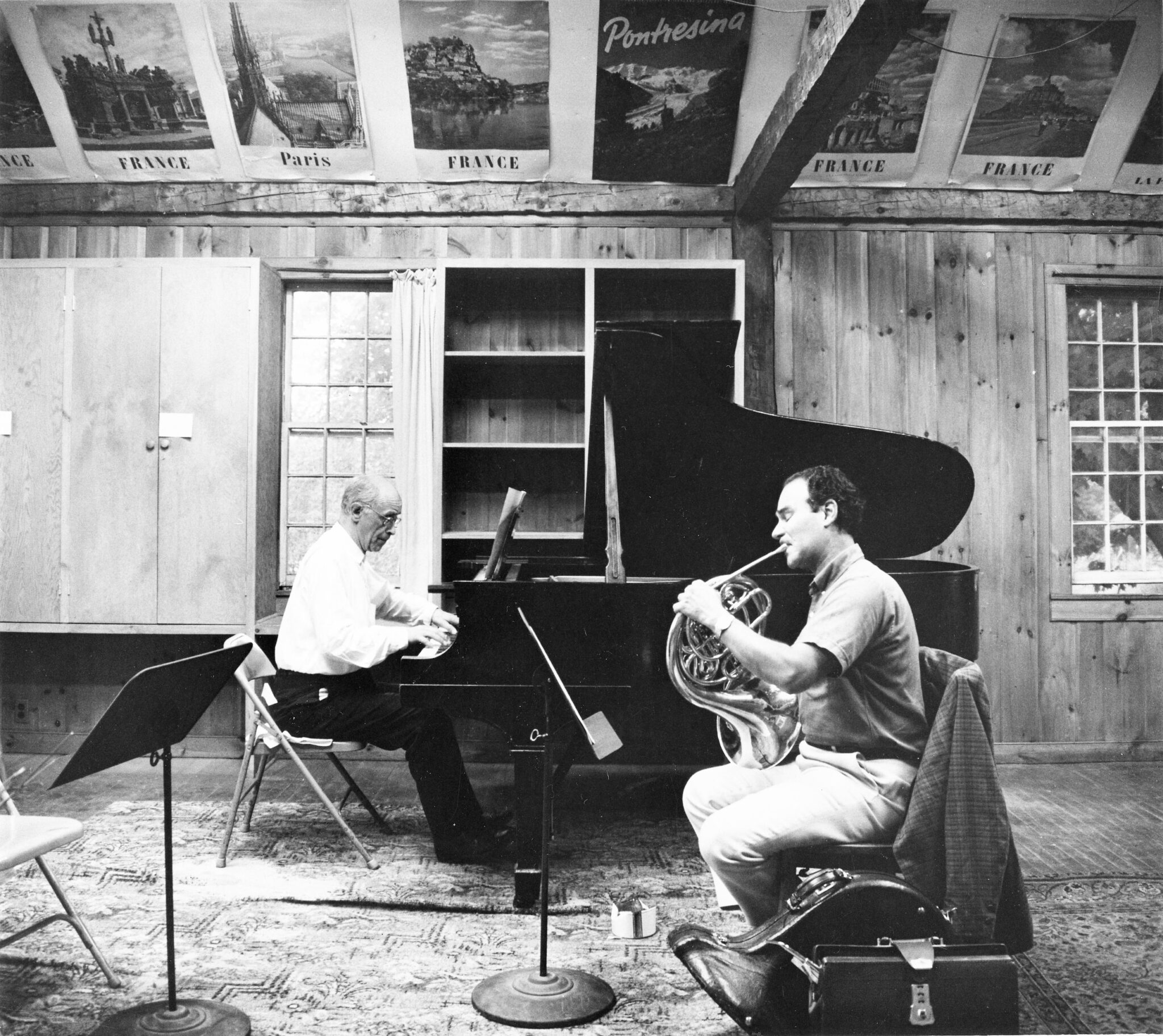
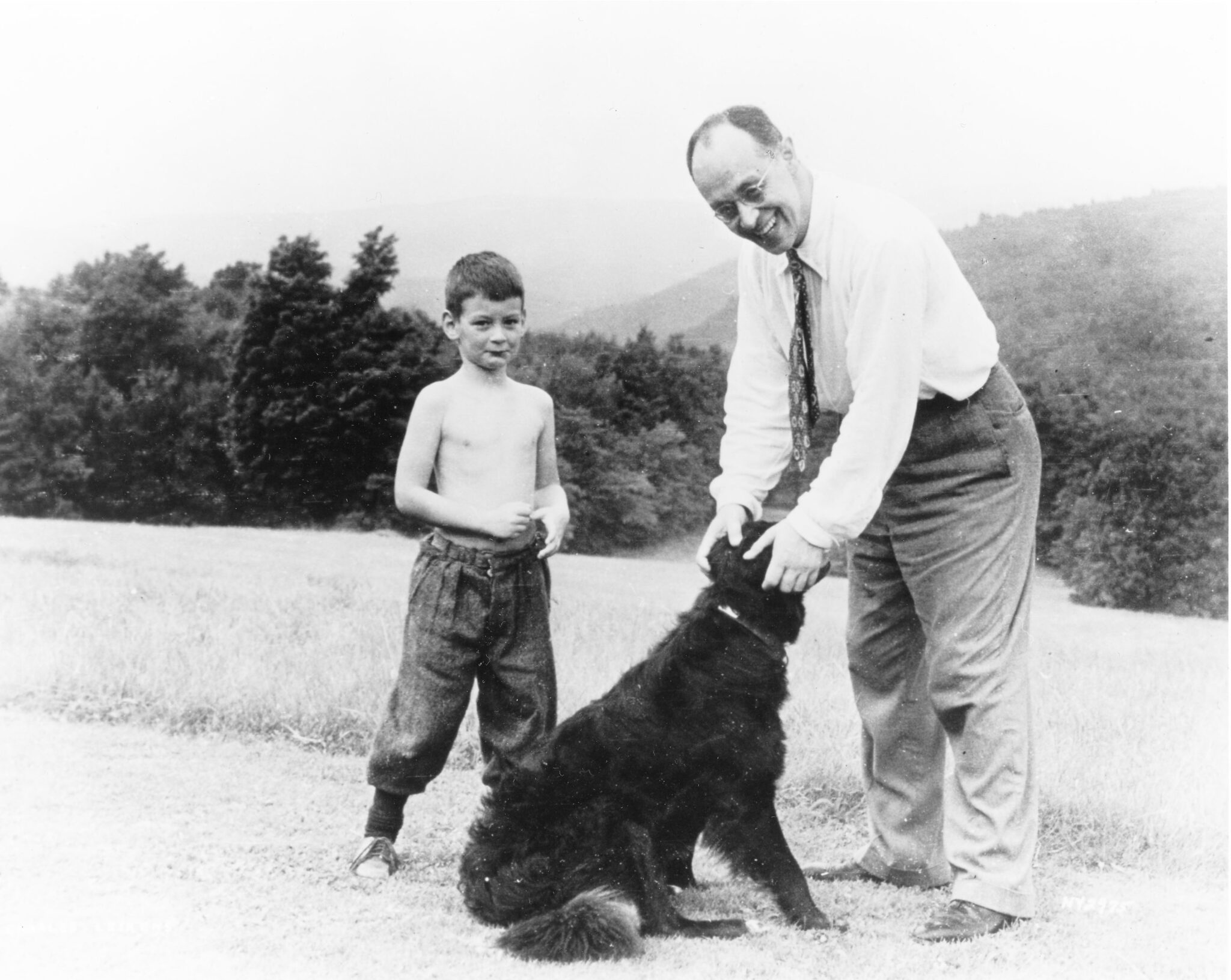
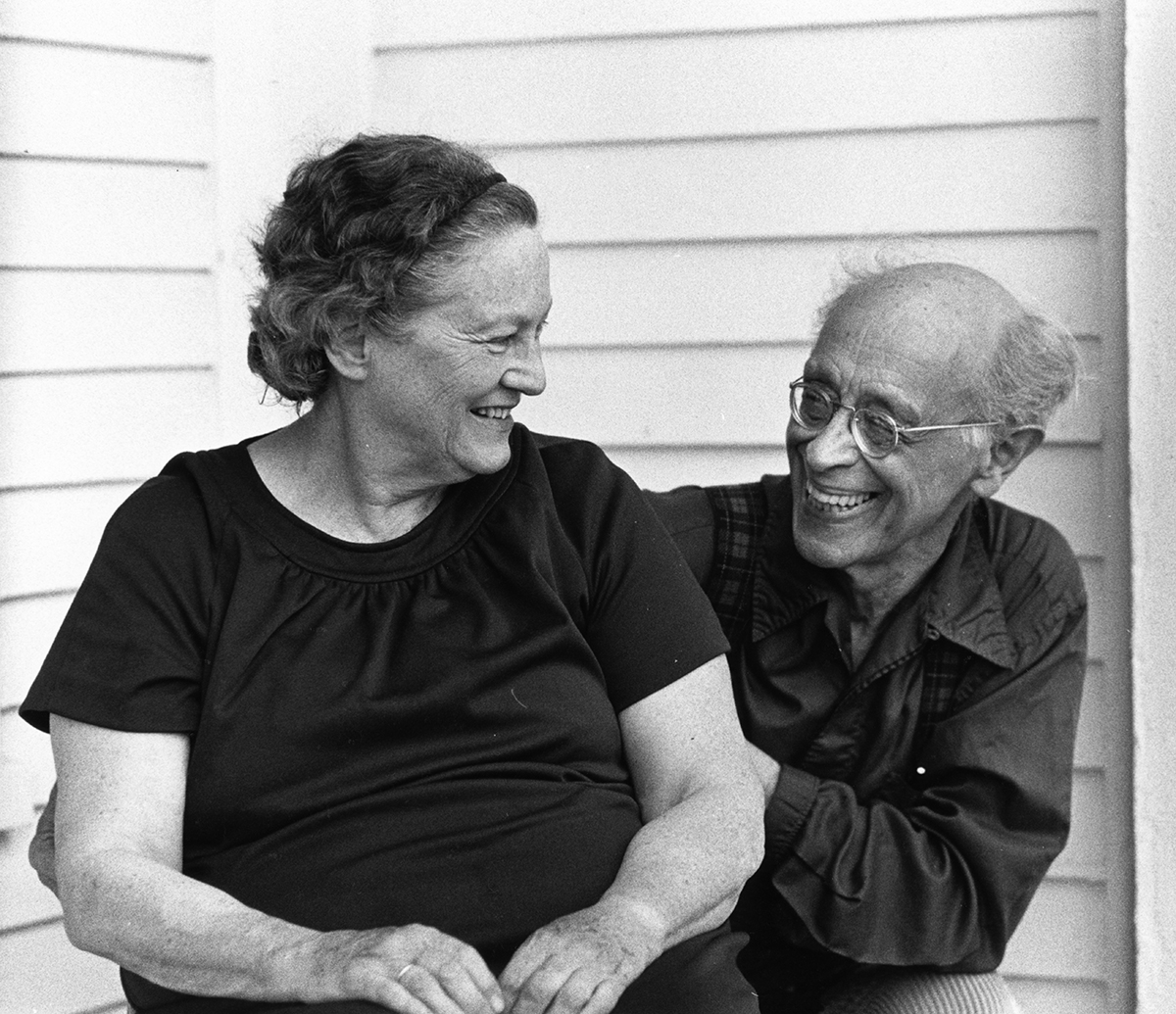
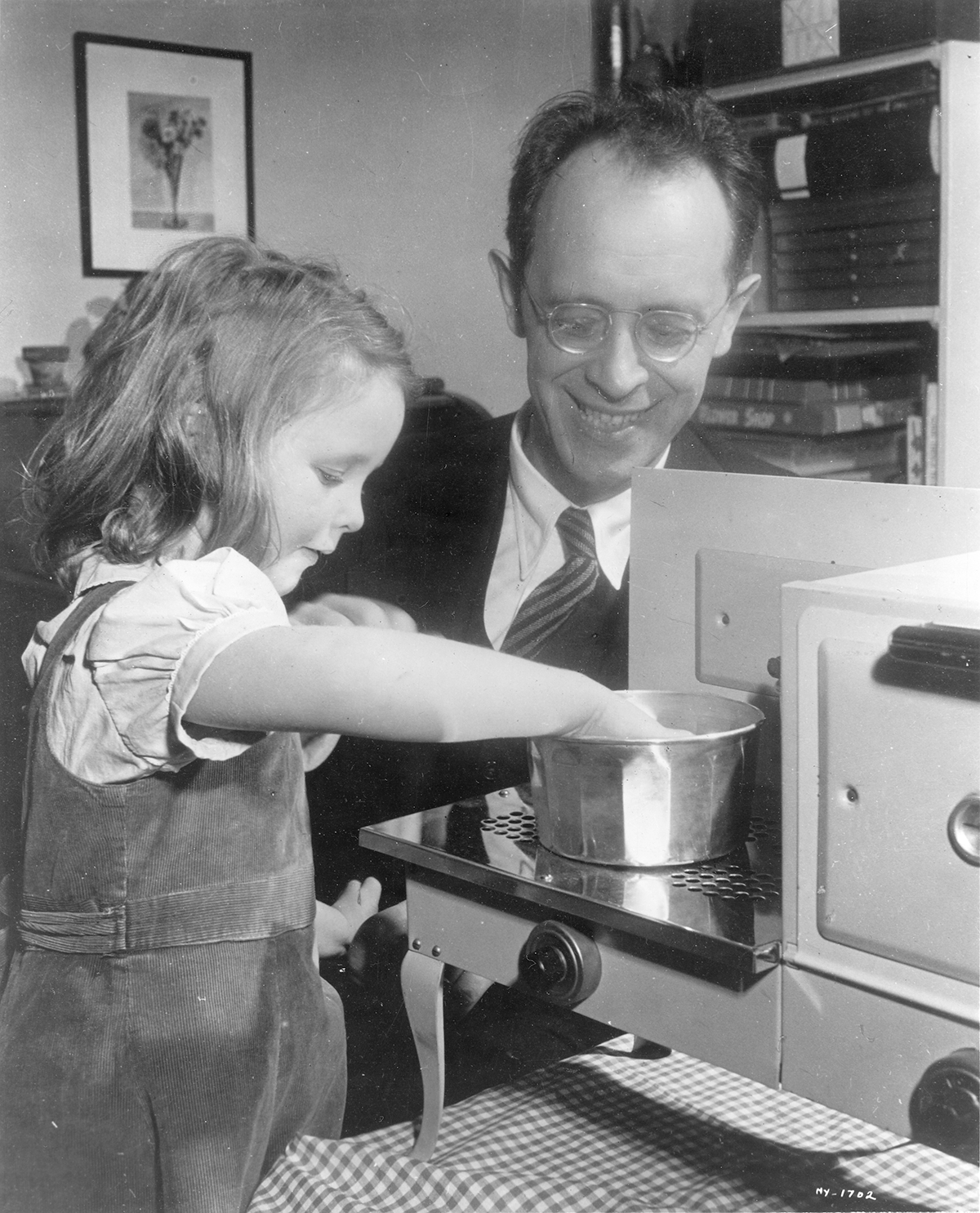
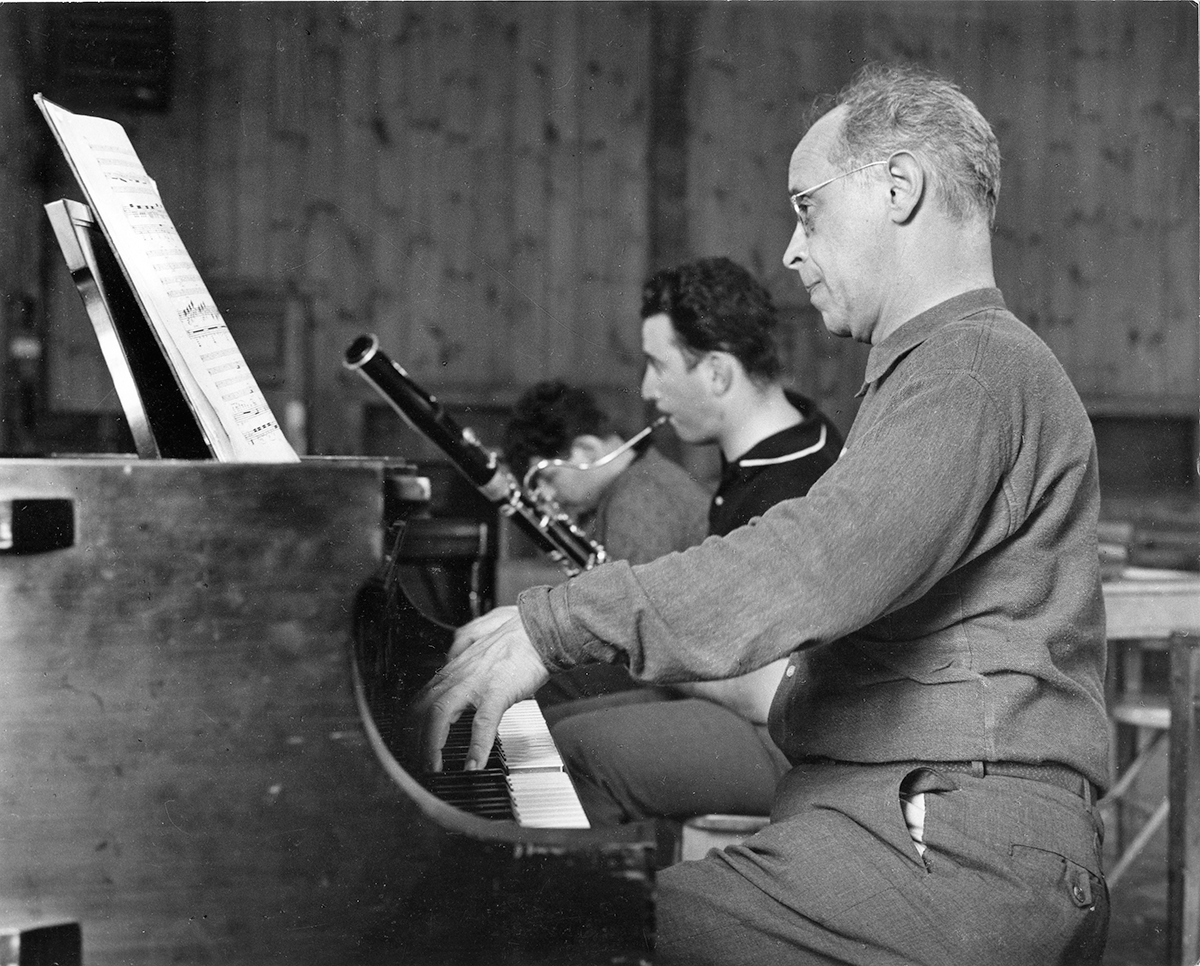
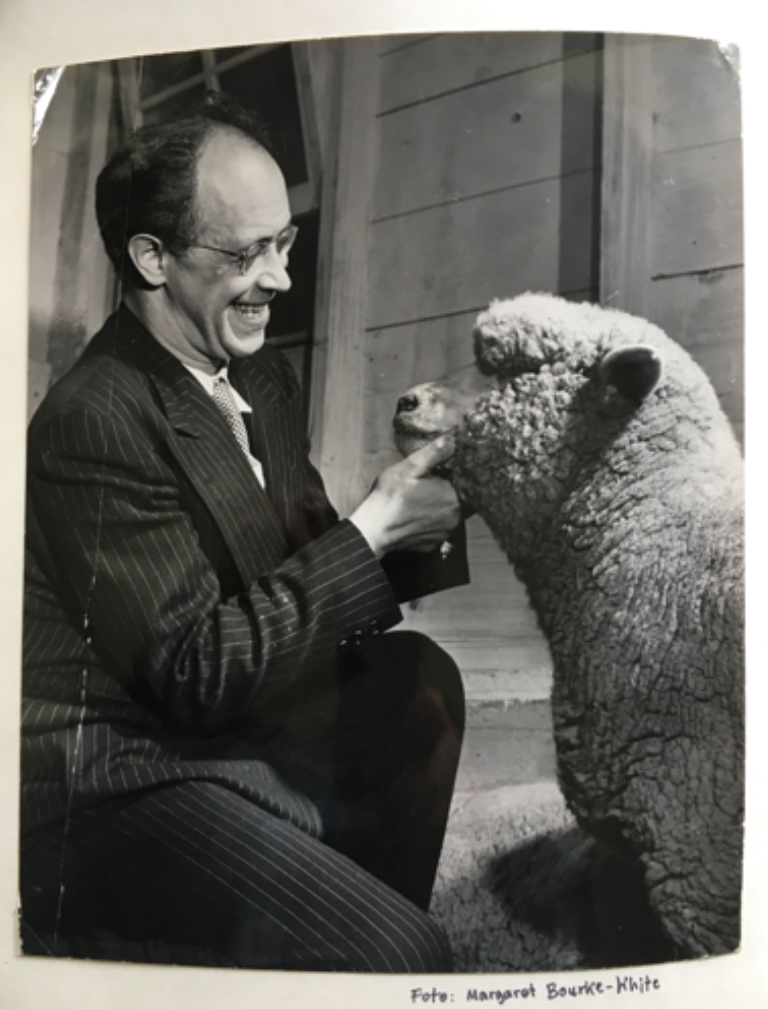
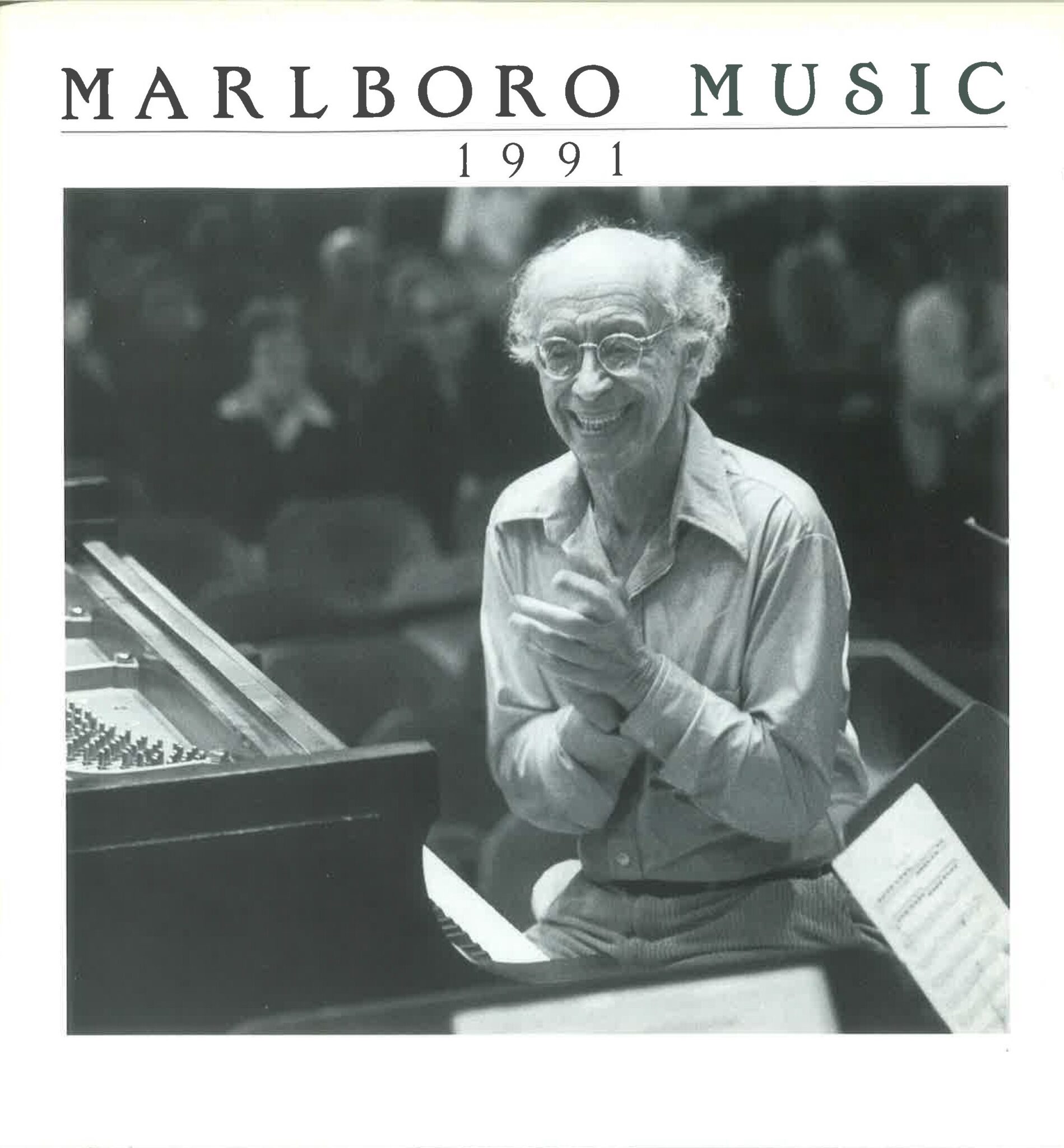
Click any of the pictures below to view an enlarged version complete with additional quotes in the captions.